UNIST site map
- Admissions
-
Academics
- Colleges and Schools
-
Academic Affairs
- Academic Calendar
- Academic Curriculum
- Requirements for Graduation
- Browse Open Courses
- Undergraduate Administration
-
Graduate Academic Affairs
- Tuition Fee Payment
- Academic Leave of Absence/ Academic Return
- Voluntary Withdrawal/ Expulsion
- Change of Major
- Change of Degree Program/ Dropping of Degree Program
- Class Period/ Attendance Period/ Academic Year・Semester
- Course Registration
- Course Drop
- Attendance/ Grade/ Exam
- Credit Transfer/ Credit Carryover
- Academic Forms
- Education Support
-
Research/Industry
- Research Aims
- Research Findings
- Researcher Search
-
Research Organizations
- UNIST Multi-Interdisciplinary Institute
- IBS Research Groups
-
UNIST Labs
- Department of Mechanical Engineering
- School of Energy and Chemical Engineering
- Department of Civil
- Department of Materials Science and Engineering
- Department of Nuclear Engineering
- Department of Industrial Engineering
- Department of Design
- Department of Biomedical Engineering
- Department of Biological Sciences
- Department of Electrical Engineering
- Department of Computer Science and Engineering
- Department of Mathematical Sciences
- Department of Chemistry
- Department of Physics
- School of Business Administration
- Graduate School of Carbon Neutrality
- Graduate School of Artificial Intelligence
- Research Support
- University-Industry Relations
- Campus Life
- News Center
- About UNIST
-
etc
- UNIST Bulletin
- Work-Life Balance Support System
- UNIST Gender Equality Plan
- Faculty Invitation for Tenure Track
- Faculty Invitation for Non-Tenure Track
- Board Meeting Minutes
- University Council Meeting Minutes
- Administrative Service Charter
- Privacy Policy
- Copyright Policy
- Rejection of Unauthorized Email Collection
- Operation and Management Policy for Video Information Processing Devices
- Information Disclosure


Connection Points of Knowledge, Everything About UNIST
Try searching.
Recommended search terms


- portal
- U Academics Innovation Center
- Leadership Center
- Dormitory
- Academic Information Center
- International Students Support
- Browse Open Courses
- Course Registration
- Graduation Requirements for Graduation
- Academic Leave of Absence/ Academic Return
- Military Service
- Certificate Issuance
- Academic Calendar
- Scholarships
- Campus Map
- Campus Life Guidebook
- Health Care Center
- Human Rights Center
- portal
- Job Opening
- Announcement for Bid
- UNIST AI Services
- UNIST Daycare Center
- Sports Center
- UI Downloads
- Announcement
- Recruitment of Professors (Non-tenure)
- Faculty Invitation for Tenure Track
- UNIST Academic Information Center
- Office of Research Facilities and Training
- Office of Research Affairs
- Rule Management System
- Academic Calendar


This is a collection of menus necessary for UNIST students .
students
- portal
- U Academics Innovation Center
- Leadership Center
- Dormitory
- Academic Information Center
- International Students Support
- Browse Open Courses
- Course Registration
- Graduation Requirements for Graduation
- Academic Leave of Absence/ Academic Return
- Military Service
- Certificate Issuance
- Academic Calendar
- Scholarships
- Campus Map
- Campus Life Guidebook
- Health Care Center
- Human Rights Center


This is a collection of menus necessary for prospective UNIST Students .
prospective Students


This is a collection of menus necessary for UNIST Faculty & Staff .
Faculty & Staff
- portal
- Job Opening
- Announcement for Bid
- UNIST AI Services
- UNIST Daycare Center
- Sports Center
- UI Downloads
- Announcement
- Recruitment of Professors (Non-tenure)
- Faculty Invitation for Tenure Track
- UNIST Academic Information Center
- Office of Research Facilities and Training
- Office of Research Affairs
- Rule Management System
- Academic Calendar


NEWS CENTER
Discover not only Research Findings and event news, but also the diverse facets of UNIST presented by reporters and writers.
News Center

UNIST News
A More Efficient Energy Strategy for Power-Hungry AI Data Centers
Published in Chem. Eng. J., the study finds that an integrated energy system could reduce total costs by about 48% and lifecycle greenhouse gas emissions by up to 72%
- Research
- JooHyeon Heo
- 2026.10.07
- 120
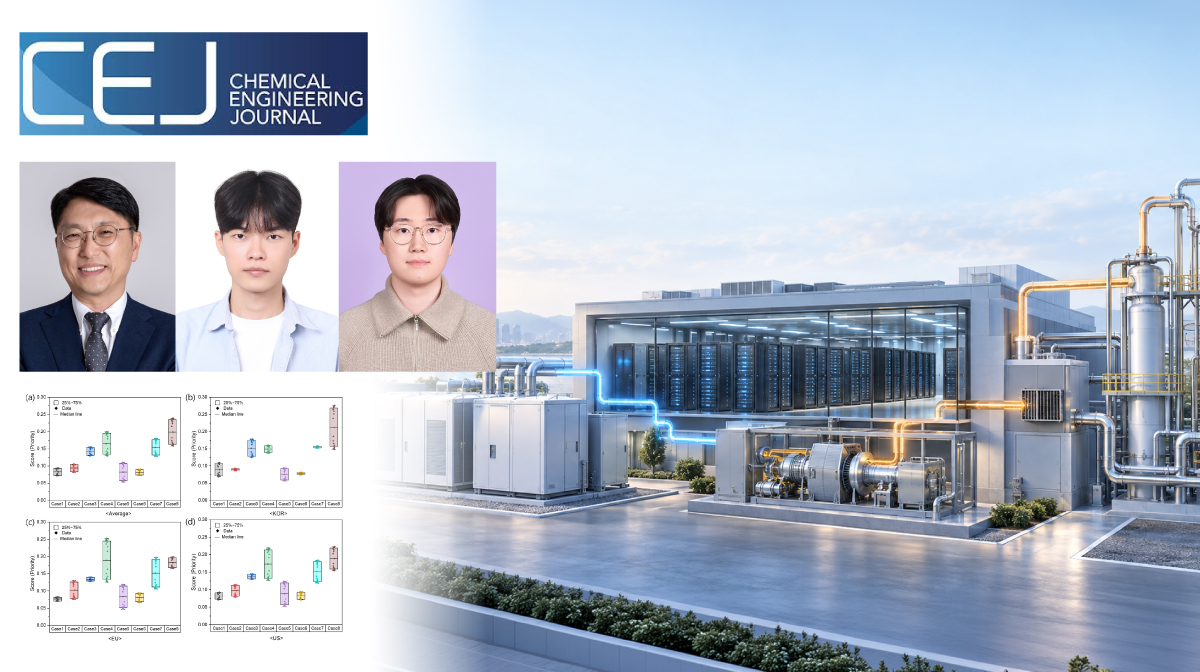
AI data centers consume enormous amounts of electricity—not only to run thousands of GPUs, but also to keep them cool. A new study suggests that recovering waste heat while integrating on-site power generation and carbon capture could substantially reduce both their cost and carbon footprint.
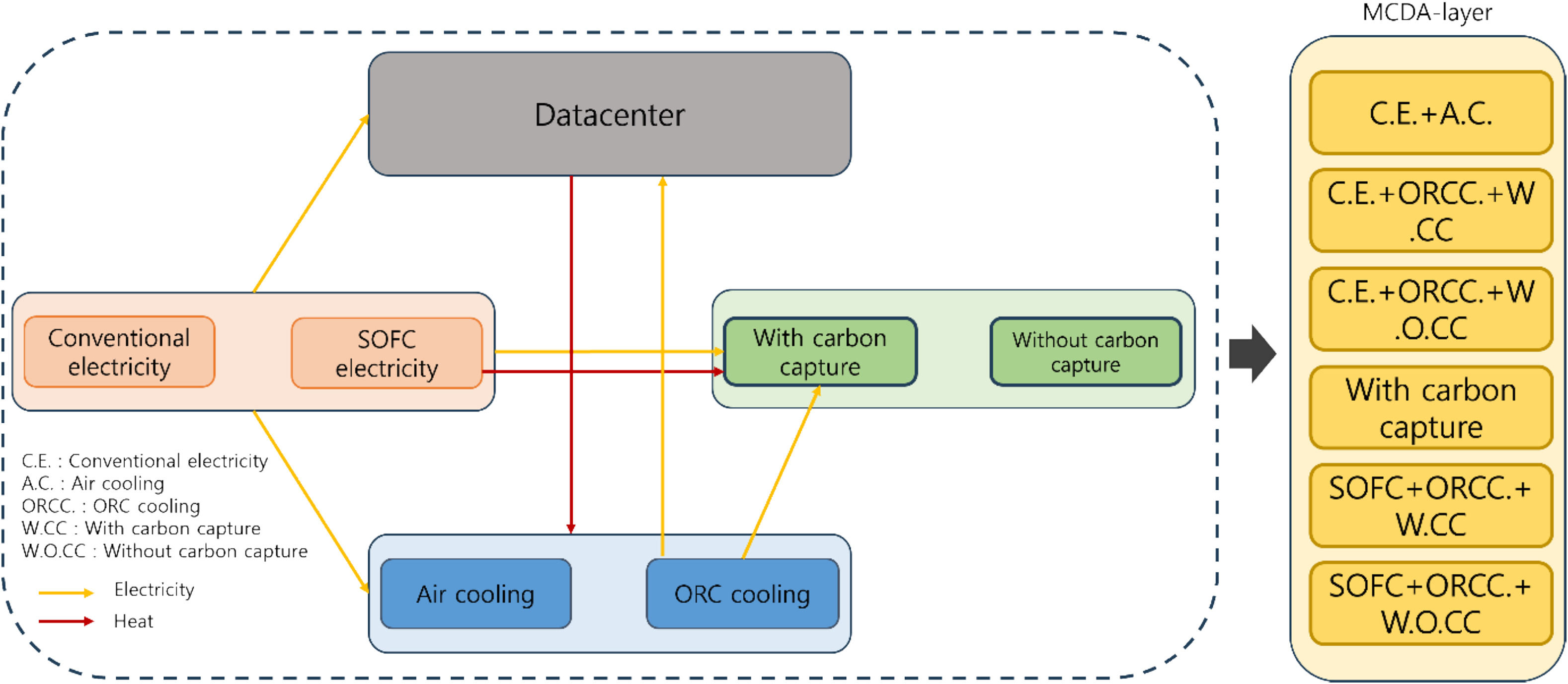
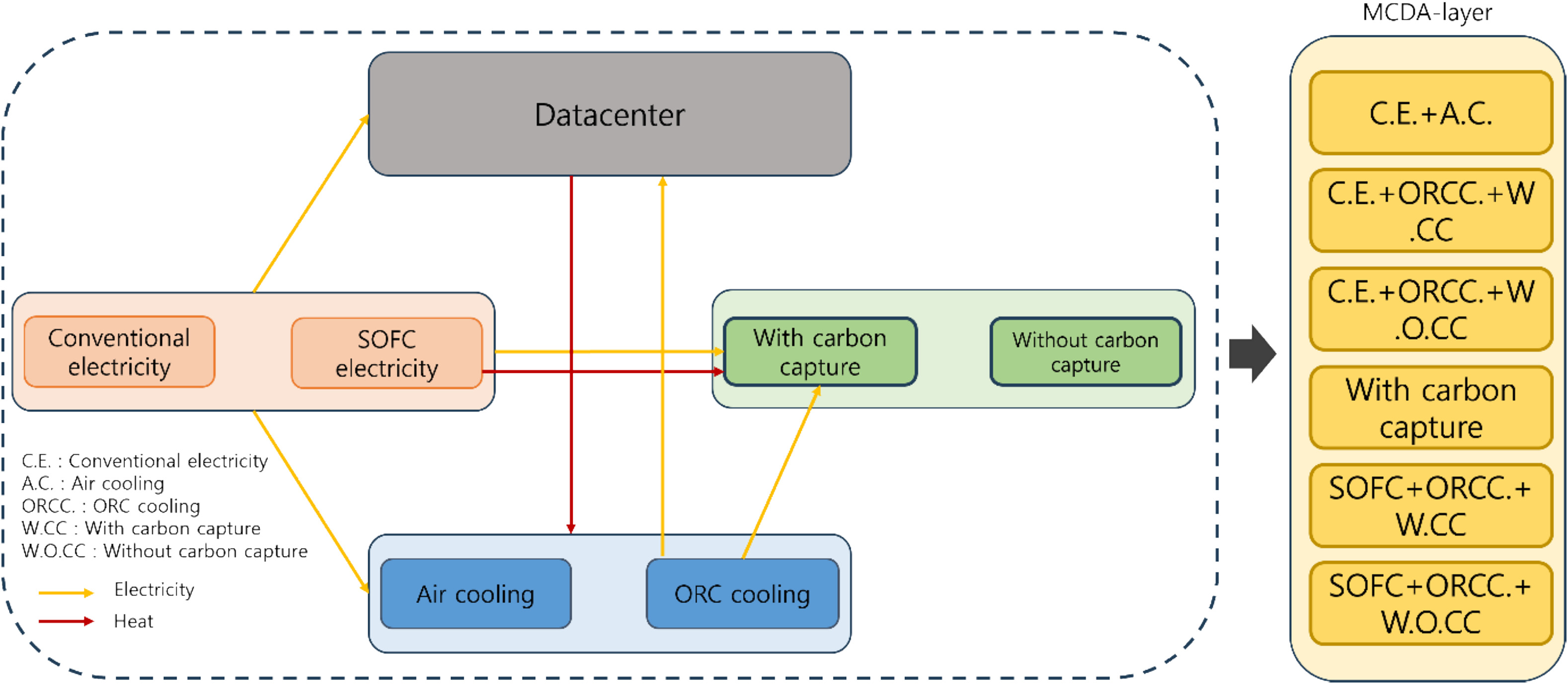
Led by Professor Hankwon Lim of the Graduate School of Carbon Neutrality at UNIST, a research team evaluated a data-center energy system combining solid oxide fuel cells (SOFCs), carbon capture, and organic Rankine cycle (ORC) cooling. Compared with a conventional grid-powered, air-cooled system, the proposed approach could reduce total system costs by approximately 48% and lifecycle greenhouse gas emissions by up to 72%.
The system puts waste heat to work in two ways. High-temperature heat from the fuel cells supplies energy for the carbon-capture process, while heat removed from servers is recovered through an ORC to generate additional electricity. This reduces both the energy required for cooling and the amount of electricity the data center must draw from the grid.

The researchers modeled a data center with 20,000 GPUs and compared eight combinations of power supply, cooling, and carbon capture using energy prices and electricity mixes in Korea, the United States, and the European Union. Across a broad range of cost and emissions priorities, the combination of SOFC power, carbon capture, and ORC cooling consistently ranked highest.
ORC cooling performed particularly well across all three regions, reducing annual cooling-related electricity costs by as much as $19 million. Lower electricity demand also cuts annual greenhouse gas emissions by an estimated 80,000 to 150,000 metric tons, potentially avoiding $5 million to $10 million in annual carbon costs under carbon-pricing schemes such as the EU Emissions Trading System.
The preferred source of electricity varied by region. Relatively inexpensive natural gas made SOFC generation economically attractive in the United States, while in Korea, where natural gas is more expensive, grid electricity remained more economical when cost was prioritized.
“As AI data centers expand, electricity supply, cooling, and carbon emissions need to be considered together,” said Donghyoun Lee from the Graduate School of Carbon Neutrality at UNIST. “Our analysis shows how power generation, waste-heat recovery, and carbon capture can be evaluated as a single energy system.”
“The best strategy will depend on local energy prices and the carbon intensity of electricity,” said Professor Lim. “This framework can help identify energy systems that balance cost and emissions for data centers of different sizes and in different regions.”
The findings of this study have been published online in Chemical Engineering Journal on August 14, 2026. The research was supported by the National Research Foundation of Korea (NRF) and the Ministry of Science and ICT (MSIT).
Journal Reference
Donghyoun Lee, JeHyeon Seong, and Hankwon Lim, "An integrated solution for data center power supply, thermal management, and carbon capture evaluated through a multi-criteria decision analysis framework," Chem. Eng. J., (2026).
Related Links
Related Photo


-
Reducing Charge Loss in Organic Photoanodes for Solar Water Splitting
-
AI Helps Spirulina Grow More Efficiently Across Climates
-
Innovative Scalable Electrochemical Approach for Transforming Waste Glycerol into Hydrogen and High-Value Chemicals
-
Advanced Interface Engineering for High-Performance Solar Cells and Green Hydrogen