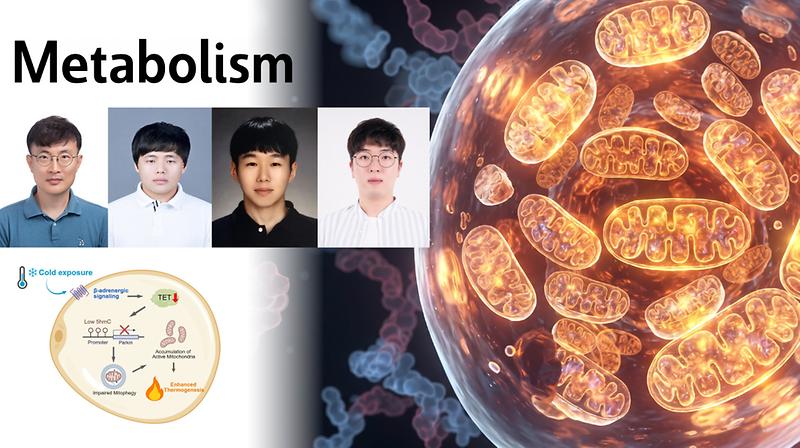
Cold-Sensitive Epigenetic Pathway Regulates Heat Production in Fat
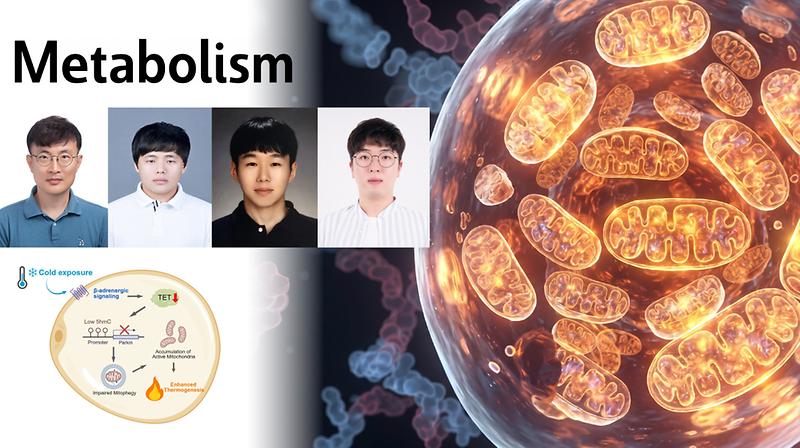
Abstract Adipose tissue thermogenesis is a major determinant of energy homeostasis, and its dysregulation contributes to obesity and metabolic disease. Parkin-mediated mitophagy is required for thermogenic adaptation, but the upstream mechanisms linking thermal cues to this pathway remain poorly defined. Here, we identify the ten-eleven translocation (TET) family of DNA dioxygenases as thermosensitive epigenetic regulators of Prkn transcription in adipocytes. Cold exposure coordinately suppressed TET expression and reduced global 5-hydroxymethylcytosine (5hmC) levels in white and brown adipose tissue through β-adrenergic signaling. Adipose-specific TET triple-knockout mice exhibited enhanced white fat begging, brown fat activation, increased energy expenditure, and improved cold tolerance. Transcriptomic network analysis identified Parkin as a key mitophagy node in TET-deficient adipose tissue. Consistent with this, loss of adipose TET reduced Parkin expression, impaired mitophagic flux, and promoted accumulation of metabolically active mitochondria with increased respiratory capacity. Mechanistically, TET proteins occupied the Prkn promoter and maintained a transcriptionally permissive state through catalytic conversion of 5-methylcytosine to 5hmC, whereas TET loss increased promoter methylation and suppressed Prkn expression. Re-expression of wild-type, but not catalytically inactive, Parkin largely normalized mitochondrial content and respiratory activity in TET-deficient adipocytes. Together, these findings define a thermosensitive TET-Parkin epigenetic axis that links environmental cold signals to mitochondrial quality control during adaptive thermogenesis. Cold exposure prompts fat cells to burn more energy and generate heat. Researchers at UNIST have identified a molecular pathway that helps these cells retain more mitochondria, sustaining their heat-producing capacity. Led by Professor Myunggon Ko of the Department of Biological Sciences at UNIST, the team found that TET proteins, a family of enzymes that regulate DNA modifications, control the expression of Parkin, a key protein involved in mitochondrial removal. When cold reduces TET levels in fat cells, Parkin levels also fall, allowing more metabolically active mitochondria to remain. Published in the July 2026 issue of Metabolism , their findings reveal a previously unknown link between environmental temperature and mitochondrial quality control in adipose tissue. White fat primarily stores excess energy, while brown fat burns energy to produce heat. Under cold conditions, some white fat cells can acquire heat-producing properties, becoming beige fat. This transition is accompanied by an increase in mitochondria, which supply the energy needed for heat production. The researchers found that cold suppresses TET expression in both white and brown adipose tissue through β-adrenergic signaling. Levels of 5-hydroxymethylcytosine (5hmC)—a DNA modification associated with TET activity—also decline. TET proteins normally act at the Prkn gene promoter, where they help maintain Parkin expression by converting 5-methylcytosine to 5hmC. When TET levels fall, methylation increases at the promoter and Parkin expression declines. Parkin plays a central role in mitophagy, the process cells use to selectively remove mitochondria. With less Parkin available, mitophagy slows, allowing more mitochondria to accumulate in fat cells. The effect was evident in mice lacking all three TET proteins specifically in adipose tissue. Compared with control mice, they showed increased becoming of white fat, greater brown-fat activation, higher energy expenditure, and better tolerance to cold. Their adipose tissue also contained less Parkin, along with increased mitochondrial DNA and proteins involved in cellular respiration. Cell-based experiments further confirmed Parkin's role in the pathway. Restoring functional Parkin in TET-deficient adipocytes largely returned mitochondrial abundance and oxygen consumption to normal levels, while a catalytically inactive form of Parkin did not. This showed that Parkin is a key link between TET activity and mitochondrial turnover. “Cold-induced increases in mitochondria and thermogenesis in adipose tissue have been well documented, but the upstream mechanism controlling these changes has remained unclear,” said Professor Ko. “Our findings identify TET proteins as part of that regulatory system and reveal how changes in Parkin-mediated mitochondrial turnover contribute to the thermogenic response.” Professor Ko added that understanding this pathway could inform future research into metabolic diseases such as obesity and type 2 diabetes, where increasing energy expenditure in adipose tissue has been explored as a potential therapeutic strategy. The study was supported by the Ministry of Science and ICT (MSIT) and the National Research Foundation of Korea (NRF), among other funding sources. Journal Reference Seongjun Byun, Chan Hyeong Lee, Kyumin Jang, et al., “A thermosensitive TET–Parkin epigenetic axis couples mitochondrial quality control to adaptive thermogenesis in adipose tissue,” Metabolism, (2026).
2026.08.12