UNIST site map
- Admissions
-
Academics
- Colleges and Schools
-
Academic Affairs
- Academic Calendar
- Academic Curriculum
- Requirements for Graduation
- Browse Open Courses
- Undergraduate Administration
-
Graduate Academic Affairs
- Tuition Fee Payment
- Academic Leave of Absence/ Academic Return
- Voluntary Withdrawal/ Expulsion
- Change of Major
- Change of Degree Program/ Dropping of Degree Program
- Class Period/ Attendance Period/ Academic Year・Semester
- Course Registration
- Course Drop
- Attendance/ Grade/ Exam
- Credit Transfer/ Credit Carryover
- Academic Forms
- Education Support
-
Research/Industry
- Research Aims
- Research Findings
- Researcher Search
-
Research Organizations
- UNIST Multi-Interdisciplinary Institute
- IBS Research Groups
-
UNIST Labs
- Department of Mechanical Engineering
- School of Energy and Chemical Engineering
- Department of Civil
- Department of Materials Science and Engineering
- Department of Nuclear Engineering
- Department of Industrial Engineering
- Department of Design
- Department of Biomedical Engineering
- Department of Biological Sciences
- Department of Electrical Engineering
- Department of Computer Science and Engineering
- Department of Mathematical Sciences
- Department of Chemistry
- Department of Physics
- School of Business Administration
- Graduate School of Carbon Neutrality
- Graduate School of Artificial Intelligence
- Research Support
- University-Industry Relations
- Campus Life
- News Center
- About UNIST
-
etc
- UNIST Bulletin
- Work-Life Balance Support System
- UNIST Gender Equality Plan
- Faculty Invitation for Tenure Track
- Faculty Invitation for Non-Tenure Track
- Board Meeting Minutes
- University Council Meeting Minutes
- Administrative Service Charter
- Privacy Policy
- Copyright Policy
- Rejection of Unauthorized Email Collection
- Operation and Management Policy for Video Information Processing Devices
- Information Disclosure


Connection Points of Knowledge, Everything About UNIST
Try searching.
Recommended search terms


- portal
- U Academics Innovation Center
- Leadership Center
- Dormitory
- Academic Information Center
- International Students Support
- Browse Open Courses
- Course Registration
- Graduation Requirements for Graduation
- Academic Leave of Absence/ Academic Return
- Military Service
- Certificate Issuance
- Academic Calendar
- Scholarships
- Campus Map
- Campus Life Guidebook
- Health Care Center
- Human Rights Center
- portal
- Job Opening
- Announcement for Bid
- UNIST AI Services
- UNIST Daycare Center
- Sports Center
- UI Downloads
- Announcement
- Recruitment of Professors (Non-tenure)
- Faculty Invitation for Tenure Track
- UNIST Academic Information Center
- Office of Research Facilities and Training
- Office of Research Affairs
- Rule Management System
- Academic Calendar


This is a collection of menus necessary for UNIST students .
students
- portal
- U Academics Innovation Center
- Leadership Center
- Dormitory
- Academic Information Center
- International Students Support
- Browse Open Courses
- Course Registration
- Graduation Requirements for Graduation
- Academic Leave of Absence/ Academic Return
- Military Service
- Certificate Issuance
- Academic Calendar
- Scholarships
- Campus Map
- Campus Life Guidebook
- Health Care Center
- Human Rights Center


This is a collection of menus necessary for prospective UNIST Students .
prospective Students


This is a collection of menus necessary for UNIST Faculty & Staff .
Faculty & Staff
- portal
- Job Opening
- Announcement for Bid
- UNIST AI Services
- UNIST Daycare Center
- Sports Center
- UI Downloads
- Announcement
- Recruitment of Professors (Non-tenure)
- Faculty Invitation for Tenure Track
- UNIST Academic Information Center
- Office of Research Facilities and Training
- Office of Research Affairs
- Rule Management System
- Academic Calendar


NEWS CENTER
Discover not only Research Findings and event news, but also the diverse facets of UNIST presented by reporters and writers.
News Center

UNIST News
Roll-to-Roll Manufacturing of Ruthenium-Loaded Carbon Fiber Electrodes for Efficient Hydrogen Production
The findings of this research were published in ACS Nano (Impact Factor: 16.1, Cite Score: 24.2) on May 7, 2026.
- Research
- JooHyeon Heo
- 2026.06.17
- 2232

Abstract
A research team affiliated with UNIST has introduced a scalable process to produce long-lasting, fiber-shaped electrodes for water electrolysis, paving the way for large-scale hydrogen production.
Professor Han Gi Chae of the Department of Materials Science and Engineering and Professor Jong-Beom Baek of the School of Energy and Chemical Engineering collaborated with Professor Cafer T. Yavuz at King Abdullah University of Science and Technology (KAUST).
Traditional electrodes rely on coating catalysts onto conductive substrates, often using binders that block active surfaces. In contrast, these new fibers act as both support and conductor, allowing water and electrolytes to flow freely and hydrogen to escape efficiently.
Central to this method is the embedding of ruthenium particles within the polymer fibers, resulting in improved catalyst dispersion and durability. By mixing a viscous polymer-Ru precursor and extruding it through a nozzle, the team produced continuous fibers. When heat-treated at 1200°C, these fibers develop a uniform distribution of catalytic nanoparticles inside and on the surface, preventing clumping and ensuring consistent activity.
Achieving this required precise control over the interaction between the Ru precursor and the polymer. The researchers optimized the conditions to maintain even dispersion during fiber formation. They further enhanced the surface exposure of catalytic sites through oxygen plasma treatment, significantly improving performance and stability.
Testing showed that these fibers could operate continuously for more than 170 hours at a high current density of 500 mA/cm² without degradation. Their catalytic activity surpassed that of conventional platinum electrodes, highlighting their potential for practical applications.
The study was primarily led by Dr. Ga-Hyeun Lee from UNIST and Professor Seok-Jin Kim from KAUST, who served as the first authors, with researcher Inkyung Baek contributing as a co-author. This research offers new insights into the microstructural evolution of metal-polymer nanocomposites and demonstrates a scalable approach to fabricating fiber electrodes for efficient hydrogen production.
Professor Chae noted, “Embedding metal catalysts uniformly within carbon fibers enhances electrode stability. This technique could extend beyond water electrolysis to other catalytic systems where durability and uniform reactivity are crucial.”
The research was published in ACS Nano (Impact Factor: 16.1, Cite Score: 24.2)Impact Factor: 16.1, Cite Score: 24.2) on May 7, and supported by the Ministry of Science and ICT (MSIT), the Ministry of Education (MOE), and the National Research Foundation of Korea (NRF).
Journal Reference
Ga-Hyeun Lee, Seok-Jin Kim, Jung-Eun Lee , et al., “Rheological Pathways to a Scalable Ruthenium Nuclei-Anchored Carbon Fiber Catalyst,” ACS Nano, (2026).
Related Links


-
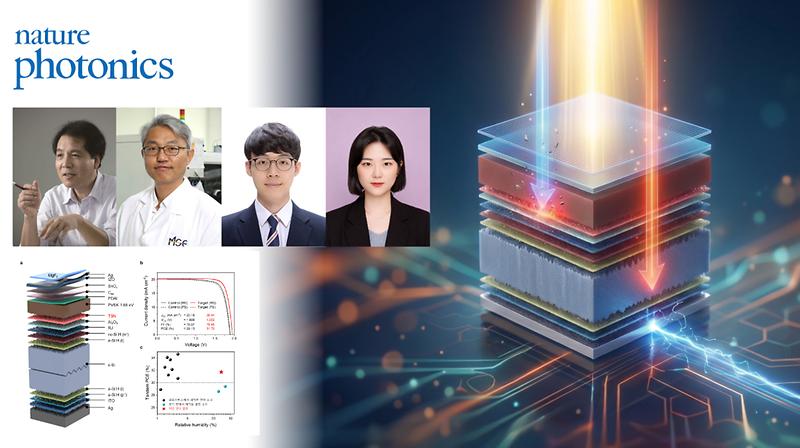
Game-Changing Interface Coating Enables Scalable, High-Efficiency Perovskite/Silicon Solar Cells
-
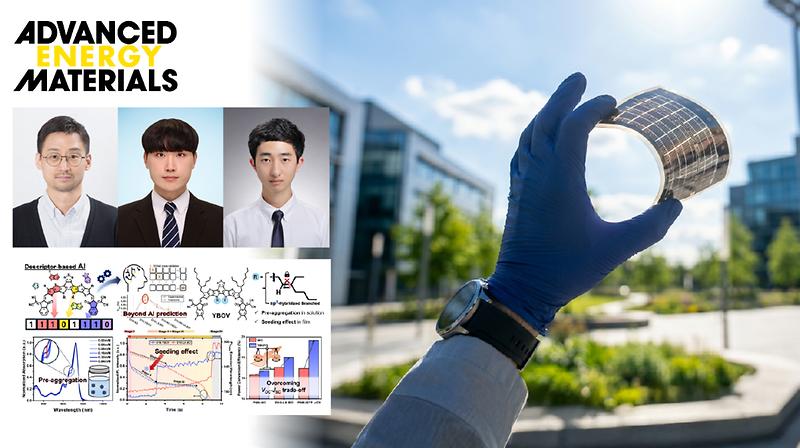
New Research Reveals High-Performance Organic Solar Cells Surpassing AI Predictions
-
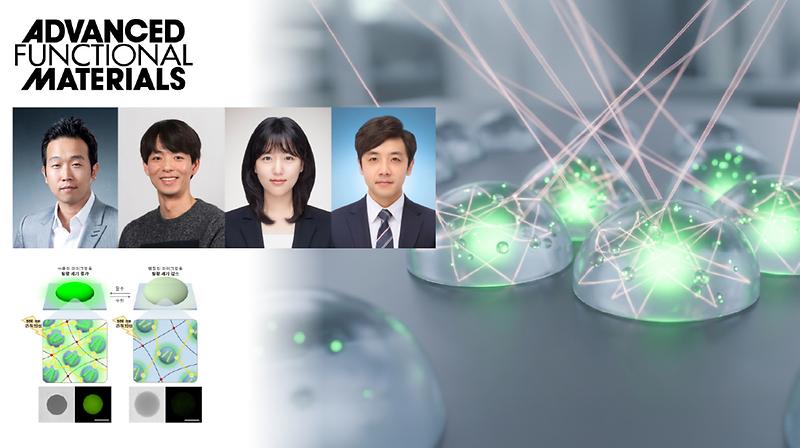
New Study Unveils Water-Responsive Luminescent Material
-
New Study Uncovers Current-Driven Spin Polarization in Chiral Nanowires