UNIST site map
- Admissions
-
Academics
- Colleges and Schools
-
Academic Affairs
- Academic Calendar
- Academic Curriculum
- Requirements for Graduation
- Browse Open Courses
- Undergraduate Administration
-
Graduate Academic Affairs
- Tuition Fee Payment
- Academic Leave of Absence/ Academic Return
- Voluntary Withdrawal/ Expulsion
- Change of Major
- Change of Degree Program/ Dropping of Degree Program
- Class Period/ Attendance Period/ Academic Year・Semester
- Course Registration
- Course Drop
- Attendance/ Grade/ Exam
- Credit Transfer/ Credit Carryover
- Academic Forms
- Education Support
-
Research/Industry
- Research Aims
- Research Findings
- Researcher Search
-
Research Organizations
- UNIST Multi-Interdisciplinary Institute
- IBS Research Groups
-
UNIST Labs
- Department of Mechanical Engineering
- School of Energy and Chemical Engineering
- Department of Civil
- Department of Materials Science and Engineering
- Department of Nuclear Engineering
- Department of Industrial Engineering
- Department of Design
- Department of Biomedical Engineering
- Department of Biological Sciences
- Department of Electrical Engineering
- Department of Computer Science and Engineering
- Department of Mathematical Sciences
- Department of Chemistry
- Department of Physics
- School of Business Administration
- Graduate School of Carbon Neutrality
- Graduate School of Artificial Intelligence
- Research Support
- University-Industry Relations
- Campus Life
- News Center
- About UNIST
-
etc
- UNIST Bulletin
- Work-Life Balance Support System
- UNIST Gender Equality Plan
- Faculty Invitation for Tenure Track
- Faculty Invitation for Non-Tenure Track
- Board Meeting Minutes
- University Council Meeting Minutes
- Administrative Service Charter
- Privacy Policy
- Copyright Policy
- Rejection of Unauthorized Email Collection
- Operation and Management Policy for Video Information Processing Devices
- Information Disclosure


Connection Points of Knowledge, Everything About UNIST
Try searching.
Recommended search terms


- portal
- U Academics Innovation Center
- Leadership Center
- Dormitory
- Academic Information Center
- International Students Support
- Browse Open Courses
- Course Registration
- Graduation Requirements for Graduation
- Academic Leave of Absence/ Academic Return
- Military Service
- Certificate Issuance
- Academic Calendar
- Scholarships
- Campus Map
- Campus Life Guidebook
- Health Care Center
- Human Rights Center
- portal
- Job Opening
- Announcement for Bid
- UNIST AI Services
- UNIST Daycare Center
- Sports Center
- UI Downloads
- Announcement
- Recruitment of Professors (Non-tenure)
- Faculty Invitation for Tenure Track
- UNIST Academic Information Center
- Office of Research Facilities and Training
- Office of Research Affairs
- Rule Management System
- Academic Calendar


This is a collection of menus necessary for UNIST students .
students
- portal
- U Academics Innovation Center
- Leadership Center
- Dormitory
- Academic Information Center
- International Students Support
- Browse Open Courses
- Course Registration
- Graduation Requirements for Graduation
- Academic Leave of Absence/ Academic Return
- Military Service
- Certificate Issuance
- Academic Calendar
- Scholarships
- Campus Map
- Campus Life Guidebook
- Health Care Center
- Human Rights Center


This is a collection of menus necessary for prospective UNIST Students .
prospective Students


This is a collection of menus necessary for UNIST Faculty & Staff .
Faculty & Staff
- portal
- Job Opening
- Announcement for Bid
- UNIST AI Services
- UNIST Daycare Center
- Sports Center
- UI Downloads
- Announcement
- Recruitment of Professors (Non-tenure)
- Faculty Invitation for Tenure Track
- UNIST Academic Information Center
- Office of Research Facilities and Training
- Office of Research Affairs
- Rule Management System
- Academic Calendar


NEWS CENTER
Discover not only Research Findings and event news, but also the diverse facets of UNIST presented by reporters and writers.
News Center

UNIST News
New Study Unveils Water-Responsive Luminescent Material
The findings of this research have been published in Advanced Functional Materials on April 20, 2026.
- Research
- JooHyeon Heo
- 2026.05.22
- 70
Abstract
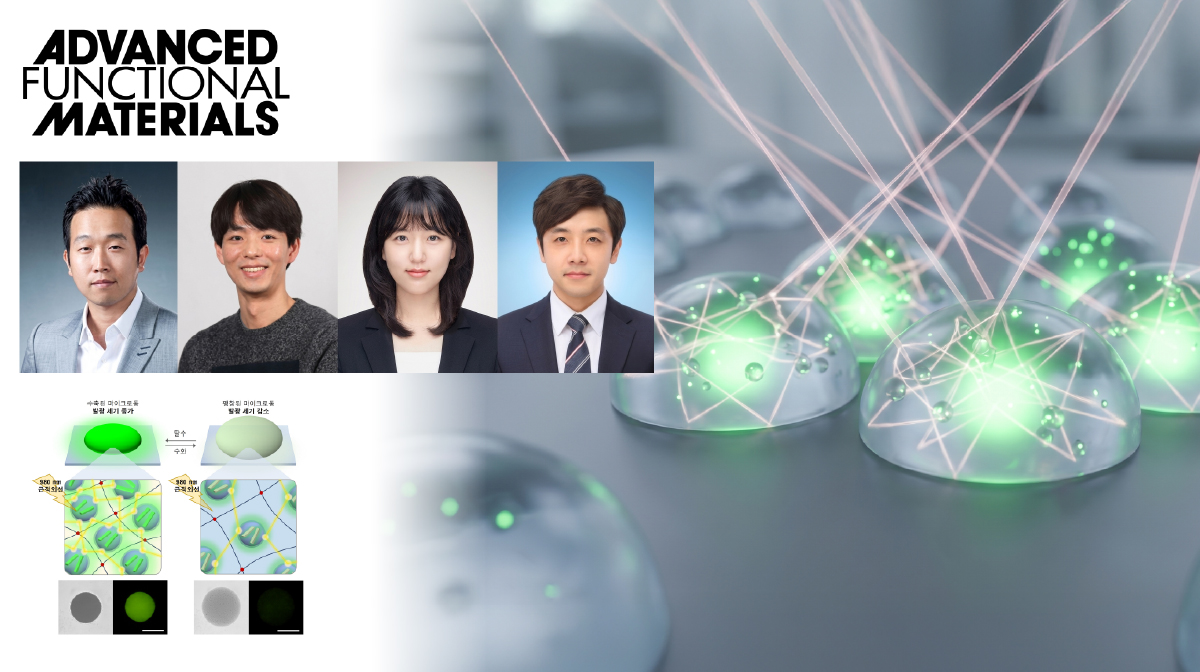
Researchers at UNIST have created a new material that dims when it absorbs moisture. This innovation could lead to water-sensitive security features, humidity sensors, and environmental-reactive displays.
Led by Professor Jiseok Lee from the School of Energy and Chemical Engineering and Professor Jung-Hoon Park from the Department of Biomedical Engineering, the team developed a hydrogel with embedded upconversion nanocrystals (UCNs). When dry, the material glows more than seven times brighter than when wet.
The core design involves oil droplets trapped inside a hydrogel dome. When near-infrared (NIR) light hits the nanocrystals, they emit visible light. In this structure, scattering within the oil droplets traps the light, boosting brightness. When the hydrogel absorbs water, its internal scattering drops, and the glow fades.
The team demonstrated how this material can hide and reveal information. In one test, a hidden pattern beneath the hydrogel becomes visible only when water is applied, as the glow weakens. They also created QR codes that are scannable when dry but vanish when wet, making them useful for anti-counterfeiting.
Durability stood out. The material retained consistent brightness over 100 wet-dry cycles, with less than 4% variation. It responds rapidly—within 0.1 seconds—fading visibly in seconds after contact with water.
Lead author Chaeyeong Ryu said, “We improved brightness by designing the light pathways inside the hydrogel, without changing the nanocrystals. This makes the material ideal for moisture-triggered devices.”
Professor Lee added, “The ability to program the color and pattern of the hydrogel microdome, combined with simple manufacturing, opens new paths for security, sensors, and displays across industries.”
The findings of this research have been published in Advanced Functional Materials on April 20, 2026. This work was supported by the National Research Foundation of Korea (NRF) and the Ministry of Science and ICT (MSIT).
Journal Reference
Chaeyeong Ryu, Byungcheon Yoo, Seunghun Lee, et al., "Speckle-Engineered Upconversion Amplification in Nanoemulsion-Templated Hydrogel Microdomes," Adv. Funct. Mater., (2026).
Related Links



-
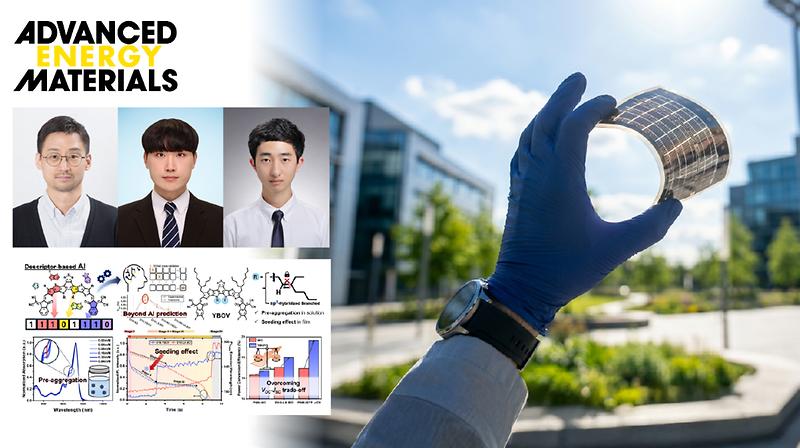
New Research Reveals High-Performance Organic Solar Cells Surpassing AI Predictions
-
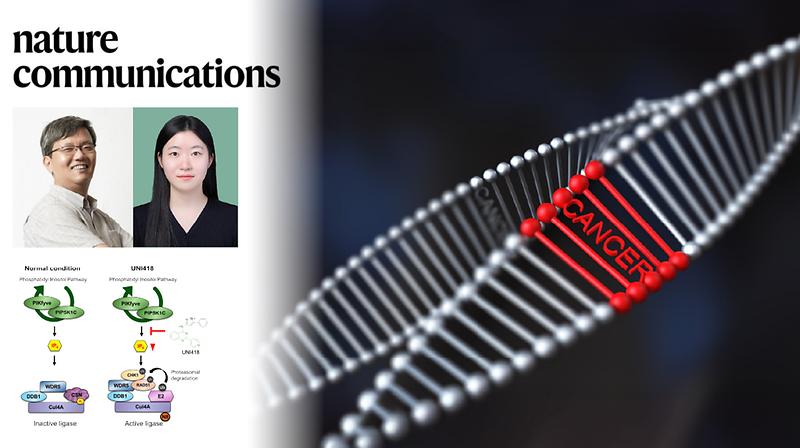
Scientists Discover a New Way to Make Drug-Resistant Cancer Treatable Again
-
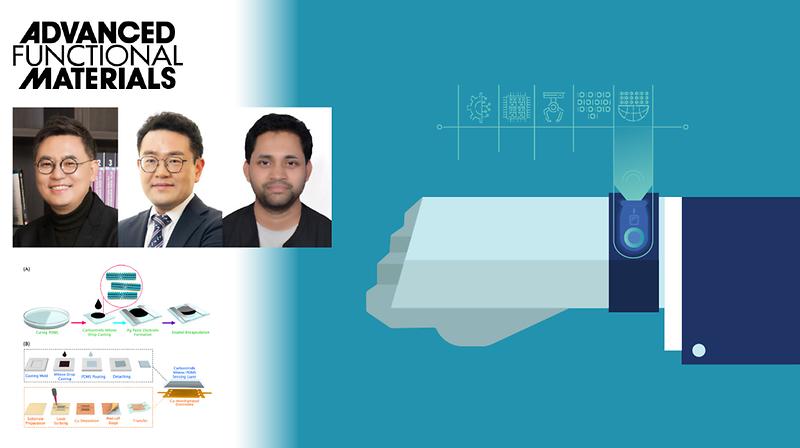
Ultra-Sensitive Wearable MXene Sensor for Real-Time Human-Machine Interfaces
-
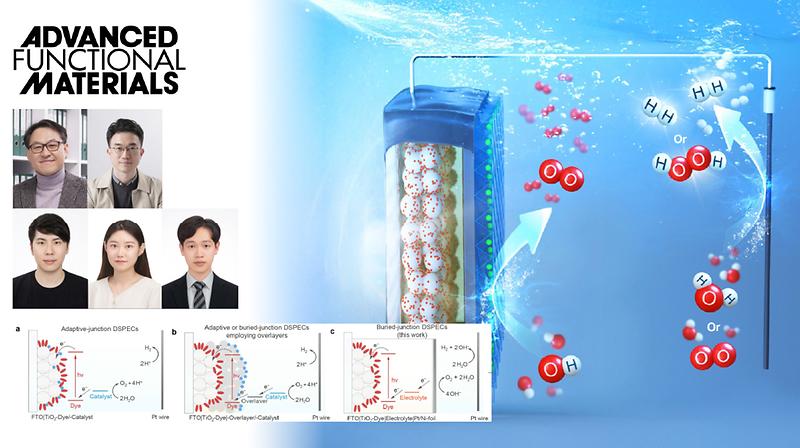
New Study Unveils High-Performance Dye-Sensitized Electrode for Artificial Photosynthesis