UNIST site map
- Admissions
-
Academics
- Colleges and Schools
-
Academic Affairs
- Academic Calendar
- Academic Curriculum
- Requirements for Graduation
- Browse Open Courses
- Undergraduate Administration
-
Graduate Academic Affairs
- Tuition Fee Payment
- Academic Leave of Absence/ Academic Return
- Voluntary Withdrawal/ Expulsion
- Change of Major
- Change of Degree Program/ Dropping of Degree Program
- Class Period/ Attendance Period/ Academic Year・Semester
- Course Registration
- Course Drop
- Attendance/ Grade/ Exam
- Credit Transfer/ Credit Carryover
- Academic Forms
- Education Support
-
Research/Industry
- Research Aims
- Research Findings
- Researcher Search
-
Research Organizations
- UNIST Multi-Interdisciplinary Institute
- IBS Research Groups
-
UNIST Labs
- Department of Mechanical Engineering
- School of Energy and Chemical Engineering
- Department of Civil
- Department of Materials Science and Engineering
- Department of Nuclear Engineering
- Department of Industrial Engineering
- Department of Design
- Department of Biomedical Engineering
- Department of Biological Sciences
- Department of Electrical Engineering
- Department of Computer Science and Engineering
- Department of Mathematical Sciences
- Department of Chemistry
- Department of Physics
- School of Business Administration
- Graduate School of Carbon Neutrality
- Graduate School of Artificial Intelligence
- Research Support
- University-Industry Relations
- Campus Life
- News Center
- About UNIST
-
etc
- UNIST Bulletin
- Work-Life Balance Support System
- UNIST Gender Equality Plan
- Faculty Invitation for Tenure Track
- Faculty Invitation for Non-Tenure Track
- Board Meeting Minutes
- University Council Meeting Minutes
- Administrative Service Charter
- Privacy Policy
- Copyright Policy
- Rejection of Unauthorized Email Collection
- Operation and Management Policy for Video Information Processing Devices
- Information Disclosure


Connection Points of Knowledge, Everything About UNIST
Try searching.
Recommended search terms


- portal
- U Academics Innovation Center
- Leadership Center
- Dormitory
- Academic Information Center
- International Students Support
- Browse Open Courses
- Course Registration
- Graduation Requirements for Graduation
- Academic Leave of Absence/ Academic Return
- Military Service
- Certificate Issuance
- Academic Calendar
- Scholarships
- Campus Map
- Campus Life Guidebook
- Health Care Center
- Human Rights Center
- portal
- Job Opening
- Announcement for Bid
- UNIST AI Services
- UNIST Daycare Center
- Sports Center
- UI Downloads
- Announcement
- Recruitment of Professors (Non-tenure)
- Faculty Invitation for Tenure Track
- UNIST Academic Information Center
- Office of Research Facilities and Training
- Office of Research Affairs
- Rule Management System
- Academic Calendar


This is a collection of menus necessary for UNIST students .
students
- portal
- U Academics Innovation Center
- Leadership Center
- Dormitory
- Academic Information Center
- International Students Support
- Browse Open Courses
- Course Registration
- Graduation Requirements for Graduation
- Academic Leave of Absence/ Academic Return
- Military Service
- Certificate Issuance
- Academic Calendar
- Scholarships
- Campus Map
- Campus Life Guidebook
- Health Care Center
- Human Rights Center


This is a collection of menus necessary for prospective UNIST Students .
prospective Students


This is a collection of menus necessary for UNIST Faculty & Staff .
Faculty & Staff
- portal
- Job Opening
- Announcement for Bid
- UNIST AI Services
- UNIST Daycare Center
- Sports Center
- UI Downloads
- Announcement
- Recruitment of Professors (Non-tenure)
- Faculty Invitation for Tenure Track
- UNIST Academic Information Center
- Office of Research Facilities and Training
- Office of Research Affairs
- Rule Management System
- Academic Calendar


NEWS CENTER
Discover not only Research Findings and event news, but also the diverse facets of UNIST presented by reporters and writers.
News Center

UNIST News
New Electrode Converts CO2 into Chemicals While Generating Electricity
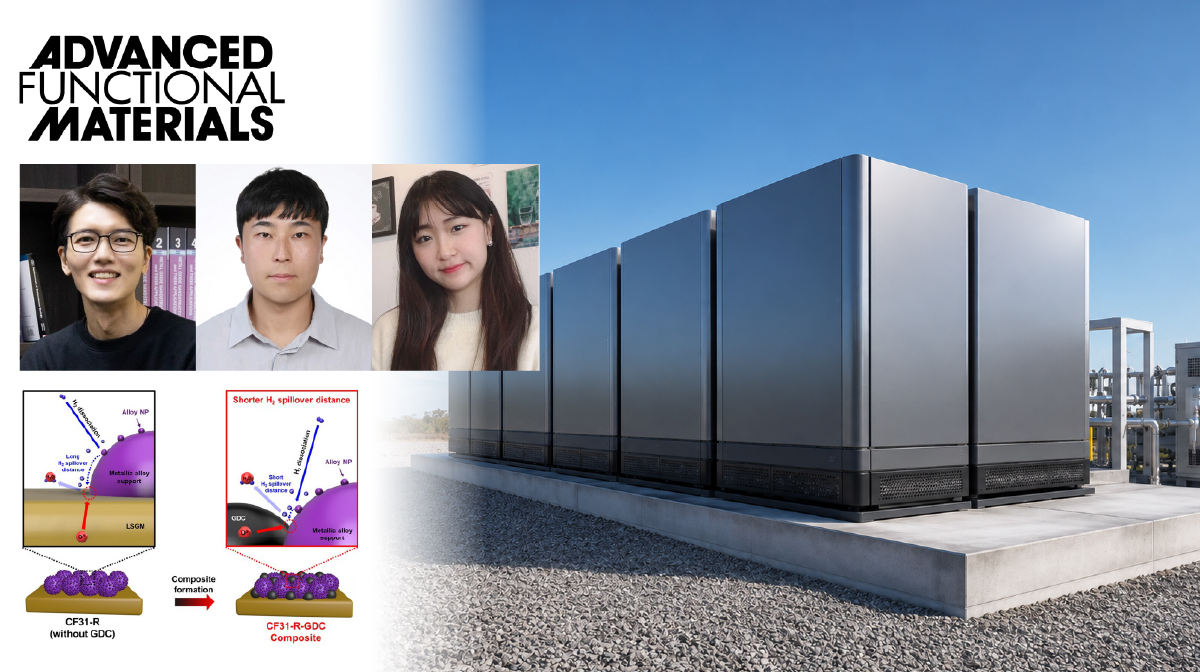
The findings of this research were published in Advanced Functional Materials on April 16, 2026.
- Research
- JooHyeon Heo
- 2026.05.15
- 26
Abstract
A research team affiliated with UNIST has unveiled a novel electrode material that significantly enhances the performance and stability of high-temperature electrochemical devices capable of converting carbon dioxide (CO2) into valuable chemicals while simultaneously generating electricity.
Led by Professor Seungho Cho of the Department of Materials Science and Engineering at UNIST, the team collaborated with researchers from POSTECH, Seoul National University, and Nanjing University of Information Science and Technology (NUIST) to develop a metal-supported solid oxide cell (SOC) electrode utilizing layered double hydroxides (LDHs). This innovative design sustains high efficiency at temperatures exceeding 700°C, effectively addressing longstanding stability challenges associated with conventional ceramic-supported electrodes.
The new electrode achieved a maximum power density of 1.57 W/cm² at 800°C—approximately 50% higher than existing solutions—and demonstrated stable operation over 200 hours during CO2 reduction to carbon monoxide. Its all-metal construction ensures resilience against thermal degradation, a common obstacle in high-temperature applications.
This breakthrough leverages the distinctive properties of LDHs, layered materials containing uniformly dispersed cobalt and iron ions. Through controlled thermal processing, the researchers induced phase transformations that facilitate the formation of metal-metal junctions and promote the exsolution of catalytic nanoparticles. These processes effectively alleviate interfacial strain and significantly enhance durability.
In addition, the incorporation of gadolinium-doped ceria (GDC) further optimized oxygen ion transport, thereby improving overall electrochemical performance.
The research team noted, “Reducing electrode replacement lowers operational costs and accelerates the deployment of clean energy technologies. Our approach offers a versatile pathway toward sustainable fuel and chemical production from CO2.”
They further stated, "This study pioneers the high-temperature application of layered double hydroxides in solid oxide electrodes—an advancement with far-reaching implications for energy efficiency and environmental sustainability."
Contributing researchers include Hyunmin Kim (currently at Stanford University), Yoon Seo Kim (currently at Korea Institute of Science and Technology), and Hwakyoung Seo from Seoul National University, as first authors. The findings were published in Advanced Functional Materials on April 16, 2026. This research was supported by the InnoCORE program of UNIST and the National Research Foundation of Korea (NRF).
Journal Reference
Hyunmin Kim, Zhengyu Wu, Yoon Seo Kim, et al., "Engineering Metal-Metal Junctions from Layered Double Hydroxide Frameworks for High-Rate Solid Oxide Cells," (2026).
Related Links



-
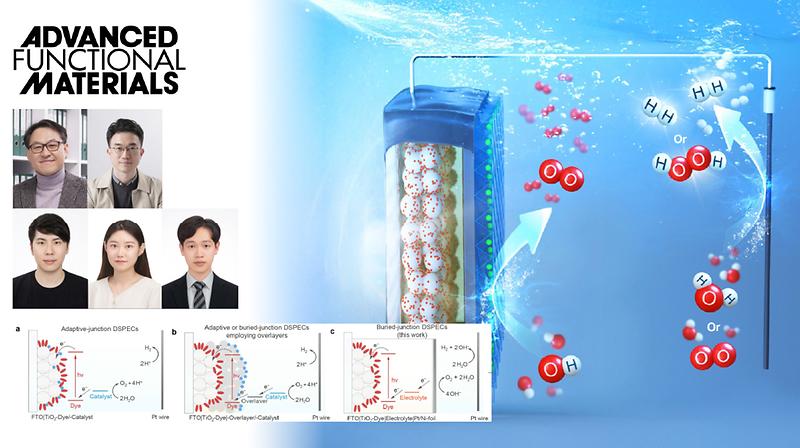
New Study Unveils High-Performance Dye-Sensitized Electrode for Artificial Photosynthesis
-
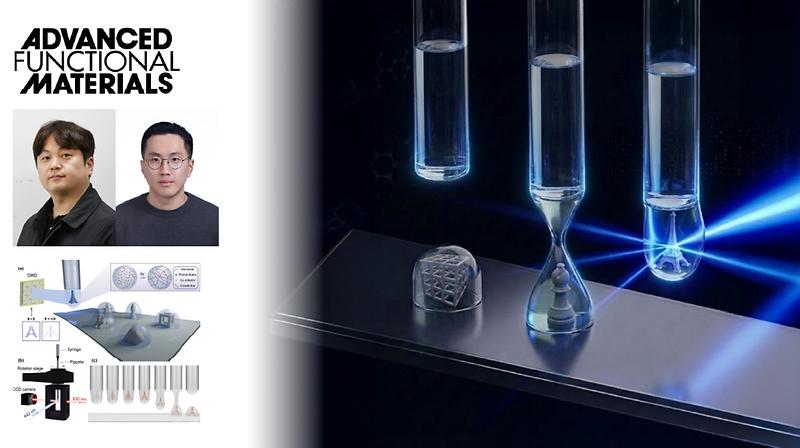
Ultrafast 3D Microfabrication Technology Produces Complex Structures in Just 60 Seconds
-
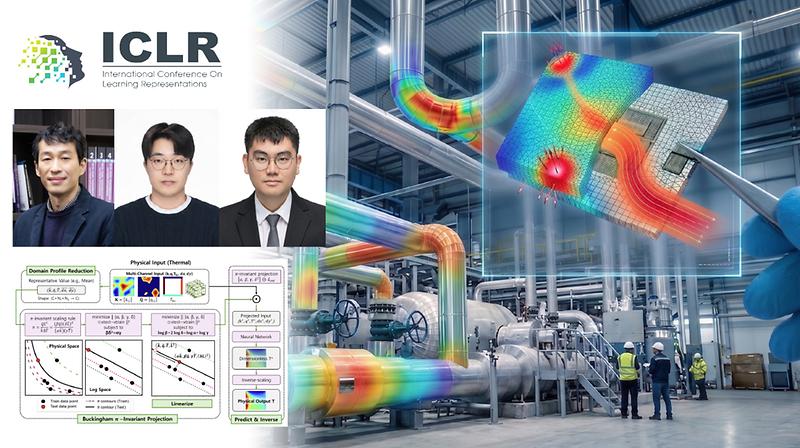
New AI Algorithm to Enhance Accuracy of Thermal and Stress Predictions in Semiconductors
-
UNIST Unveils Smart Contact Lens with Meniscus Pixel Printing for Vision-Based Robotic Control