UNIST site map
- Admissions
-
Academics
- Colleges and Schools
-
Academic Affairs
- Academic Calendar
- Academic Curriculum
- Requirements for Graduation
- Browse Open Courses
- Undergraduate Administration
-
Graduate Academic Affairs
- Tuition Fee Payment
- Academic Leave of Absence/ Academic Return
- Voluntary Withdrawal/ Expulsion
- Change of Major
- Change of Degree Program/ Dropping of Degree Program
- Class Period/ Attendance Period/ Academic Year・Semester
- Course Registration
- Course Drop
- Attendance/ Grade/ Exam
- Credit Transfer/ Credit Carryover
- Academic Forms
- Education Support
-
Research/Industry
- Research Aims
- Research Findings
- Researcher Search
-
Research Organizations
- UNIST Multi-Interdisciplinary Institute
- IBS Research Groups
-
UNIST Labs
- Department of Mechanical Engineering
- School of Energy and Chemical Engineering
- Department of Civil
- Department of Materials Science and Engineering
- Department of Nuclear Engineering
- Department of Industrial Engineering
- Department of Design
- Department of Biomedical Engineering
- Department of Biological Sciences
- Department of Electrical Engineering
- Department of Computer Science and Engineering
- Department of Mathematical Sciences
- Department of Chemistry
- Department of Physics
- School of Business Administration
- Graduate School of Carbon Neutrality
- Graduate School of Artificial Intelligence
- Research Support
- University-Industry Relations
- Campus Life
- News Center
- About UNIST
-
etc
- UNIST Bulletin
- Work-Life Balance Support System
- UNIST Gender Equality Plan
- Faculty Invitation for Tenure Track
- Faculty Invitation for Non-Tenure Track
- Board Meeting Minutes
- University Council Meeting Minutes
- Administrative Service Charter
- Privacy Policy
- Copyright Policy
- Rejection of Unauthorized Email Collection
- Operation and Management Policy for Video Information Processing Devices
- Information Disclosure


Connection Points of Knowledge, Everything About UNIST
Try searching.
Recommended search terms


- portal
- U Academics Innovation Center
- Leadership Center
- Dormitory
- Academic Information Center
- International Students Support
- Browse Open Courses
- Course Registration
- Graduation Requirements for Graduation
- Academic Leave of Absence/ Academic Return
- Military Service
- Certificate Issuance
- Academic Calendar
- Scholarships
- Campus Map
- Campus Life Guidebook
- Health Care Center
- Human Rights Center
- portal
- Job Opening
- Announcement for Bid
- UNIST AI Services
- UNIST Daycare Center
- Sports Center
- UI Downloads
- Announcement
- Recruitment of Professors (Non-tenure)
- Faculty Invitation for Tenure Track
- UNIST Academic Information Center
- Office of Research Facilities and Training
- Office of Research Affairs
- Rule Management System
- Academic Calendar


This is a collection of menus necessary for UNIST students .
students
- portal
- U Academics Innovation Center
- Leadership Center
- Dormitory
- Academic Information Center
- International Students Support
- Browse Open Courses
- Course Registration
- Graduation Requirements for Graduation
- Academic Leave of Absence/ Academic Return
- Military Service
- Certificate Issuance
- Academic Calendar
- Scholarships
- Campus Map
- Campus Life Guidebook
- Health Care Center
- Human Rights Center


This is a collection of menus necessary for prospective UNIST Students .
prospective Students


This is a collection of menus necessary for UNIST Faculty & Staff .
Faculty & Staff
- portal
- Job Opening
- Announcement for Bid
- UNIST AI Services
- UNIST Daycare Center
- Sports Center
- UI Downloads
- Announcement
- Recruitment of Professors (Non-tenure)
- Faculty Invitation for Tenure Track
- UNIST Academic Information Center
- Office of Research Facilities and Training
- Office of Research Affairs
- Rule Management System
- Academic Calendar


NEWS CENTER
Discover not only Research Findings and event news, but also the diverse facets of UNIST presented by reporters and writers.
News Center

UNIST News
Re‑Engineering the Future: For A More Resilience World
From sensing technologies to planetary-scale science, UNIST designs systems that adapt, recover, and endure.
- Research
- JooHyeon Heo
- 2026.05.01
- 178
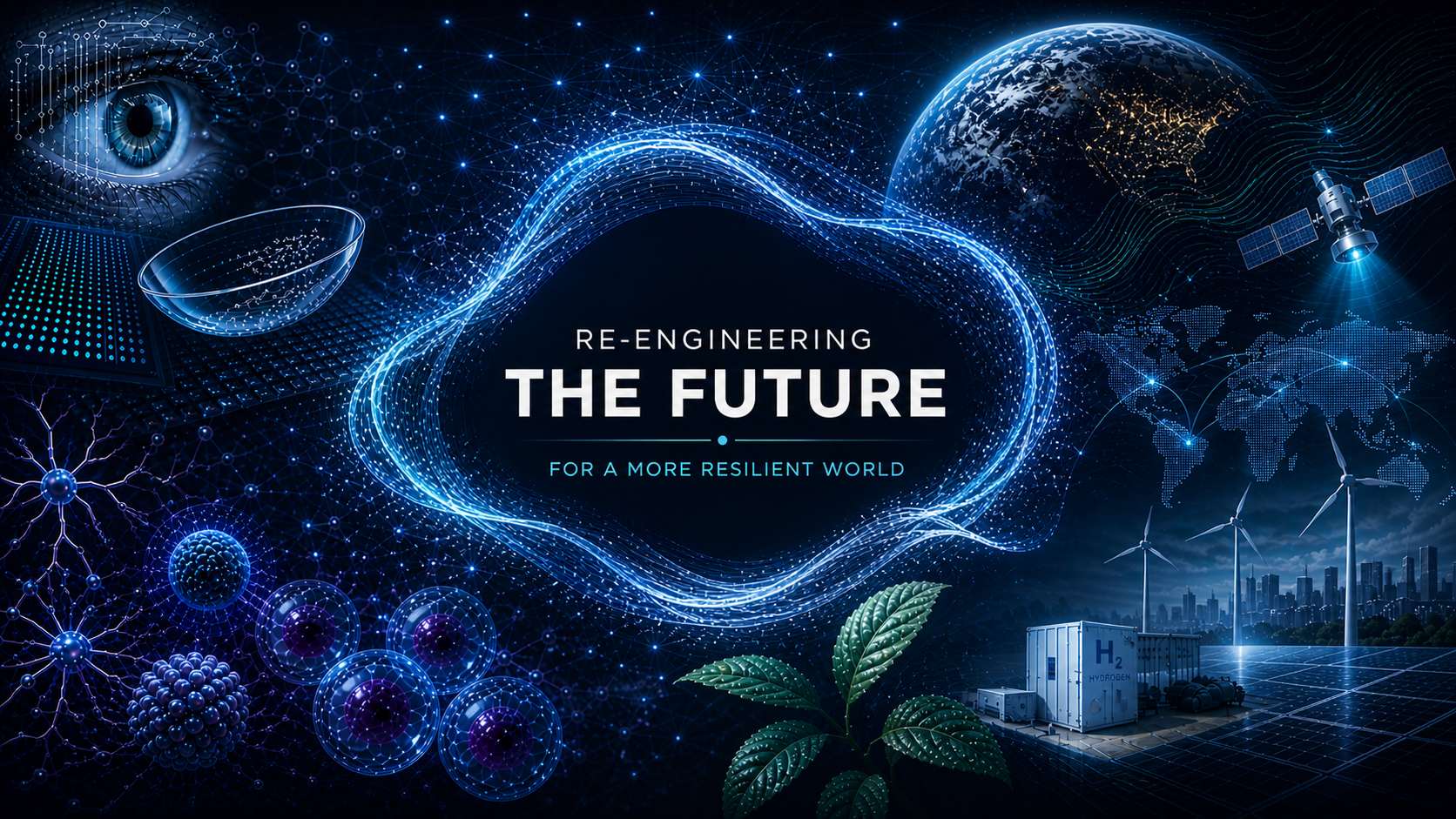
《 Editor's Note: Across fields that range from energy engineering to quantum physics, UNIST researchers share a common aim: redesigning the systems that sustain life and technology. Their latest work—converting solar‑panel waste into clean hydrogen, restoring vision through nanomedicine, and decoding the feedback loops driving global wildfires—positions science not merely as discovery, but as a blueprint for resilience.》
Sensing the Future
From visions that steer robots to displays sharper than reality, UNIST researchers are redefining how machines interpret the human world. A smart contact lens equipped with AI‑driven sensors enables vision‑based robotic control, while a new quantum‑dot technique achieves over 4,000 pixels per inch—paving the way for ultra‑compact extended‑reality glasses. On a different frontier, three papers accepted to ICLR 2026 show the university's rising influence in reinforcement learning, advancing physical AI systems that learn directly from their environments. Together, these studies represent technology that doesn't just emulate perception—it extends it.
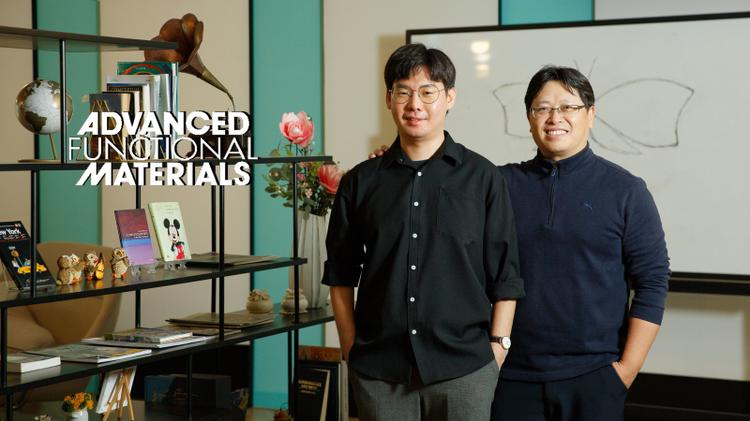
• Smart Contact Lens for Vision-Based Robotic Control (Adv. Funct. Mater. l Mar., 2026)
• Breakthrough QD Display with 4,000 PPI Resolution (Nat. Commun. l Mar., 2026)
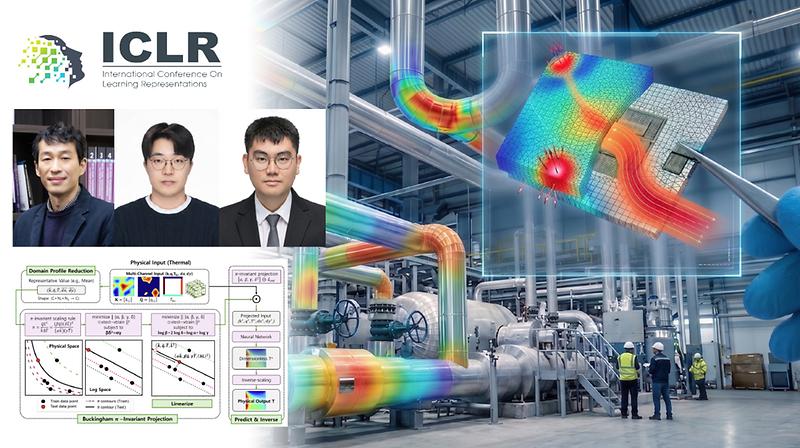
• Three Research Papers Accepted to ICLR 2026
Circulating Energy
What if waste could power the next energy revolution? Two separate breakthroughs at UNIST bring that vision closer. One process converts end‑of‑life solar panels into high‑purity hydrogen and silica using mechanochemical reactions; Another turns industrial glycerol into hydrogen and value‑added chemicals through a scalable electrochemical system. Both replace extraction with regeneration, showing how circular design can meet industrial scale without environmental cost. This emerging “loop thinking” is central to UNIST's broader push toward a sustainable hydrogen economy.
• Solar Panel Waste into H2 and High-Value Silica (Joule l Mar., 2026)
• Turning Waste Glycerol into H2 and High-Value Chemicals (Joule l Mar., 2026)
Healing Systems
At the intersection of biology and environment, UNIST scientists are uncovering how systems heal themselves. A nanomedicine platform that selectively removes aging retinal cells restores vision in degenerative models, while another study reveals how alcohol and immune signaling interact to amplify liver damage—insights that could guide future therapies. On a planetary scale, researchers have identified a climate “regime shift” behind Australia's increasing wildfire intensity and developed AI frameworks for real‑time multilevel air‑pollution prediction. From cells to climate, the common thread is understanding how complex networks can recover balance.
• Targeted Nanoparticles Aging Retinal Cells (Nat. Commun. l Mar., 2026)
• Alcohol Amplifies Liver Damage During Illness (Sci. Adv. l Apr., 2026)
• Climate Prediction (Nat. Commun. l Mar., 2026 )
• Wildfire Prediction (Agric. For. Meteorol. l Apr., 2026 )
• Deep Learning for Multiple Air Pollutant Analysis (Environ. Sci. Technol. l Mar., 2026)
Across its laboratories, UNIST demonstrates that resilience is not a separate discipline—it is a design principle. By approaching technology, energy, and biology as interconnected systems, these efforts move beyond repair. They point instead toward a more fundamental question: How Can the World Be Designed to Endure—and Renew?
Related Links