UNIST site map
- Admissions
-
Academics
- Colleges and Schools
-
Academic Affairs
- Academic Calendar
- Academic Curriculum
- Requirements for Graduation
- Browse Open Courses
- Undergraduate Administration
-
Graduate Academic Affairs
- Tuition Fee Payment
- Academic Leave of Absence/ Academic Return
- Voluntary Withdrawal/ Expulsion
- Change of Major
- Change of Degree Program/ Dropping of Degree Program
- Class Period/ Attendance Period/ Academic Year・Semester
- Course Registration
- Course Drop
- Attendance/ Grade/ Exam
- Credit Transfer/ Credit Carryover
- Academic Forms
- Education Support
-
Research/Industry
- Research Aims
- Research Findings
- Researcher Search
-
Research Organizations
- UNIST Multi-Interdisciplinary Institute
- IBS Research Groups
-
UNIST Labs
- Department of Mechanical Engineering
- School of Energy and Chemical Engineering
- Department of Civil
- Department of Materials Science and Engineering
- Department of Nuclear Engineering
- Department of Industrial Engineering
- Department of Design
- Department of Biomedical Engineering
- Department of Biological Sciences
- Department of Electrical Engineering
- Department of Computer Science and Engineering
- Department of Mathematical Sciences
- Department of Chemistry
- Department of Physics
- School of Business Administration
- Graduate School of Carbon Neutrality
- Graduate School of Artificial Intelligence
- Research Support
- University-Industry Relations
- Campus Life
- News Center
- About UNIST
-
etc
- UNIST Bulletin
- Work-Life Balance Support System
- UNIST Gender Equality Plan
- Faculty Invitation for Tenure Track
- Faculty Invitation for Non-Tenure Track
- Board Meeting Minutes
- University Council Meeting Minutes
- Administrative Service Charter
- Privacy Policy
- Copyright Policy
- Rejection of Unauthorized Email Collection
- Information Disclosure
SEARCH


Connection Points of Knowledge, Everything About UNIST
Try searching.
Recommended search terms


STUDENT


- Portal
- U Academics Innovation Center
- Leadership Center
- Dormitory
- Academic Information Center
- International Students Support
- Browse Open Courses
- Course Registration
- Graduation Requirements for Graduation
- Academic Leave of Absence/ Academic Return
- Military Service
- Certificate Issuance
- Academic Calendar
- Scholarships
- Campus Map
- Campus Life Guidebook
- Health Care Center
- Human Rights Center
- portal
- UNIST AI Services
- Work-Family Balance Support System
- UNIST Daycare Center
- Sports Center
- UI Downloads
- Announcement
- Recruitment of Professors (Non-tenure)
- Faculty Invitation for Tenure Track
- UNIST Academic Information Center
- Pioneers Innovative Education Team
- Office of Research Facilities and Training
- Office of Research Affairs
- Rule Management System
- Academic Calendar


This is a collection of menus necessary for UNIST students .
students
- Portal
- U Academics Innovation Center
- Leadership Center
- Dormitory
- Academic Information Center
- International Students Support
- Browse Open Courses
- Course Registration
- Graduation Requirements for Graduation
- Academic Leave of Absence/ Academic Return
- Military Service
- Certificate Issuance
- Academic Calendar
- Scholarships
- Campus Map
- Campus Life Guidebook
- Health Care Center
- Human Rights Center


This is a collection of menus necessary for prospective UNIST Students .
prospective Students


This is a collection of menus necessary for UNIST Faculty & Staff .
Faculty & Staff
- portal
- UNIST AI Services
- Work-Family Balance Support System
- UNIST Daycare Center
- Sports Center
- UI Downloads
- Announcement
- Recruitment of Professors (Non-tenure)
- Faculty Invitation for Tenure Track
- UNIST Academic Information Center
- Pioneers Innovative Education Team
- Office of Research Facilities and Training
- Office of Research Affairs
- Rule Management System
- Academic Calendar


NEWS CENTER
Discover not only Research Findings and event news, but also the diverse facets of UNIST presented by reporters and writers.
News Center

UNIST News
총 936건의 게시물이 있습니다.
There are a total of 936 posts.
-
Research
New Si-Based Photocatalyst Enables Efficient Solar-Driven Hydrogen Production and Biomass RefineryThe study findings have been published in the July 2023 version of Advanced Materials.
Abstract Efficient electrochemical hydrogen production and biomass refinery are crucial for the decarbonization of various sectors. However, their energy-intensive nature and low efficiency have hindered their practical application. In this study, earth-abundant and non-toxic photocatalysts that can produce hydrogen and reform biomass efficiently, utilizing unlimited solar energy, are presented. The approach involves using low-bandgap Si flakes (SiF) for efficient light-harvesting, followed by modification with Ni-coordinated N-doped graphene quantum dots (Ni-NGQDs) to enable efficient and stable light-driven biomass reforming and hydrogen production. When using kraft lignin as a model biomass, SiF/Ni-NQGDs facilitate record-high hydrogen productivity at 14.2 mmol gcat−1 h−1 and vanillin yield of 147.1 mg glignin−1 under simulated sunlight without any buffering agent and sacrificial electron donors. SiF/Ni-NQGDs can be readily recycled without any noticeable performance degradation owing to the prevention of deactivation of Si via oxidation. This strategy provides valuable insights into the efficient utilization of solar energy and practical applications of electro-synthesis and biomass refinement. A team of researchers, led by Professor Jungki Ryu in the School of Energy and Chemical Engineering at UNIST and Professor Soojin Park from Pohang University of Science and Technology (POSTECH), have achieved a significant breakthrough in the development of a hybrid silicon photocatalyst. This innovative catalyst utilizes solar power to produce hydrogen and high-value compounds efficiently, marking a major step forward in green hydrogen production technology. The newly developed photocatalyst is both non-toxic and eco-friendly, addressing the limitations associated with previous catalysts that were not sunlight-responsive or posed toxicity concerns. Silicon-based photocatalysts demonstrate excellent light absorption properties, making them highly efficient in utilizing solar energy. Moreover, these non-toxic materials do not emit harmful chemicals during their production process. Figure 1. Schematic illustration of the synthesis and application of SiF/Ni-NGQDs for efficient biomass reforming and hydrogen production under solar irradiation and mild conditions. Previous research faced challenges in achieving continuous production of hydrogen alongside high-value compounds due to a lack of suitable catalysts. Toxic catalysts used under strong base conditions often led to environmental pollution issues. Additionally, as oxide layers formed on traditional silicon photocatalysts during reactions, it negatively impacted hydrogen production efficiency over time. To overcome these obstacles, the research team developed a hybrid silicon photocatalyst by uniformly coating nickel-doped graphene quantum dots onto the surface of 2 to 3 nm thick silicon flakes. The modified surface enabled significantly higher hydrogen production efficiency compared to conventional silicon photocatalysts—achieving an impressive rate of 14.2 mmol gcat−1 h−1—a substantial improvement equating to approximately 28 times higher performance. Furthermore, through oxidation reactions using biomass instead of water—an organic substance derived from biological sources—the hybrid silicon photocatalyst demonstrated its capability for producing high-value compounds alongside hydrogen production. The catalyst also maintained 98% of its original form, ensuring long-term stability. Figure 2. Photo-reforming of lignin depolymerization using SiF/Ni-NGQD photocatalysts. a) GC-MS spectra for the identification and quantification of the lignin byproducts after the irradiation of the simulated sunlight for 6 h. b) Comparison of the vanillin yield under various conditions. c) 2D NMR spectra of the residual lignin after the simulated solar irradiation for 6 h with and without photocatalysts. Professor Ryu stated, "Previous research on hydrogen production has been limited to photocatalysts that absorb ultraviolet rays or involve toxic catalysts. Our non-toxic and cost-effective silicon photocatalyst is a significant advancement as it enables high-efficiency hydrogen production through superior solar absorption." Professor Park added, "The surface modification technique utilizing nickel-doped graphene quantum dots can be applied not only to silicon photocatalysts but also to various other types of photocatalysts, opening up new possibilities in energy applications." The study has been jointly participated by Yuri Choi (Research Assistant Professor, School of Energy and Chemical Engineering, UNIST) and Sungho Choi (Combined MS/Ph.D. Program of Advanced Materials Science, POSTECH). The findings of this study were published in Advanced Materials on July 27, 2023. This study has been supported by the grants through the National Research Foundation of Korea (NRF) funded by the Ministry of Science and ICT of Korea, as well as the Basic Science Research Program through the NRF funded by the Ministry of Education of Korea. Journal Reference Yuri Choi, Sungho Choi, Inhui Lee, Trang Vu Thien Nguyen, et al., "Solar Biomass Reforming and Hydrogen Production with Earth-Abundant Si-Based Photocatalysts," Advanced Materials, (2023).- 2023-08-10
- JooHyeon Heo
- 4215
-
Research
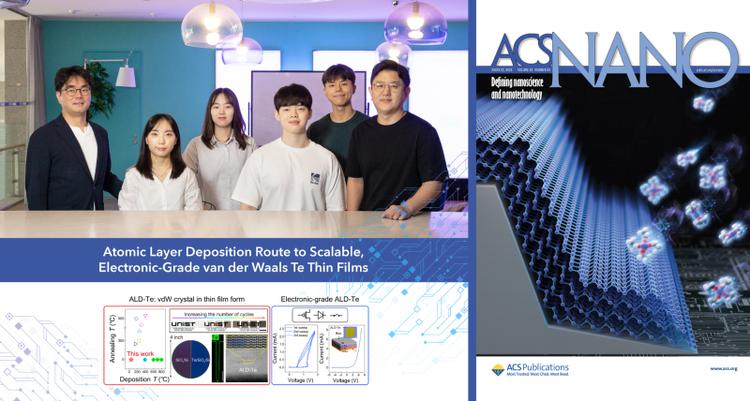
Atomic Layer Deposition Route to Scalable, Electronic-Grade van der Waals Te Thin FilmsThe study findings have been published ahead of their official publication in the online version of ACS Nano on July 11, 2023.
Abstract Scalable production and integration techniques for van der Waals (vdW) layered materials are vital for their implementation in next-generation nanoelectronics. Among available approaches, perhaps the most well-received is atomic layer deposition (ALD) due to its self-limiting layer-by-layer growth mode. However, ALD-grown vdW materials generally require high processing temperatures and/or additional postdeposition annealing steps for crystallization. Also, the collection of ALD-producible vdW materials is rather limited by the lack of a material-specific tailored process design. Here, we report the annealing-free wafer-scale growth of monoelemental vdW tellurium (Te) thin films using a rationally designed ALD process at temperatures as low as 50 °C. They exhibit exceptional homogeneity/crystallinity, precise layer controllability, and 100% step coverage, all of which are enabled by introducing a dual-function co-reactant and adopting a so-called repeating dosing technique. Electronically, vdW-coupled and mixed-dimensional vertical p-n heterojunctions with MoS2 and n-Si, respectively, are demonstrated with well-defined current rectification as well as spatial uniformity. Additionally, we showcase an ALD-Te-based threshold switching selector with fast switching time (∼40 ns), selectivity (∼104), and low Vth (∼1.3 V). This synthetic strategy allows the low-thermal-budget production of vdW semiconducting materials in a scalable fashion, thereby providing a promising approach for monolithic integration into arbitrary 3D device architectures. A research team, led by Professor Joonki Suh in the Department of Materials Science and Engineering and the Graduate School of Semiconductor Materials and Devices Engineering at UNIST, has made a significant breakthrough in thin film deposition technology. By employing an innovative atomic layer deposition (ALD) process, Professor Seo successfully achieved regular arrangement of tellurium (Te) atoms at low temperatures as low as 50 degrees Celsius. The ALD method is a cutting-edge thin film process that enables precise stacking of semiconductor materials at the atomic layer level on three-dimensional structures—even at low process temperatures. However, traditional application to next-generation semiconductors requires high processing temperatures above 250 degrees Celsius and additional heat treatment exceeding 450 degrees Celsius. In this groundbreaking research, the UNIST team applied ALD to monoelemental van der Waals tellurium—a material under extensive investigation for its potential applications in electronic devices and thermoelectric materials. Remarkably, they successfully fabricated high-quality Te thin films without any post-deposition heat treatment at an unprecedentedly low temperature of only 50 degrees Celsius. The resulting films exhibited exceptional uniformity with precisely controlled thickness down to nanometers scale—achieving perfect atom arrangement with one out of every billion atoms. Figure 1. Scalability, controllability, and homogeneity of atomic layer deposited tellurium (ALD-Te). (Left) ALD-Te: vdW crystal in thin film form, (Right) Electronic-grade ALD-Te. To enhance reactivity at lower temperatures, the research team employed two precursors with acid-base properties. Additionally, they introduced co-reactants to improve surface reactions and stability while adopting a repeating dosing technique by injecting precursors in shorter intervals. These strategies enabled the production of dense and continuous Te thin films compared to conventional methods that often resulted in porous or discontinuous grain depositions. The developed manufacturing process allowed for wafer-scale growth on entire 4-inch (100mm) wafers, providing precise atomic layer-level thickness control and uniform deposition. Furthermore, the Te thin films demonstrated compatibility with vertical three-dimensional structures—a crucial requirement for high device integration. This breakthrough holds significant potential for various electronic devices such as transistors, rectifiers, and selection elements. "This research fulfills all the essential criteria of low-temperature, large-area, and high-quality synthesis in semiconductor deposition processes," stated Professor Suh. Figure 2. The study findings have been featured as the cover page of the online version of ACS Nano on July 11, 2023. The results of this groundbreaking research were published online on July 11 in the esteemed international journal ACS Nano. Besides, its remarkable achievements were recognized by being featured as a cover paper. The study was conducted through support from the National Research Foundation of Korea (NRF), the Ministry of Science and ICT (MSIT), the Korea Evaluation Institute of Industrial Technology (KEIT), and the Korea Semiconductor Industry Association (KSIA). Journal Reference Changhwan Kim, Namwook Hur, Jiho Yang, et al., "Atomic Layer Deposition Route to Scalable, Electronic-Grade van der Waals Te Thin Films," ACS Nano, (2023).- 2023-08-01
- JooHyeon Heo
- 2623
-
Research
Groundbreaking Research Unveils Genetic Characteristics and Improved Prognosis of Triple Negative Apocrine CarcinomaThe study findings have been published in the July 2023 issue of Experimental & Molecular Medicine.
Abstract Apocrine carcinoma is a rare breast cancer subtype. As such, the genomic characteristics of apocrine carcinoma with triple negative immunohistochemical results (TNAC), which has been treated as triple negative breast cancer (TNBC), have not been revealed. In this study, we evaluated the genomic characteristics of TNAC compared to TNBC with low Ki-67 (LK-TNBC). In the genetic analysis of 73 TNACs and 32 LK-TNBCs, the most frequently mutated driver gene in TNAC was TP53 (16/56, 28.6%), followed by PIK3CA (9/56, 16.1%), ZNF717 (8/56, 14.3%), and PIK3R1 (6/56, 10.71%). Mutational signature analysis showed enrichment of defective DNA mismatch repair (MMR)-related signatures (SBS6 and SBS21) and the SBS5 signature in TNAC, whereas an APOBEC activity-associated mutational signature (SBS13) was more prominent in LK-TNBC (Student’s t test, p < 0.05). In intrinsic subtyping, 38.4% of TNACs were classified as luminal A, 27.4% as luminal B, 26.0% as HER2-enriched (HER2-E), 2.7% as basal, and 5.5% as normal-like. The basal subtype was the most dominant subtype (43.8%) in LK-TNBC (p < 0.001), followed by luminal B (21.9%), HER2-E (21.9%), and luminal A (12.5%). In the survival analysis, TNAC had a five-year disease-free survival (DFS) rate of 92.2% compared to 59.1% for LK-TNBC (P = 0.001) and a five-year overall survival (OS) rate of 95.3% compared to 74.6% for LK-TNBC (P = 0.0099). TNAC has different genetic characteristics and better survival outcomes than LK-TNBC. In particular, normal-like and luminal A subtypes in TNAC have much better DFS and OS than other intrinsic subtypes. Our findings are expected to impact medical practice for patients diagnosed with TNAC. Breast cancer research takes a significant stride forward as Professor Semin Lee and his research team from the Department of Biomedical Engineering at UNIST, in collaboration with Professor Ji-Yeon Kim and Professor Young-Hyuck Im from the Division of Hematology-Oncology at Samsung Medical Center in Seoul, delves into the exploration of triple negative apocrine carcinoma. This rare breast cancer subtype has garnered attention due to its unique genetic characteristics and improved prognosis when compared to other forms of triple-negative breast cancer (TNBC). Triple negative apocrine carcinoma accounts for only 1-4% of all breast cancers. While it falls under the category of TNBC, which is characterized by the absence of hormone receptors and epidermal growth factor receptors, this particular subtype exhibits a more favorable prognosis than other TNBC subtypes. However, due to limited analysis studies on triple negative apocrine carcinoma, treatment criteria have remained ambiguous. In their study titled 'Multiple Omics Study of Triple-Negative Apocrine Carcinoma,' the research team employed advanced molecular biological methods to conduct multi-omics analyses—integrating genetic information and RNA molecules—to unravel novel insights into this rare form of breast cancer. Figure 1. Somatic Point Mutations in TNAC and LK-TNBC. The top 16 significantly mutated genes as determined by the dNdScv algorithm (p < 0.001, TNAC: 13 genes, LK-TNBC: 5 genes) in TNAC and LK-TNBC were sorted by their mutation frequency. The right bar plot shows the mutation frequencies of the 16 genes in our cohorts and TCGA cohorts. The red dotted vertical line represents a 5% mutation frequency. The top bar plot indicates tumor mutational burden (TMB), which represents the number of mutations per megabase (Mb) for each sample. The samples with TMB values greater than 10 were considered hypermutated (black dotted horizontal line). The clinical and pathological characteristics were also annotated. The significant differences between TNAC and LK-TNBC according to baseline characteristics were calculated by Fisher’s exact test. The findings revealed distinct genomic characteristics that impact the prognosis for patients with triple negative apocrine carcinoma. The researchers identified four to five unique subtypes within breast cancer based on gene expression profiles. Notably, patients with triple-negative apocrine carcinoma exhibited similarities to Luminal A—a subtype associated with better prognostic outcomes. The study confirmed an impressive five-year disease-free survival rate for these patients at 92.2%, significantly higher than those diagnosed with other types of TNBC (59.1%). "This research has the potential to guide treatment decisions regarding adjuvant chemotherapy after surgery and predict patient survival outcomes," explained Sabin Park (Department of Biomedical Engineering, UNIST), first author of the study, while emphasizing the potential impact of these findings. Published in the journal, Experimental & Molecular Medicine on July 3, this study received support from the Korea Research Foundation's Cancer Control Research Center by Intercellular Signal Communication—a program under the Ministry of Science and ICT. As breast cancer continues to be a significant global health concern affecting millions of lives, studies like these play a crucial role in advancing personalized treatment approaches based on specific genetic mutations. The groundbreaking insights gained from Professor Lee's team provide hope for improved clinical management and better prognostic outcomes for patients diagnosed with triple negative apocrine carcinoma. Journal Reference Ji-Yeon Kim, Sabin Park, Eun Yoon Cho, et al., "Genomic characteristics of triple negative apocrine carcinoma: a comparison to triple negative breast cancer," Exp. Mol. Med. (2023).- 2023-07-28
- JooHyeon Heo
- 4692
-
Research
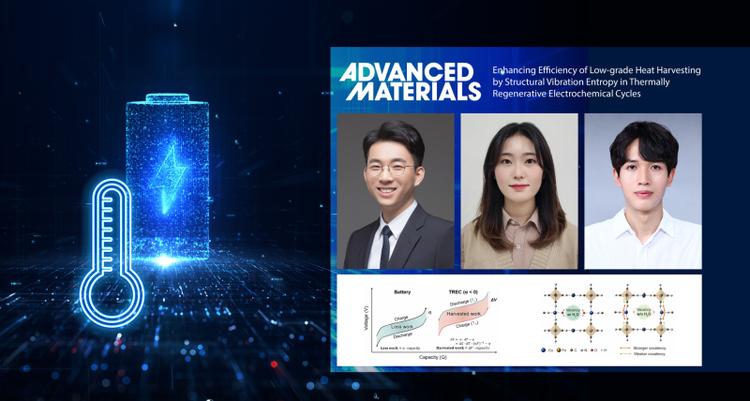
Researchers Make Strides in Harnessing Low-Grade Heat for Efficient Energy ConversionThe study findings have been published ahead of their official publication in the online version of Adv. Mater. on July 3, 2023.
Abstract The majority of waste-heat energy exists in the form of low-grade heat (<100 °C), which is immensely difficult to convert into usable energy using conventional energy-harvesting systems. Thermally regenerative electrochemical cycles (TREC), which integrate battery and thermal-energy-harvesting functionalities, are considered an attractive system for low-grade heat harvesting. Herein, the role of structural vibration modes in enhancing the efficacy of TREC systems is investigated. How changes in bonding covalency, influenced by the number of structural water molecules, impact the vibration modes is analyzed. It is discovered that even small amounts of water molecules can induce the A1g stretching mode of cyanide ligands with strong structural vibration energy, which significantly contributes to a larger temperature coefficient (ɑ) in a TREC system. Leveraging these insights, a highly efficient TREC system using a sodium-ion-based aqueous electrolyte is designed and implemented. This study provides valuable insights into the potential of TREC systems, offering a deeper understanding of the intrinsic properties of Prussian Blue analogs regulated by structural vibration modes. These insights open up new possibilities for enhancing the energy-harvesting capabilities of TREC systems. A team of researchers, jointly led by Professor Hyun-Wook Lee and Professor Dong-Hwa Seo from the School of Energy and Chemical Engineering at the Ulsan National Institute of Science and Technology (UNIST), in collaboration with Professor Seok Woo Lee from Nanyang Technological University in Singapore, has achieved significant breakthroughs in harnessing low-grade heat sources (<100 °C) for efficient energy conversion. Their groundbreaking work focuses on developing a highly efficient Thermally Regenerative Electrochemical Cycle (TREC) system capable of converting small temperature differences into usable energy. Conventional energy-harvesting systems face challenges when it comes to effectively utilizing low-grade heat sources. However, TREC systems offer an attractive solution as they integrate battery functionality with thermal-energy-harvesting capabilities. In this study, the research team delved into the role of structural vibration modes to enhance the efficacy of TREC systems. Figure 1. Schematic showing the different mechanisms of a battery and TREC system. Whereas the battery system (left) loses some of the stored energy as unusable energy, the TREC system (right) can convert low-grade waste-heat energy into electrochemical energy during battery cycling. By analyzing how changes in covalent bonding influence vibration modes—specifically affecting structural water molecules—the researchers discovered that even minute amounts of water induce strong structural vibrations within cyanide ligands' A1g stretching mode. These vibrations substantially contribute to a larger temperature coefficient (ɑ) within a TREC system. Based on these insights, the team designed and implemented a highly efficient TREC system using a sodium-ion-based aqueous electrolyte. "This study provides valuable insights into how structural vibration modes can enhance the energy-harvesting capabilities of TREC systems," explained Professor Hyun-Wook Lee. "Our findings deepen our understanding of Prussian Blue analogs' intrinsic properties regulated by these vibration modes—opening up new possibilities for improved energy conversion." Figure 2. Principle of TREC and effect of water molecules in a PBA structure. (Top) Effect of removal of water molecules on the CuHCFe structure and covalency variation (-ICOHP/eV). The average -ICOHP values of Cu─N and Fe─C bonds and the SD of -ICOHP values of 6 Fe─C bonds are presented. (Center) Effect of water molecules on the stretching vibration mode of cyanide ligands. (Bottom) d) Amount of harvested work as a result of TREC full-cell and half-cell. The low and high temperatures are 10 and 60 °C, respectively. The current density of the full cell is set at 0.5 C (30 mA g−1) based on O/Cu-x. The potential applications for TREC systems are vast, particularly in wearable technologies and other devices where small temperature differentials exist. By effectively capturing and converting low-grade heat into usable energy, TREC systems offer a promising pathway towards the development of next-generation secondary batteries. The study findings have been published ahead of their official publication in the online version of Advanced Materials on July 3, 2023. This research has received support from the 2023 Research Fund of UNIST, Individual Basic Science & Engineering Research Program, and the National Center for Materials Research Data through the National Research Foundation (NRF) of Korea, funded by the Ministry of Science and ICT (MSIT). Journal Reference Ahreum Choi, You-Yeob Song, Juyoung Kim, et al., "Enhancing Efficiency of Low-Grade Heat Harvesting by Structural Vibration Entropy in Thermally Regenerative Electrochemical Cycles," Adv. Mater., (2023).- 2023-07-27
- JooHyeon Heo
- 5237
-
Research
Researchers Unveil New Flexible Adhesive with Exceptional Recovery and Adhesion Properties for Electronic DevicesThe study findings have been published ahead of their official publication in the online version of Adv. Funct. Mater. on July 12, 2023.
Abstract The development of flexible electronic technology has led to convenient devices, including foldable displays, wearable, e-skin, and medical devices, increasing the need for flexible adhesives that can quickly recover their shape while connecting the components of the device. Conventional pressure sensitive adhesives (PSAs) can improve recoverability via crosslinking, but often have poor adhesive strength. In this study, new types of urethane-based crosslinkers are synthesized using m-xylylene diisocyanate (XDI) or 1,3-bis(isocyanatomethyl)cyclohexane (H6XDI) as a hard segment, and poly(ethylene glycol) (PEG) group as a soft segment. The PSA with the synthesized H6XDI-PEG diacrylate (HPD) demonstrates a significantly improved recoverability compared to XDI-PEG diacrylate and a conventional crosslinker 1,6-hexanediol diacrylate (HDDA) while maintaining high adhesion strength (≈25.5 N 25 mm−1). The excellent recovery property of the PSA crosslinked with HPD is further confirmed by 100k folding tests and 10k multi-directional stretching tests exhibiting high folding and stretching stability. PSA with HPD also shows high optical transmittance (> 90%) even after 20% straining, suggesting its applicability in fields that simultaneously require high flexibility, recoverability, and optical clarity such as foldable displays. The rapid advancements in flexible electronic technology have led to the emergence of innovative devices such as foldable displays, wearables, e-skin, and medical devices. These breakthroughs have created a growing demand for flexible adhesives that can quickly recover their shape while effectively connecting various components in these devices. However, conventional pressure-sensitive adhesives (PSAs) often face challenges in achieving a balance between recovery capabilities and adhesive strength. In an extraordinary study conducted at UNIST, researchers have successfully synthesized new types of urethane-based crosslinkers that address this critical challenge. Led by Professor Dong Woog Lee from the School of Energy and Chemical Engineering at UNIST, the research team developed novel crosslinkers utilizing m-xylylene diisocyanate (XDI) or 1,3-bis(isocyanatomethyl)cyclohexane (H6XDI) as hard segments along with poly(ethylene glycol) (PEG) groups serving as soft segments. By incorporating these newly synthesized materials into pressure-sensitive adhesives, they achieved significantly improved recoverability compared to traditional methods. Figure 1. Synthesis of a) XDI-PEG diacrylate (XPD) and H6XDI-PEG diacrylate (HPD). b) Molecular structure of PSA crosslinked with H6XDI-PEG diacrylate (HPD). The PSA formulated with H6XDI-PEG diacrylate (HPD) demonstrated exceptional recovery properties while maintaining high adhesion strength (~25.5 N 25 mm−1). Through extensive folding tests totaling 100k folds and multi-directional stretching tests spanning 10k cycles, the PSA crosslinked with HPD exhibited remarkable stability under repeated deformation—showcasing its potential for applications requiring both flexibility and recoverability. Furthermore, even after subjecting the adhesive to strains up to 20%, it displayed high optical transmittance (>90%), making it suitable for fields such as foldable displays that demand not only flexibility but also optical clarity. Figure 2. Stretching and folding test of PSAs. A schematic illustration of the folding stability test operating procedure and the displacement change of the elongated PSA after folding. Bottom left is the micro-vision image of 0.15 HPD, 0.3 HPD, and 0.6 HPD before and after 100k folds. Bottom right is a graph illustrating the displacement change of each PSA during 100k folds. "This breakthrough in adhesive technology offers promising possibilities for electronic products that require both high flexibility and rapid recovery characteristics," said Professor Lee. "Our research addresses the long-standing challenge of balancing adhesion strength and resilience, opening up new avenues for the development of flexible electronic devices." Figure 3. (Left) The transmittance of PSAs crosslinked with HPD, XPD, and HDDA. The transmittance of PSAs. (Center) as a function of HPD content and c) applied strain. (Right) The optical images of 0.15 HPD, 0.3 HPD, and 0.6 HPD under different strains. Hyunok Park, a researcher involved in the study, emphasized the significance of this research by stating, "The introduction of this new crosslinking structure has led to an adhesive with exceptional adhesion and recovery properties. We believe it will drive future advancements in adhesive research while contributing to further developments in flexible electronics." The study findings have been published ahead of their official publication in the online version of Advanced Functional Materials on July 12, 2023. This work was supported through the 2023 Research Fund at UNIST and received additional support from organizations including the National Research Foundation (NRF) of Korea, Defense Acquisition Program Administration and Ministry of Trade. Journal Reference Hyunok Park, Daegyun Lim, Geonwoo Lee, et al., "Tailoring Pressure Sensitive Adhesives with H6XDI-PEG Diacrylate for Strong Adhesive Strength and Rapid Strain Recovery," Adv. Funct. Mater., (2023).- 2023-07-25
- JooHyeon Heo
- 5046
-
Research
Groundbreaking Soft Valve Technology Enabling Sensing and Control Integration in Soft RobotsThe study findings have been published ahead of their official publication in the online version of Nat. Commun. on July 4, 2023.
Abstract Soft inflatable robots are a promising paradigm for applications that benefit from their inherent safety and adaptability. However, for perception, complex connections of rigid electronics both in hardware and software remain the mainstay. Although recent efforts have created soft analogs of individual rigid components, the integration of sensing and control systems is challenging to achieve without compromising the complete softness, form factor, or capabilities. Here, we report a soft self-sensing tensile valve that integrates the functional capabilities of sensors and control valves to directly transform applied tensile strain into distinctive steady-state output pressure states using only a single, constant pressure source. By harnessing a unique mechanism, “helical pinching”, we derive physical sharing of both sensing and control valve structures, achieving all-in-one integration in a compact form factor. We demonstrate programmability and applicability of our platform, illustrating a pathway towards fully soft, electronics-free, untethered, and autonomous robotic systems. Soft inflatable robots have emerged as a promising paradigm for applications that require inherent safety and adaptability. However, the integration of sensing and control systems in these robots has posed significant challenges without compromising their softness, form factor, or capabilities. Addressing this obstacle, a research team jointly led by Professor Jiyun Kim (Department of Materials Science and Engineering, UNIST) and Professor Jonbum Bae (Department of Mechanical Engineering, UNIST) has developed groundbreaking "soft valve" technology—an all-in-one solution that integrates sensors and control valves while maintaining complete softness. Traditionally, soft robot bodies coexisted with rigid electronic components for perception purposes. The study conducted by this research team introduces a novel approach to overcome this limitation by creating soft analogs of sensors and control valves that operate without electricity. The resulting tube-shaped part serves dual functions: detecting external stimuli and precisely controlling driving motion using only air pressure. By eliminating the need for electricity-dependent components, these all-soft valves enable safe operation underwater or in environments where sparks may pose risks—while simultaneously reducing weight burdens on robotic systems. Moreover, each component is inexpensive at approximately 800 Won. Figure 1. Soft self-sensing tensile valve (STV) transducing strain into manageable proportional output pressures. "Previous soft robots had flexible bodies but relied on hard electronic parts for stimulus detection sensors and drive control units," explained Professor Kim. "Our study focuses on making both sensors and drive control parts using soft materials." The research team showcased various applications utilizing this groundbreaking technology. They created universal tongs capable of delicately picking up fragile items such as potato chips—preventing breakage caused by excessive force exerted by conventional rigid robot hands. Additionally, they successfully employed these all-soft components to develop wearable elbow assist robots designed to reduce muscle burden caused by repetitive tasks or strenuous activities involving arm movements. The elbow support automatically adjusts according to the angle at which an individual's arm is bent—a breakthrough contributing to a 63% average decrease in the force exerted on the elbow when wearing the robot. Figure 2. Operational photographs of the STV-controlled soft actuator when the tensile strain ε = 0 (i) and ε = εmax (ii). Insets: close-up images of the STV. Scale bars = 5 cm. The soft valve operates by utilizing air flow within a tube-shaped structure. When tension is applied to one end of the tube, a helically wound thread inside compresses it, controlling inflow and outflow of air. This accordion-like motion allows for precise and flexible movements without relying on electrical power. Furthermore, the research team confirmed that by programming different structures or numbers of threads within the tube, they could accurately control airflow variations. This programmability enables customized adjustments to suit specific situations and requirements—providing flexibility in driving unit response even with consistent external forces applied to the end of the tube. Figure 3. (a-i) Photographs of the soft gripper handling a pinecone near a welding arc (which can affect electronic circuits by electromagnetic interference), and (a-ii) coral reef under water. (b) Overview of the soft exosuit. A photograph of the soft exosuit on a user (i) and details of the soft exosuit (ii). The STV (n = 2, p = 10 mm, L0 = 80 mm) is connected in inverse mode, where the produced normalized chamber pressure Pch/Ps is a decreasing function of the normalized strain ε/εmax (iii). "These newly developed components can be easily employed using material programming alone, eliminating electronic devices," expressed Professor Bae with excitement about this development. "This breakthrough will significantly contribute to advancements in various wearable systems." This groundbreaking soft valve technology marks a significant step toward fully soft, electronics-free robots capable of autonomous operation—a crucial milestone for enhancing safety and adaptability across numerous industries. The study findings have been published ahead of their official publication in Nature Communications' online version on July 4, 2023. Support for this work was provided by various organizations including Korea's National Research Foundation (NRF), Korea Institute of Materials Science (KIMS), and Korea Evaluation Institute of Industrial Technology (KEIT). Journal Reference Jun Kyu Choe, Junsoo Kim, Hyeonseo Song, et al., "A soft, self-sensing tensile valve for perceptive soft robots," Nat. Commun., (2023).- 2023-07-20
- JooHyeon Heo
- 3429
-
Research
Groundbreaking Research Reveals the Role of TonEBP in Lupus and Lupus Nephritis, Opening New Avenues for TreatmentThe research findings were made available on May 5 ahead of their official publication in Kidney International on July 1, 2023.
Summary Systemic lupus erythematosus (SLE) is an autoimmune disorder characterized by autoreactive B cells and dysregulation of many other types of immune cells including myeloid cells. Lupus nephritis (LN) is a common target organ manifestations of SLE. Tonicity-responsive enhancer-binding protein (TonEBP, also known as nuclear factor of activated T-cells 5 (NFAT5)), was initially identified as a central regulator of cellular responses to hypertonic stress and is a pleiotropic stress protein involved in a variety of immunometabolic diseases. To explore the role of TonEBP, we examined kidney biopsy samples from patients with LN. Kidney TonEBP expression was found to be elevated in these patients compared to control patients – in both kidney cells and infiltrating immune cells. Kidney TonEBP mRNA was elevated in LN and correlated with mRNAs encoding inflammatory cytokines and the degree of proteinuria. In a pristane-induced SLE model in mice, myeloid TonEBP deficiency blocked the development of SLE and LN. In macrophages, engagement of various toll-like receptors (TLRs) that respond to damage-associated molecular patterns induced TonEBP expression via stimulation of its promoter. Intracellular signaling downstream of the TLRs was dependent on TonEBP. Therefore, TonEBP can act as a transcriptional cofactor for NF-κB, and activated mTOR-IRF3/7 via protein-protein interactions. Additionally, TonEBP-deficient macrophages displayed elevated efferocytosis and animals with myeloid deficiency of TonEBP showed reduced Th1 and Th17 differentiation, consistent with macrophages defective in TLR signaling. Thus, our data show that myeloid TonEBP may be an attractive therapeutic target for SLE and LN. A groundbreaking discovery has been made by Professor Hyug Moo Kwon and his research team in the Department of Biological Sciences at UNIST, in collaboration with Professor Jaeseok Yang from Yonsei University. Their study sheds new light on the protein called 'TonEBP,' revealing its significant role in the development of lupus and lupus nephritis. This breakthrough not only enhances our understanding of these conditions, but also opens up potential avenues for future treatment options. Figure 1. TonEBP expression in endothelial cells, epithelial cells, and infiltrating immune cells in renal biopsy tissues subjected to multiplex immune fluorescence staining. Biopsy sections were double stained for TonEBP (red) and cell surface markers (green): CD31, cytokeratin (CK), CD4, CD8, CD68, or CD86. Nuclei were visualized with 4′,6-diamidino-2-phenylindole (DAPI; blue). Representative pseudocolor merged images of the renal cortex and medulla are shown for both controls and the patients with lupus nephritis (LN). Merged image demonstrates colocalization of TonEBP and DAPI in the nucleus (purple) and cell markers on the cell surface and cytoplasm (green). Original magnification ×200 (bars = 100 μm) and ×400 (boxed areas; bars = 20 μm). G, glomerulus. Lupus is an autoimmune disorder characterized by autoreactive B cells and dysregulation of various immune cells, including myeloid cells. Lupus nephritis (LN), which refers to kidney inflammation caused by lupus, is one of the most common organ manifestations associated with systemic lupus erythematosus (SLE). The study conducted meticulous analysis on kidney biopsy samples obtained from LN patients to investigate TonEBP's involvement in these conditions. The findings unveiled elevated expression levels of TonEBP not only within kidney cells but also infiltrating immune cells when compared to control patients. This increased expression correlated with inflammatory cytokines involved in inflammatory reactions triggered by bacterial or viral infections, as well as severity of proteinuria—a key indicator reflecting kidney damage. Figure 2. Renal expression of mRNA encoding TonEBP and proinflammatory cytokines in patients with lupus nephritis (LN). (a) Levels of mRNA encoding TonEBP and proinflammatory cytokines were measured by quantitative real-time polymerase chain reaction of frozen kidney biopsy samples from patients with LN and controls (Table 1). mRNA level of each gene was normalized to that of glyceraldehyde-3-phosphate dehydrogenase. Mean ± SEM. ∗P < 0.05, ∗∗P < 0.01 compared with the controls. (b) Correlation between expression of each cytokine mRNA and that of TonEBP. To delve deeper into TonEBP's impact on both lupus development and kidney damage, animal experiments were conducted. The results demonstrated that specifically suppressing TonEBP within myeloid cells effectively halted lupus progression while mitigating kidney damage. Additionally, animal models with myeloid deficiency of TonEBP exhibited elevated efferocytosis (phagocytic clearance) alongside reduced differentiation of Th1 (T helper 1) and Th17 (T helper 17) cells—indicating impaired Toll-like receptor (TLR) signaling, which is crucial for T cell function. Furthermore, the study revealed that various TLRs stimulated macrophages to induce TonEBP expression through promoter activation—a critical intracellular signaling pathway dependent on TonEBP. This finding suggests that TonEBP acts as a transcriptional cofactor for NF-κB and activates mTOR-IRF3/7 via protein-protein interactions. Figure 3. Proposed model for the role of macrophage TonEBP in systemic lupus erythematosus (SLE). "This study unveils the pivotal role of TonEBP in lupus development," stated Professor Kwon. "By identifying the underlying cause and providing valuable clues for new treatments, we aim to contribute to improving the lives of individuals affected by these conditions." The research findings were made available on May 5 ahead of their official publication in Kidney International on July 1, 2023. The study received support from grants provided by the National Research Foundation of Korea (NRF), funded by the Ministry of Science and ICT (MSIT). Journal Reference Jun Kyu Choe, Junsoo Kim, Hyeonseo Song, et al., "Macrophage transcription factor TonEBP promotes systemic lupus erythematosus and kidney injury via damage-induced signaling pathways," Kidney Int., (2023).- 2023-07-18
- JooHyeon Heo
- 3097
-
Research
Unraveling the Link between Obesity, Diabetes, and EndotrophinThe study findings have been published ahead of their official publication in the online version of Metabolism on June 10, 2023.
With obesity rates projected to continue rising globally, there is an urgent need to understand the intricate mechanisms that contribute to metabolic diseases such as diabetes. Addressing this critical issue head-on, Professor Jiyoung Park and her research team in the Department of Biological Sciences at UNIST has led a groundbreaking study on endotrophin—an extracellular matrix protein that plays a pivotal role in adipose tissue homeostasis. The research team's findings shed light on how intracellular endotrophin levels impact autophagy—a natural cellular process responsible for removing unnecessary or dysfunctional components. In obese individuals, elevated levels of endotrophin drive detrimental effects within fat cells by disrupting autophagic flux—leading to inflammation and insulin resistance associated with diabetes. "Understanding the relationship between obesity-related metabolic dysfunction and endotrophin presents significant implications for developing targeted treatments for metabolic diseases," emphasized Professor Park. Figure 1. Endotrophin-mediated interaction between SEC13+ COPII and ATG7 contributes to increasing autophagosome formation and impairs autophagic flux in adipocyte in obesity. PLA utilizes the specificity of a secondary antibody conjugated with the PLA probe, which amplifies the interacting protein complex shown by red puncta. GFP+ area indicates the cytoplasmic region. Endotrophin was first discovered by Professor Park in 2012, as a key player responding to metabolic stress in obese individuals. The recent study delved deeper into understanding how endotrophin enters and influences fat cells under both lean and obese conditions through meticulous comparative analysis. In cases of obesity, it was observed that endocytosis—the process through which extracellular substances are internalized into cells—facilitates the accumulation of endotrophin within fat cells. This accumulation not only promotes the formation of autophagosomes involved in autophagy but also disrupts their degradation process—ultimately leading to cell death, inflammation, and insulin resistance. Furthermore, the research team uncovered specific interactions between proteins involved in protein transport (SEC13) and autophagy (ATG7), which play crucial roles in driving excessive autophagosome formation triggered by endotrophin within fat cells. This dysregulation of autophagy further exacerbates the adverse effects on adipocyte health. Excitingly, the study also demonstrated that inhibiting ATG7 protein function or neutralizing endotrophin using the siRNA system—specifically designed to interfere with gene expression—significantly improved metabolic diseases associated with obesity. These findings pave the way for potential future treatments targeting endotrophin-mediated autophagic flux impairment in obesity-related conditions. "The accumulation of endotrophin in cells can serve as a biomarker indicating an imbalance in extracellular matrix homeostasis," remarked Professor Park. Figure 2. This is a single, concise, pictorial and visual summary of the main findings of the article. The study findings have been published ahead of their official publication in the online version of Metabolism: Clinical and Experimental—a prestigious international academic journal specializing in endocrine metabolism—on June 10, 2023. This work has received support from the National Research Foundation (NRF) of Korea, funded by the Ministry of Science and ICT (MSIT). Journal Reference Jiyoung Oh, Chanho Park, Sahee Kim, et al., "High levels of intracellular endotrophin in adipocytes mediate COPII vesicle supplies to autophagosome to impair autophagic flux and contribute to systemic insulin resistance in obesity," Metabolism (2023).- 2023-07-14
- JooHyeon Heo
- 9529
-
Research
Researchers Uncover NSMF Protein's Role in Relieving DNA Replication StressThe study findings have been published ahead of their official publication in the online version of Nucleic Acids Research on June 28, 2023.
Abstract Replication protein A (RPA), a eukaryotic single-stranded DNA (ssDNA) binding protein, dynamically interacts with ssDNA in different binding modes and plays essential roles in DNA metabolism such as replication, repair, and recombination. RPA accumulation on ssDNA due to replication stress triggers the DNA damage response (DDR) by activating the ataxia telangiectasia and RAD3-related (ATR) kinase, which phosphorylates itself and downstream DDR factors, including RPA. We recently reported that the N-methyl-D-aspartate receptor synaptonuclear signaling and neuronal migration factor (NSMF), a neuronal protein associated with Kallmann syndrome, promotes RPA32 phosphorylation via ATR upon replication stress. However, how NSMF enhances ATR-mediated RPA32 phosphorylation remains elusive. Here, we demonstrate that NSMF colocalizes and physically interacts with RPA at DNA damage sites in vivo and in vitro. Using purified RPA and NSMF in biochemical and single-molecule assays, we find that NSMF selectively displaces RPA in the more weakly bound 8- and 20-nucleotide binding modes from ssDNA, allowing the retention of more stable RPA molecules in the 30-nt binding mode. The 30-nt binding mode of RPA enhances RPA32 phosphorylation by ATR, and phosphorylated RPA becomes stabilized on ssDNA. Our findings provide new mechanistic insight into how NSMF facilitates the role of RPA in the ATR pathway. A team of researchers from the Department of Biological Sciences at UNIST has achieved a significant breakthrough in understanding how brain proteins can help alleviate complications arising from DNA replication stress. This groundbreaking discovery holds immense potential for advancing treatments for various diseases, including cancer, neurological disorders, and age-related conditions that result from disruptions in DNA replication. Led by Professor Jayil Lee, Professor Jang Hyun Choi, and Professor Hongtae Kim, this collaborative effort has unveiled crucial insights into the intricate processes involving NSMF proteins when confronted with DNA replication stress—a fundamental aspect of cellular functioning. N-methyl-D-aspartate receptor synaptonuclear signaling and neuronal migration factor (NSMF), a neuronal protein associated with Kallmann syndrome, plays a novel role in neuronal development, regulation of movement, reproductive hormone secretion, and olfactory perception. Dysfunctions in this protein can lead to rare conditions like Kallmann syndrome—an affliction characterized by impaired reproductive function and loss of sense of smell. Figure 1: A schematic diagram illustrating the increase in RPA phosphorylation of ATR by NSMF during DNA replication stress. In their study focused on alleviating DNA replication stress using NSMF proteins, the research team observed that when protein synthesis encounters obstacles during replication due to various factors causing stress on DNA structure—resulting in single-stranded regions—the replication protein A (RPA) binds uniquely to these exposed single strands. The combined RPA molecules then undergo phosphorylation—a chemical process involving attachment of phosphate groups composed of phosphorus and oxygen. Phosphorylated RPA recruits other proteins that help alleviate replication stress at specific sites along the DNA strand—restoring normal activity. Interestingly, RPA exhibits weak or strong binding affinity towards single-stranded regions during its interaction with DNA. Through their investigation involving NSMF proteins, the research team discovered that NSMF selectively displaces some weakly bound RPAs while promoting a transition into more stable binding modes for the remaining RPAs. This shift favors an enhanced phosphorylation process, catalyzed by the ataxia telangiectasia and RAD3-related (ATR) kinase—an enzyme crucial for DNA damage response. The team's findings demonstrate that this mechanism accelerates the relief of replication stress. "This study has significant potential to impact treatments related to cancer, neurological disorders, and age-related conditions by unraveling molecular mechanisms associated with DNA replication," commented Professor Lee. "Considering NSMF's close relationship with Kallmann syndrome, we anticipate its contribution to advancements in treating this disease," added Yujin Kang, the first author of the study. The study findings have been published ahead of their official publication in Nucleic Acids Research on June 28, 2023. This pioneering research has received support from esteemed organizations such as the Samsung Science and Technology Foundation, National Research Foundation,and Institute for Basic Science. Journal Reference Yujin Kang, Ye Gi Han, Keon Woo Khim, et al., "Alteration of replication protein A binding mode on single-stranded DNA by NSMF potentiates RPA phosphorylation by ATR kinase," Nucleic Acids Res. (2023).- 2023-07-13
- JooHyeon Heo
- 2657