UNIST site map
- Admissions
-
Academics
- Colleges and Schools
-
Academic Affairs
- Academic Calendar
- Academic Curriculum
- Requirements for Graduation
- Browse Open Courses
- Undergraduate Administration
-
Graduate Academic Affairs
- Tuition Fee Payment
- Academic Leave of Absence/ Academic Return
- Voluntary Withdrawal/ Expulsion
- Change of Major
- Change of Degree Program/ Dropping of Degree Program
- Class Period/ Attendance Period/ Academic Year・Semester
- Course Registration
- Course Drop
- Attendance/ Grade/ Exam
- Credit Transfer/ Credit Carryover
- Academic Forms
- Education Support
-
Research/Industry
- Research Aims
- Research Findings
- Researcher Search
-
Research Organizations
- UNIST Multi-Interdisciplinary Institute
- IBS Research Groups
-
UNIST Labs
- Department of Mechanical Engineering
- School of Energy and Chemical Engineering
- Department of Civil
- Department of Materials Science and Engineering
- Department of Nuclear Engineering
- Department of Industrial Engineering
- Department of Design
- Department of Biomedical Engineering
- Department of Biological Sciences
- Department of Electrical Engineering
- Department of Computer Science and Engineering
- Department of Mathematical Sciences
- Department of Chemistry
- Department of Physics
- School of Business Administration
- Graduate School of Carbon Neutrality
- Graduate School of Artificial Intelligence
- Research Support
- University-Industry Relations
- Campus Life
- News Center
- About UNIST
-
etc
- UNIST Bulletin
- Work-Life Balance Support System
- UNIST Gender Equality Plan
- Faculty Invitation for Tenure Track
- Faculty Invitation for Non-Tenure Track
- Board Meeting Minutes
- University Council Meeting Minutes
- Administrative Service Charter
- Privacy Policy
- Copyright Policy
- Rejection of Unauthorized Email Collection
- Operation and Management Policy for Video Information Processing Devices
- Information Disclosure


Connection Points of Knowledge, Everything About UNIST
Try searching.
Recommended search terms


- portal
- U Academics Innovation Center
- Leadership Center
- Dormitory
- Academic Information Center
- International Students Support
- Browse Open Courses
- Course Registration
- Graduation Requirements for Graduation
- Academic Leave of Absence/ Academic Return
- Military Service
- Certificate Issuance
- Academic Calendar
- Scholarships
- Campus Map
- Campus Life Guidebook
- Health Care Center
- Human Rights Center
- portal
- Job Opening
- Announcement for Bid
- UNIST AI Services
- UNIST Daycare Center
- Sports Center
- UI Downloads
- Announcement
- Recruitment of Professors (Non-tenure)
- Faculty Invitation for Tenure Track
- UNIST Academic Information Center
- Office of Research Facilities and Training
- Office of Research Affairs
- Rule Management System
- Academic Calendar


This is a collection of menus necessary for UNIST students .
students
- portal
- U Academics Innovation Center
- Leadership Center
- Dormitory
- Academic Information Center
- International Students Support
- Browse Open Courses
- Course Registration
- Graduation Requirements for Graduation
- Academic Leave of Absence/ Academic Return
- Military Service
- Certificate Issuance
- Academic Calendar
- Scholarships
- Campus Map
- Campus Life Guidebook
- Health Care Center
- Human Rights Center


This is a collection of menus necessary for prospective UNIST Students .
prospective Students


This is a collection of menus necessary for UNIST Faculty & Staff .
Faculty & Staff
- portal
- Job Opening
- Announcement for Bid
- UNIST AI Services
- UNIST Daycare Center
- Sports Center
- UI Downloads
- Announcement
- Recruitment of Professors (Non-tenure)
- Faculty Invitation for Tenure Track
- UNIST Academic Information Center
- Office of Research Facilities and Training
- Office of Research Affairs
- Rule Management System
- Academic Calendar


NEWS CENTER
Discover not only Research Findings and event news, but also the diverse facets of UNIST presented by reporters and writers.
News Center

UNIST News
UNIST Brings Metal 3D Printing to Full-Scale Ship Propeller Manufacturing
KRW 11 billion project combines additive manufacturing and AI to produce and validate a 5-meter-class propeller.
- News
- JooHyeon Heo
- 2026.08.10
- 2042

Large ship propellers are still commonly made by casting molten metal in molds, a process that can take considerable time and material. UNIST and Ulsan-based 3D Factory are developing an alternative that combines metal additive manufacturing with AI to produce and validate a 5-meter-class propeller at full scale.
The 54-month project will span design for additive manufacturing (DfAM), full-scale fabrication, performance validation, and classification approval. Led by the UNIST 3D Printing Convergence Technology Center in partnership with 3D Factory, the project will receive KRW 11 billion in funding, including KRW 8.5 billion in government support under the 2026 Shipbuilding and Marine Industry Technology Development Program of the Ministry of Trade, Industry and Energy (MOTIE).
Producing a propeller at this scale presents particular challenges for additive manufacturing. Propeller blades have complex curved surfaces and varying thicknesses, while heat generated during metal deposition can cause distortion and residual stress that affect the final shape.
The team will use wire arc additive manufacturing (WAAM), which melts metal wire with an electric arc and deposits it layer by layer. Because the process builds directly from digital designs without conventional molds, it could reduce production time and material waste while offering greater flexibility in manufacturing complex components. UNIST has previously highlighted 3D Factory's work applying WAAM to mobility manufacturing.
To improve accuracy at this scale, UNIST will develop DfAM methods tailored to large propeller blades and use AI to analyze data from design, deposition, and inspection. By predicting thermal deformation and residual stress during fabrication, researchers aim to compensate for distortion before it occurs and improve the dimensional accuracy of the finished component.
The technology could also have applications in naval maintenance, repair, and overhaul (MRO), where replacement or discontinued parts may be difficult to source. Manufacturing components directly from digital design data could allow parts to be produced closer to where they are needed and reduce reliance on conventional supply chains.
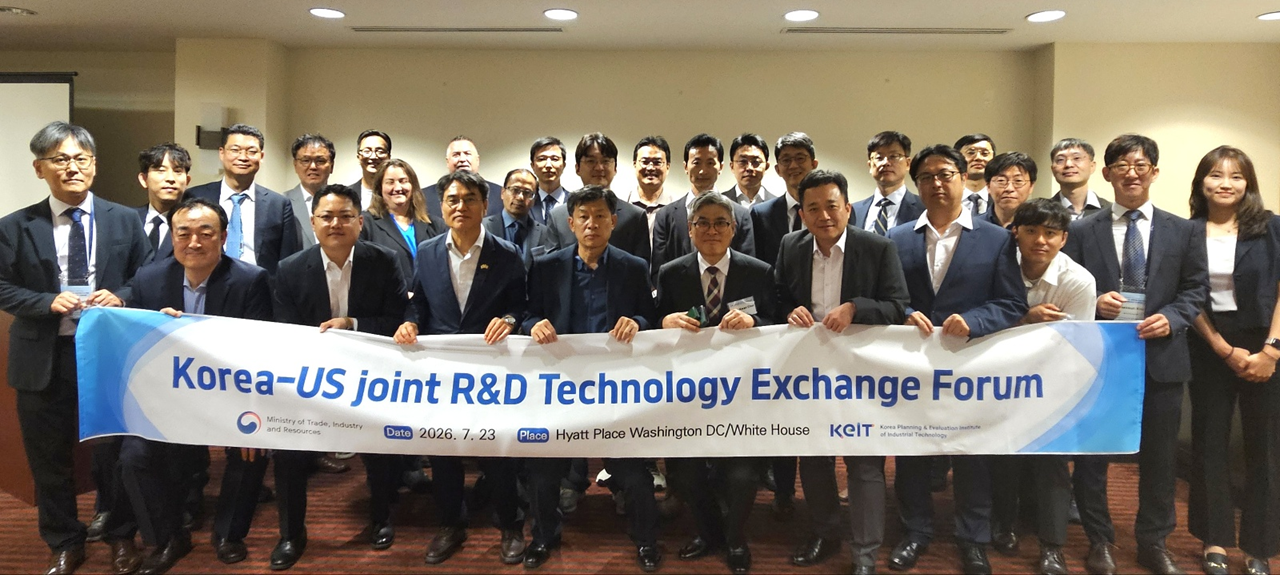
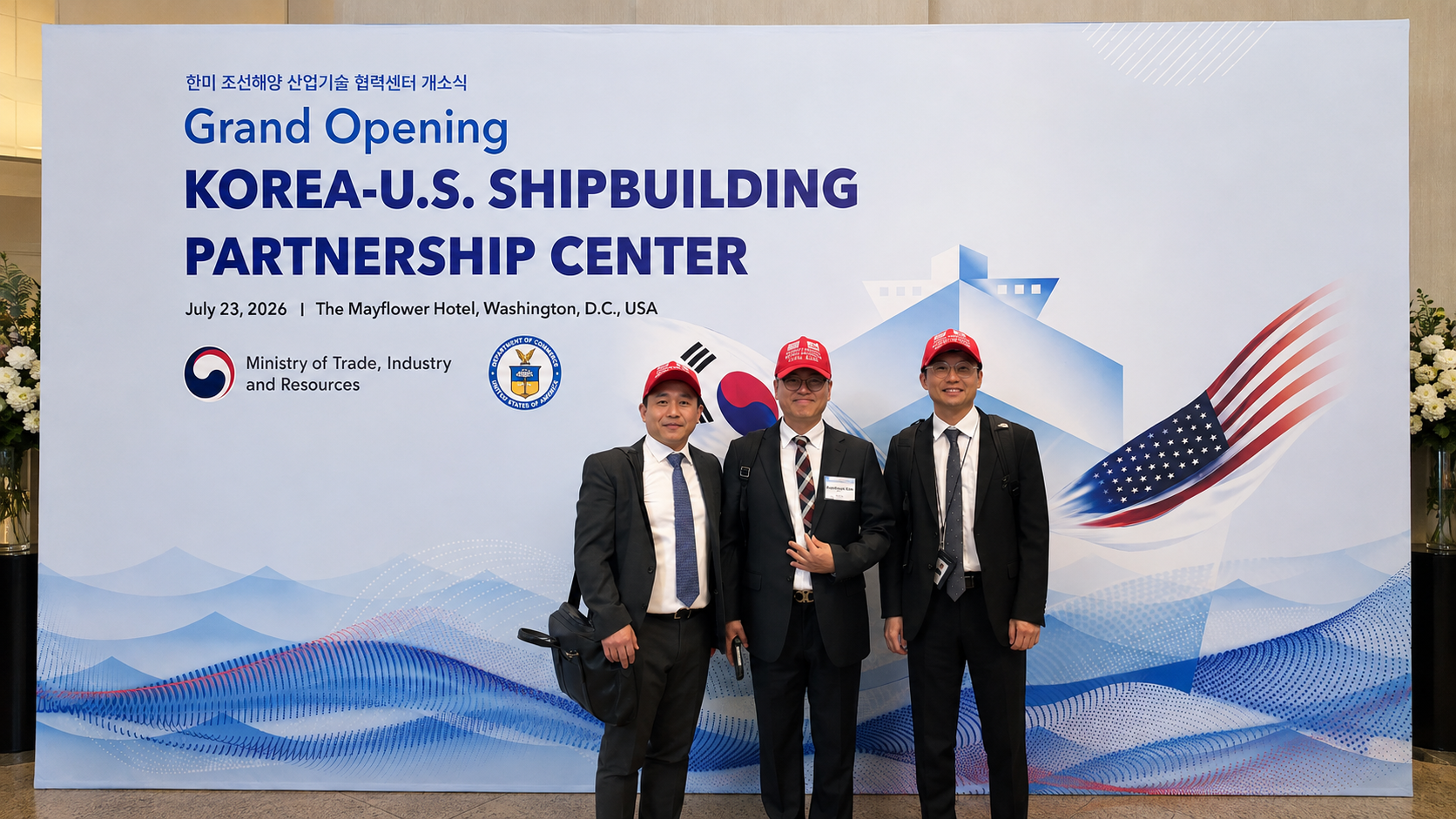
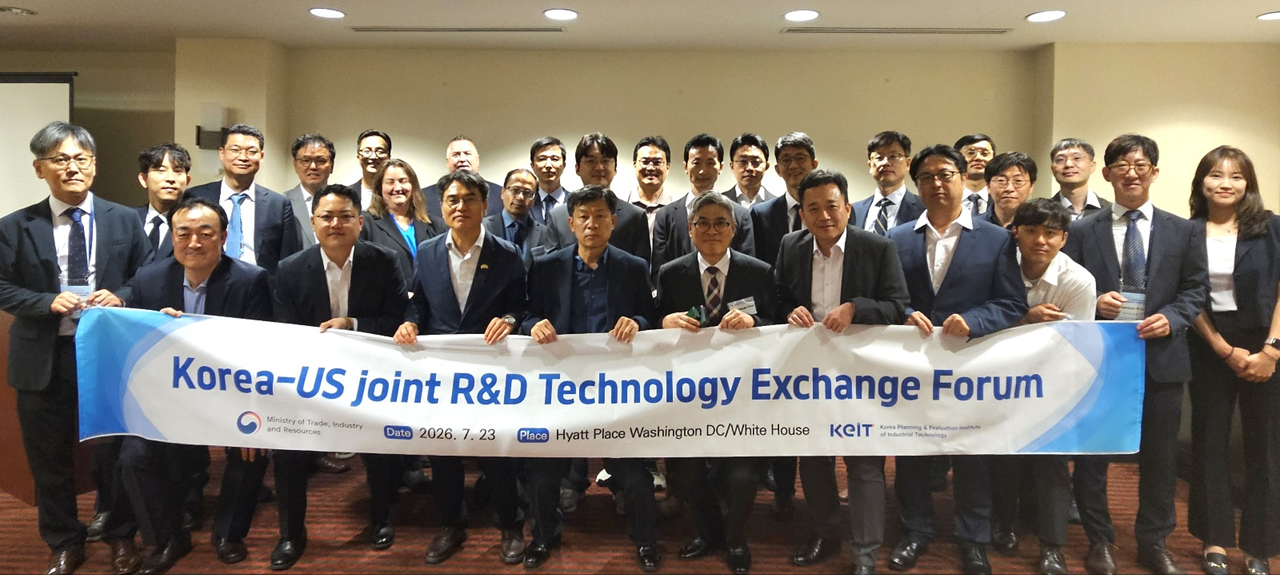
UNIST and 3D Factory presented their metal additive manufacturing and AI-based manufacturing capabilities in Washington, DC, in July at the Openning Ceremony of the Korea-US Shipbuilding Cooperation Center and the Korea-US Joint R&D Technology Exchange Forum. The events brought the team together with representatives from the US Navy and the US shipbuilding industry.
If successfully validated and certified, the technology could open opportunities to enter the US naval component supply chain and other overseas markets. The project is also expected to serve as a demonstration model for MASGA (Make American Shipbuilding Great Again), the Korea-US shipbuilding cooperation initiative.
Ulsan City plans to support subsequent commercialization and overseas market development, drawing on the region's established shipbuilding and manufacturing base.
“The key to this project is not simply producing a five-meter-scale component, but demonstrating DfAM and AI-based distortion compensation at full scale,” said Namhun Kim, Director of the UNIST 3D Printing Convergence Technology Center. “By combining UNIST's research capabilities with Ulsan's shipbuilding infrastructure, we aim to establish a new approach to manufacturing large ship components and develop it into a model for Korea-US shipbuilding cooperation.”
Related Links
Related Photo
![[사진] UNIST와 ㈜쓰리디팩토리 관계자들이 지난달 23일 미국 워싱턴 D.C.에서 열린 ‘한미 조선해양 산업기술 협력센터 개소식’에서 기념촬영을 하고 있다. (2).png](/app/board/attach/image/591301_1786329998000.do)





-
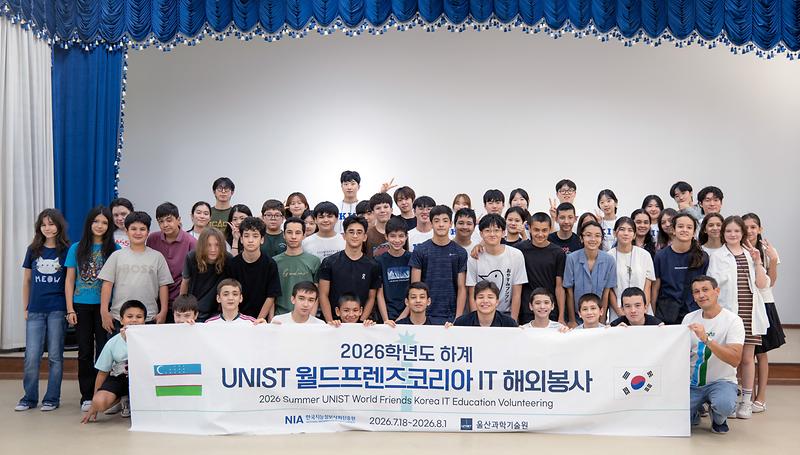
UNIST Students Bring Hands-On STEM Learning to Uzbekistan
-
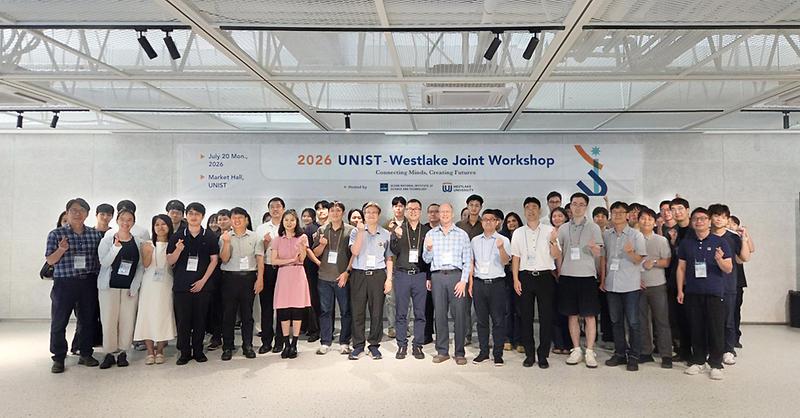
UNIST and Westlake University Expand Research Partnership in Sustainable Energy and Advanced Materials
-
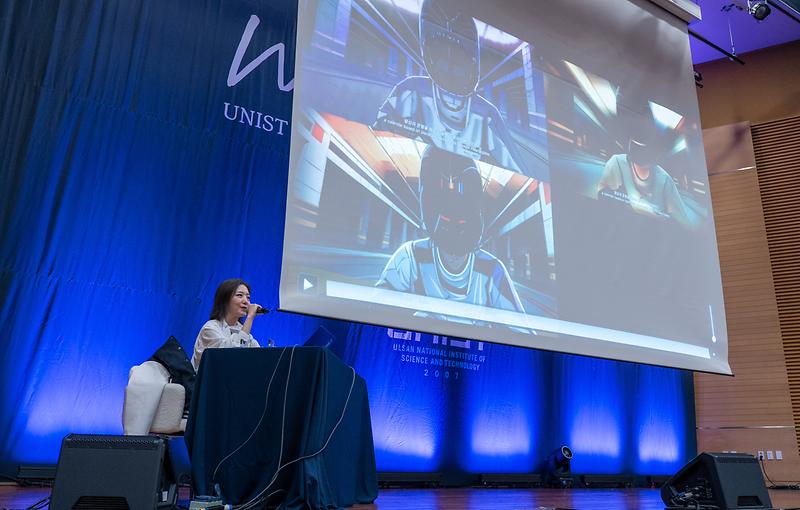
Beyond the Possible: Collaborating Professor Ayoung Kim on Imagination in the AI Era
-
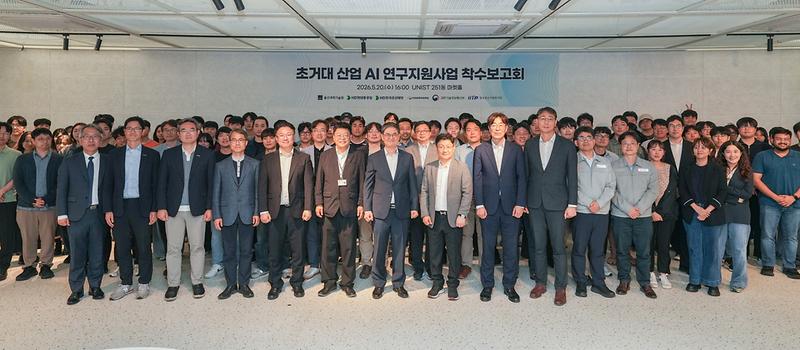
UNIST Holds Kickoff for National AI Initiative in Shipbuilding