UNIST site map
- Admissions
-
Academics
- Colleges and Schools
-
Academic Affairs
- Academic Calendar
- Academic Curriculum
- Requirements for Graduation
- Browse Open Courses
- Undergraduate Administration
-
Graduate Academic Affairs
- Tuition Fee Payment
- Academic Leave of Absence/ Academic Return
- Voluntary Withdrawal/ Expulsion
- Change of Major
- Change of Degree Program/ Dropping of Degree Program
- Class Period/ Attendance Period/ Academic Year・Semester
- Course Registration
- Course Drop
- Attendance/ Grade/ Exam
- Credit Transfer/ Credit Carryover
- Academic Forms
- Education Support
-
Research/Industry
- Research Aims
- Research Findings
- Researcher Search
-
Research Organizations
- UNIST Multi-Interdisciplinary Institute
- IBS Research Groups
-
UNIST Labs
- Department of Mechanical Engineering
- School of Energy and Chemical Engineering
- Department of Civil
- Department of Materials Science and Engineering
- Department of Nuclear Engineering
- Department of Industrial Engineering
- Department of Design
- Department of Biomedical Engineering
- Department of Biological Sciences
- Department of Electrical Engineering
- Department of Computer Science and Engineering
- Department of Mathematical Sciences
- Department of Chemistry
- Department of Physics
- School of Business Administration
- Graduate School of Carbon Neutrality
- Graduate School of Artificial Intelligence
- Research Support
- University-Industry Relations
- Campus Life
- News Center
- About UNIST
-
etc
- UNIST Bulletin
- Work-Life Balance Support System
- UNIST Gender Equality Plan
- Faculty Invitation for Tenure Track
- Faculty Invitation for Non-Tenure Track
- Board Meeting Minutes
- University Council Meeting Minutes
- Administrative Service Charter
- Privacy Policy
- Copyright Policy
- Rejection of Unauthorized Email Collection
- Operation and Management Policy for Video Information Processing Devices
- Information Disclosure


Connection Points of Knowledge, Everything About UNIST
Try searching.
Recommended search terms


- portal
- U Academics Innovation Center
- Leadership Center
- Dormitory
- Academic Information Center
- International Students Support
- Browse Open Courses
- Course Registration
- Graduation Requirements for Graduation
- Academic Leave of Absence/ Academic Return
- Military Service
- Certificate Issuance
- Academic Calendar
- Scholarships
- Campus Map
- Campus Life Guidebook
- Health Care Center
- Human Rights Center
- portal
- Job Opening
- Announcement for Bid
- UNIST AI Services
- UNIST Daycare Center
- Sports Center
- UI Downloads
- Announcement
- Recruitment of Professors (Non-tenure)
- Faculty Invitation for Tenure Track
- UNIST Academic Information Center
- Office of Research Facilities and Training
- Office of Research Affairs
- Rule Management System
- Academic Calendar


This is a collection of menus necessary for UNIST students .
students
- portal
- U Academics Innovation Center
- Leadership Center
- Dormitory
- Academic Information Center
- International Students Support
- Browse Open Courses
- Course Registration
- Graduation Requirements for Graduation
- Academic Leave of Absence/ Academic Return
- Military Service
- Certificate Issuance
- Academic Calendar
- Scholarships
- Campus Map
- Campus Life Guidebook
- Health Care Center
- Human Rights Center


This is a collection of menus necessary for prospective UNIST Students .
prospective Students


This is a collection of menus necessary for UNIST Faculty & Staff .
Faculty & Staff
- portal
- Job Opening
- Announcement for Bid
- UNIST AI Services
- UNIST Daycare Center
- Sports Center
- UI Downloads
- Announcement
- Recruitment of Professors (Non-tenure)
- Faculty Invitation for Tenure Track
- UNIST Academic Information Center
- Office of Research Facilities and Training
- Office of Research Affairs
- Rule Management System
- Academic Calendar


NEWS CENTER
Discover not only Research Findings and event news, but also the diverse facets of UNIST presented by reporters and writers.
News Center

UNIST News
Beyond the Answer: Sedol Lee and Changho Lee on Human Judgment in the AI Era
UNIST Collaborating Professor Sedol Lee and Go grandmaster Changho Lee reflect on creativity, resilience, and the future of learning during the inaugural UNIST Open Stage event.
- News
- JooHyeon Heo
- 2026.05.07
- 1589
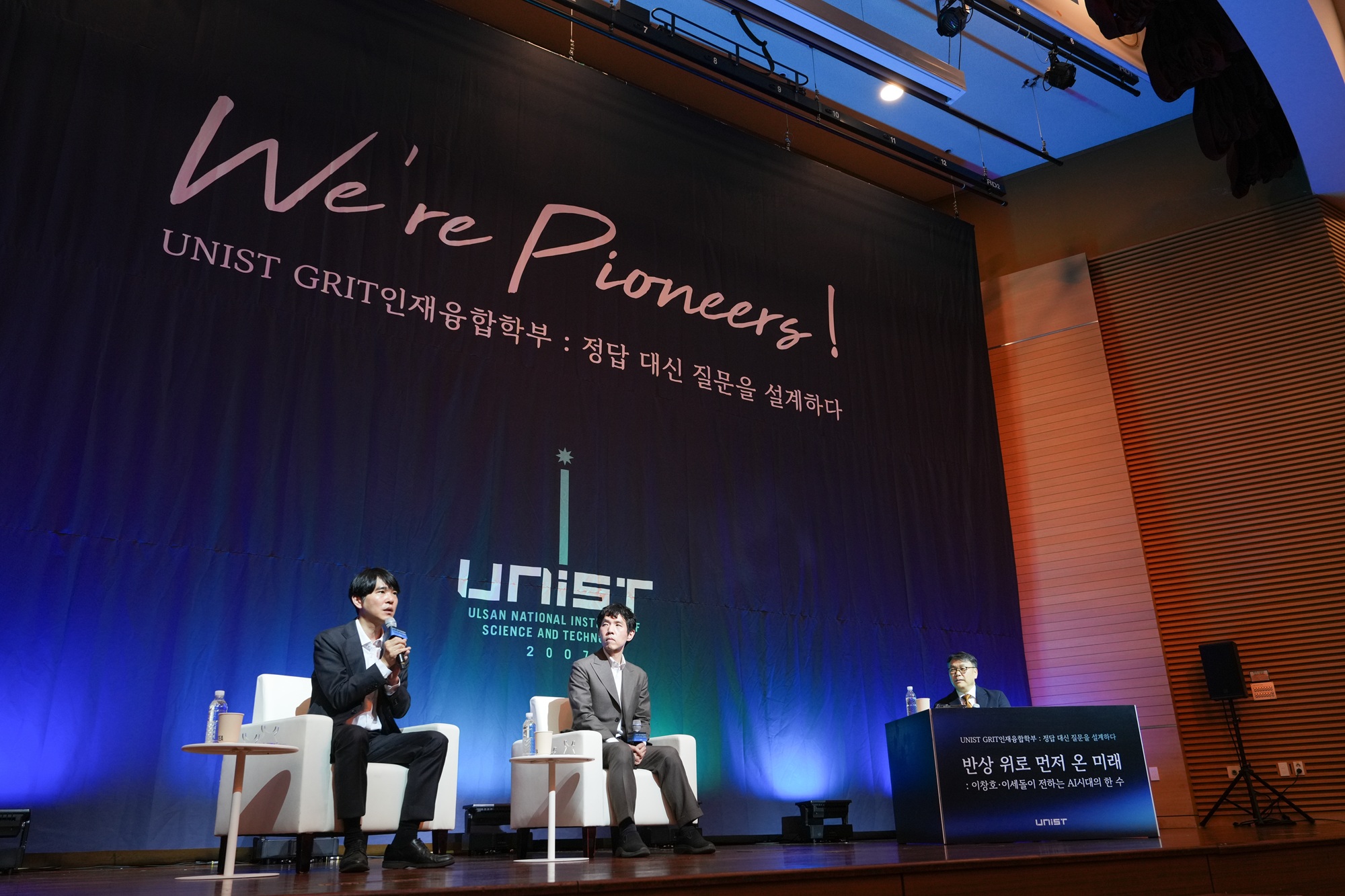
"AI may generate answers, but understanding and applying them remain fundamentally human."
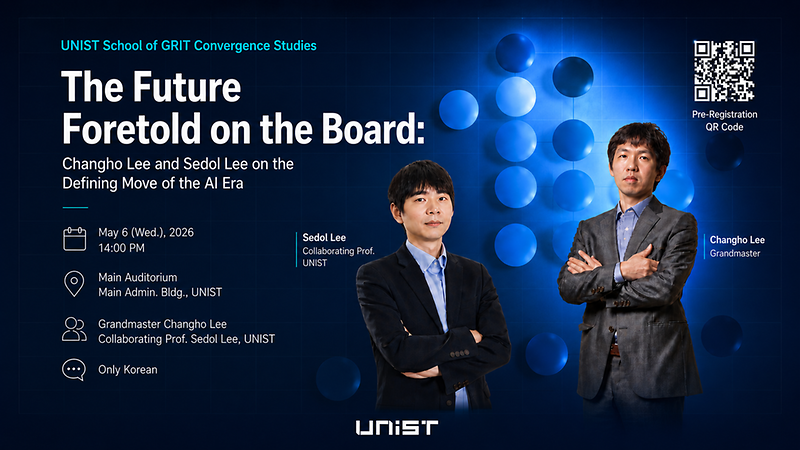
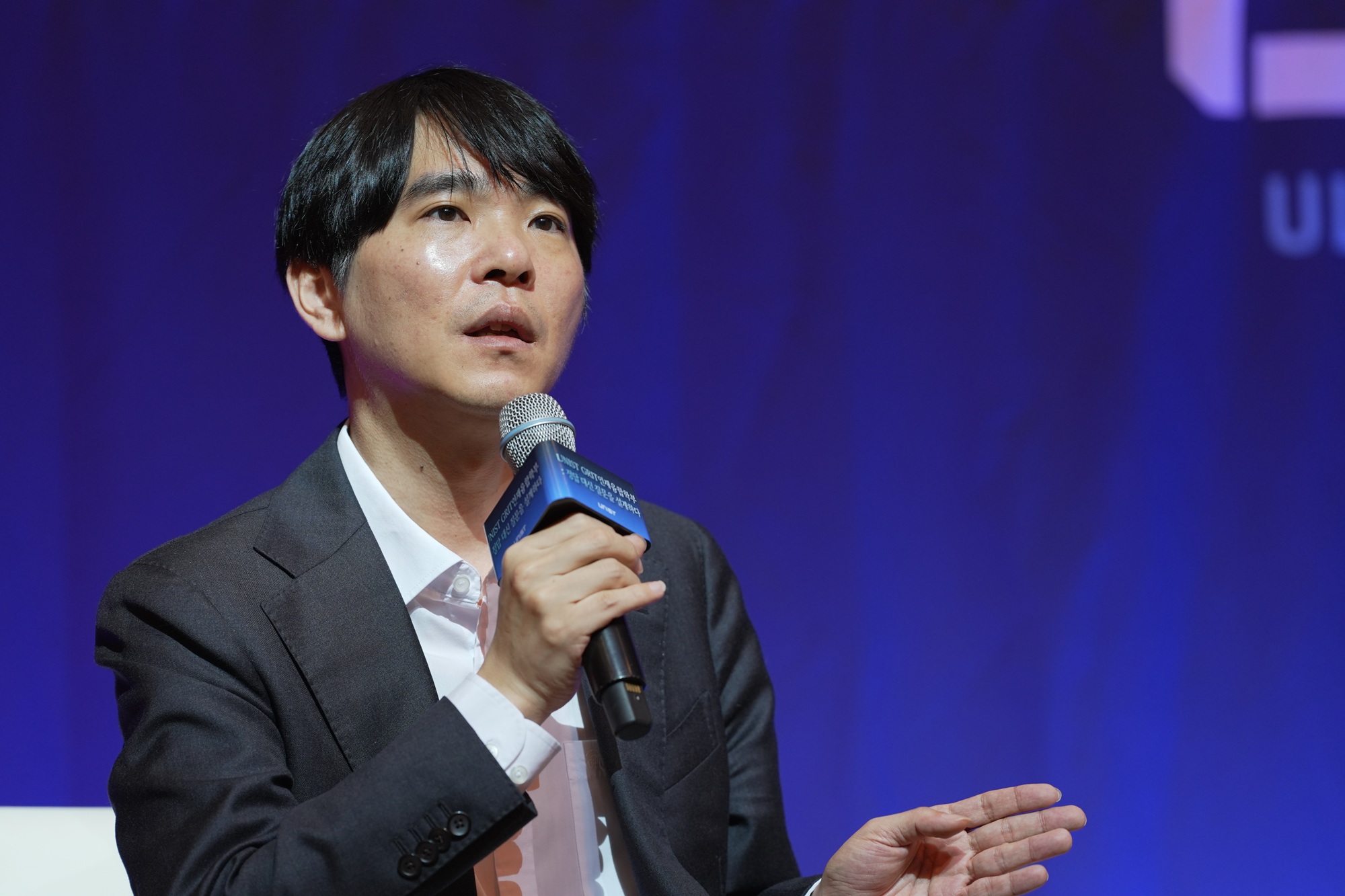
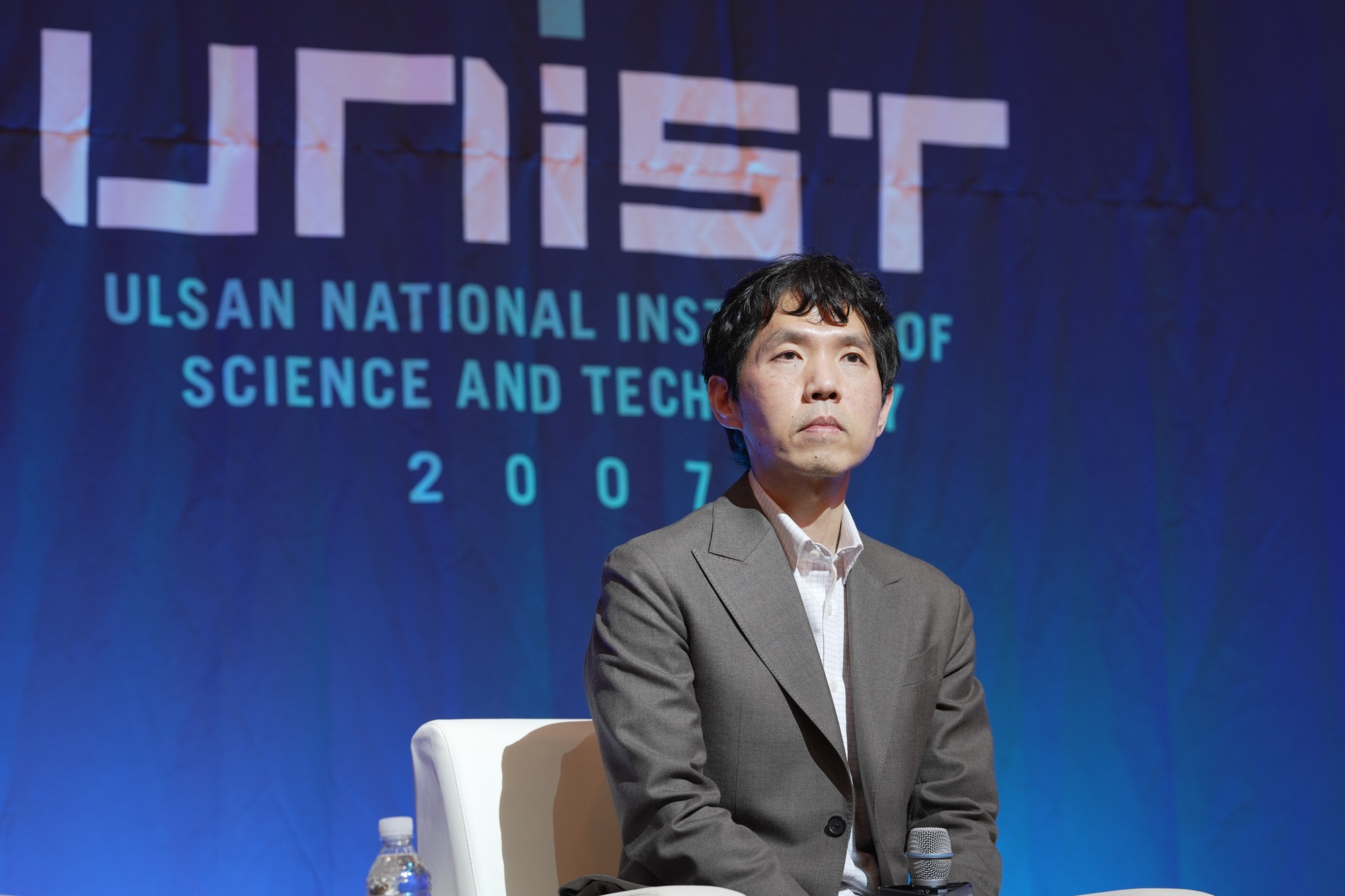
That question framed a public conversation at UNIST on May 6 featuring UNIST Collaborating Professor Sedol Lee and Go grandmaster Changho Lee, who reflected on the future of human judgment, creativity, and learning in an age increasingly shaped by artificial intelligence.
Held before an audience of more than 200 students, faculty members, and members of the public, the event inaugurated UNIST Open Stage 1, a new lecture series launched alongside the establishment of the School of GRIT Convergence Studies. Moderated by Professor Cheol-Min Ghim, Head of the school, the conversation explored what the culture and discipline of Go can reveal about thought, resilience, and decision-making in the age of AI.
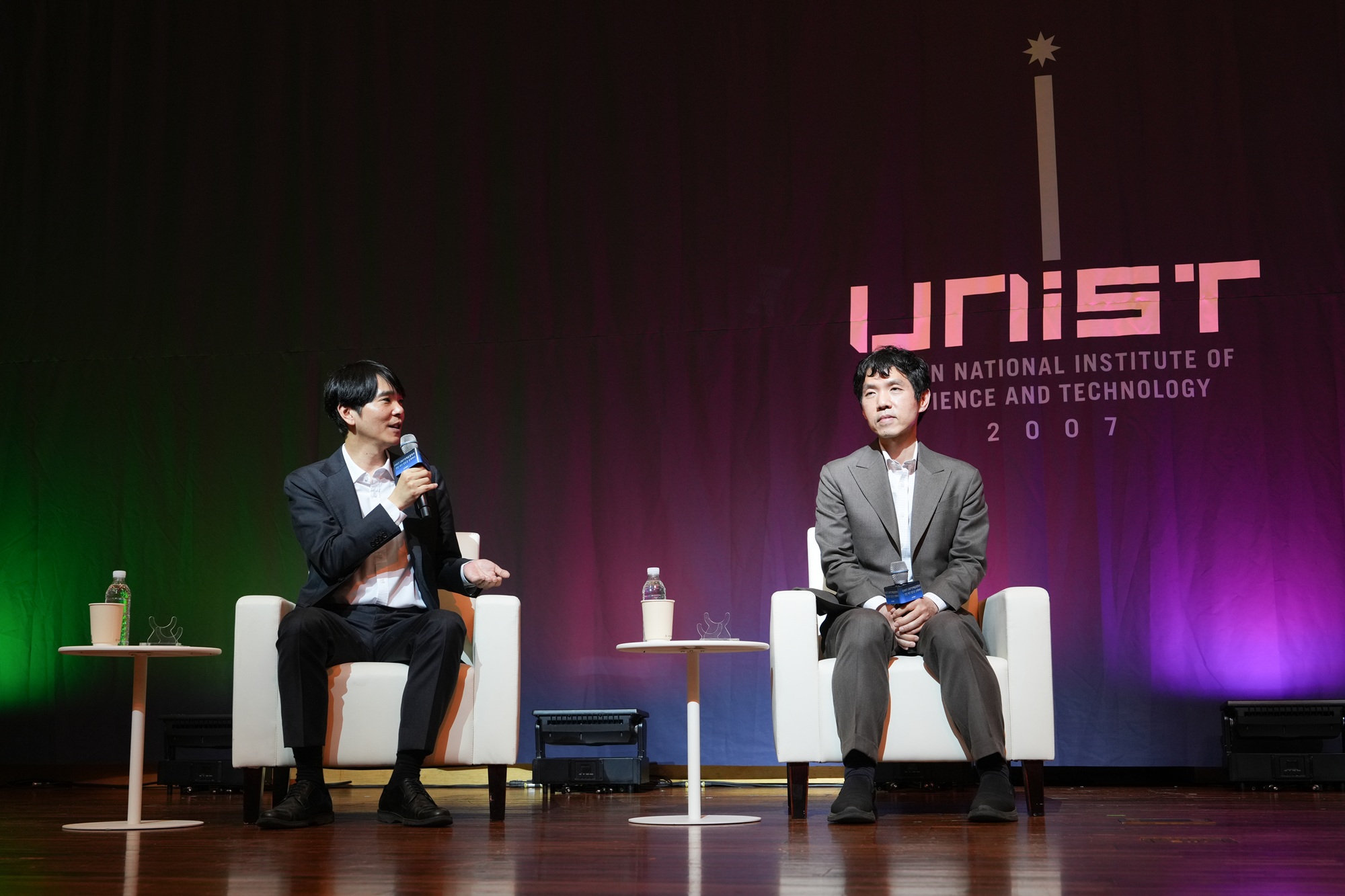
Titled “The Future Foretold on the Board: Sedol Lee and Changho Lee on the Defining Move of the AI Era,” the discussion explored how AIphaGo transformed professional Go while reshaping broader ideas about expertise, creativity, and human judgment.
Although AI systems now surpass humans in many forms of strategic analysis, both speakers argued that interpretation, discernment, and the ability to formulate meaningful questions remain distinctly human capacities.
“AI can produce stronger and faster answers,” said Professor Sedol Lee. “But people still have to decide what questions are worth asking and how those answers should be understood and applied.”
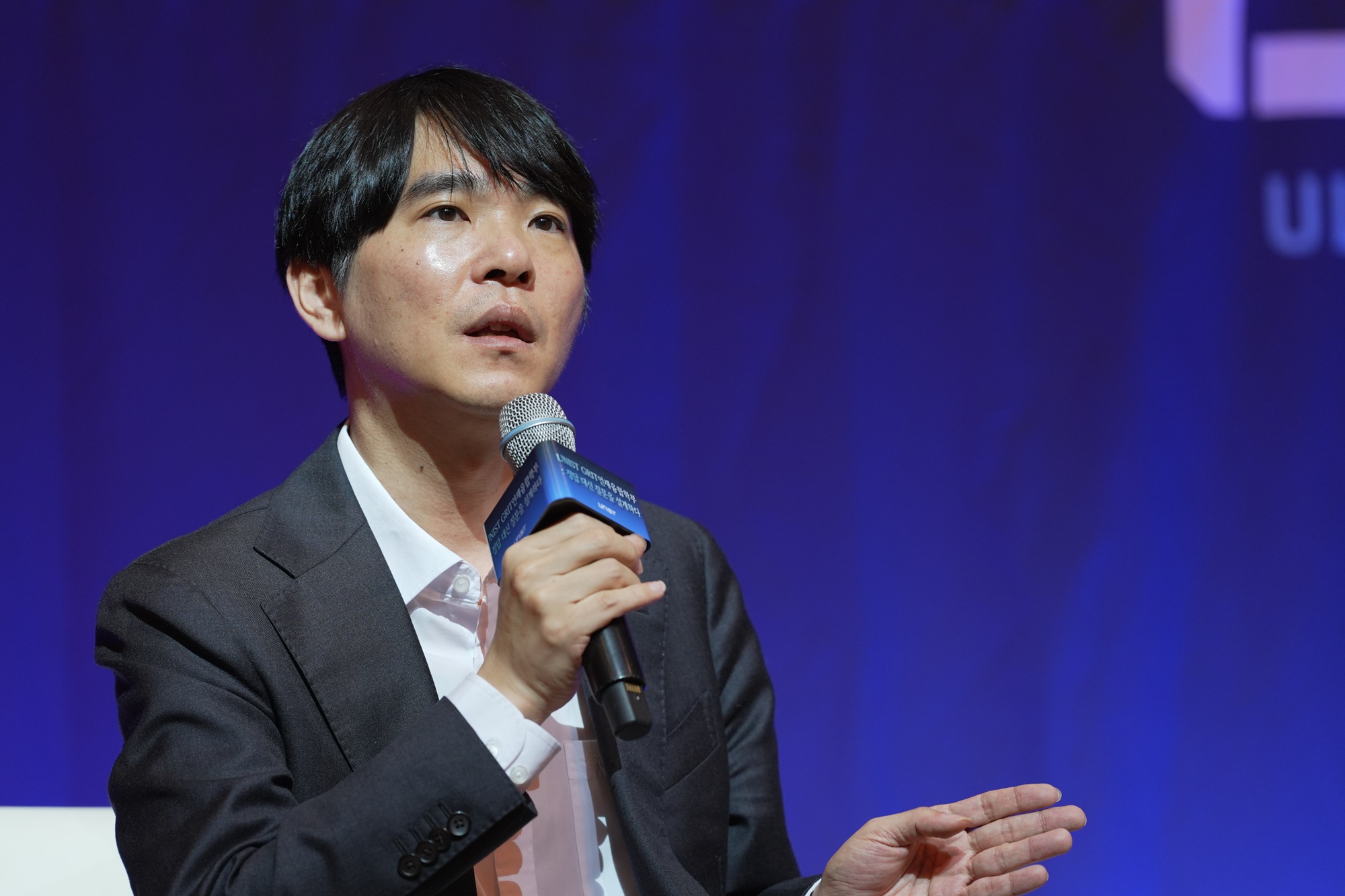
Changho Lee drew a distinction between receiving information and truly understanding it. “Seeing the correct move is different from understanding the process behind it,” he said. “Even when AI presents an answer, the work of making that insight one’s own still belongs to the individual.”
The discussion later turned to failure, reflection, and the role of adversity in learning. Drawing on their experiences at the highest levels of professional competition, both speakers described how setbacks often become the basis for growth and self-understanding.
“Losses tend to stay with you longer than victories,” Changho Lee said. “Carefully revisiting those difficult moments is often what prepares you for the next challenge.”
Professor Sedol Lee added that creativity itself is shaped through repeated experimentation and failure. “New ideas rarely emerge all at once,” he said. “They come from continually testing your thinking, reconsidering assumptions, and searching for different possibilities.”
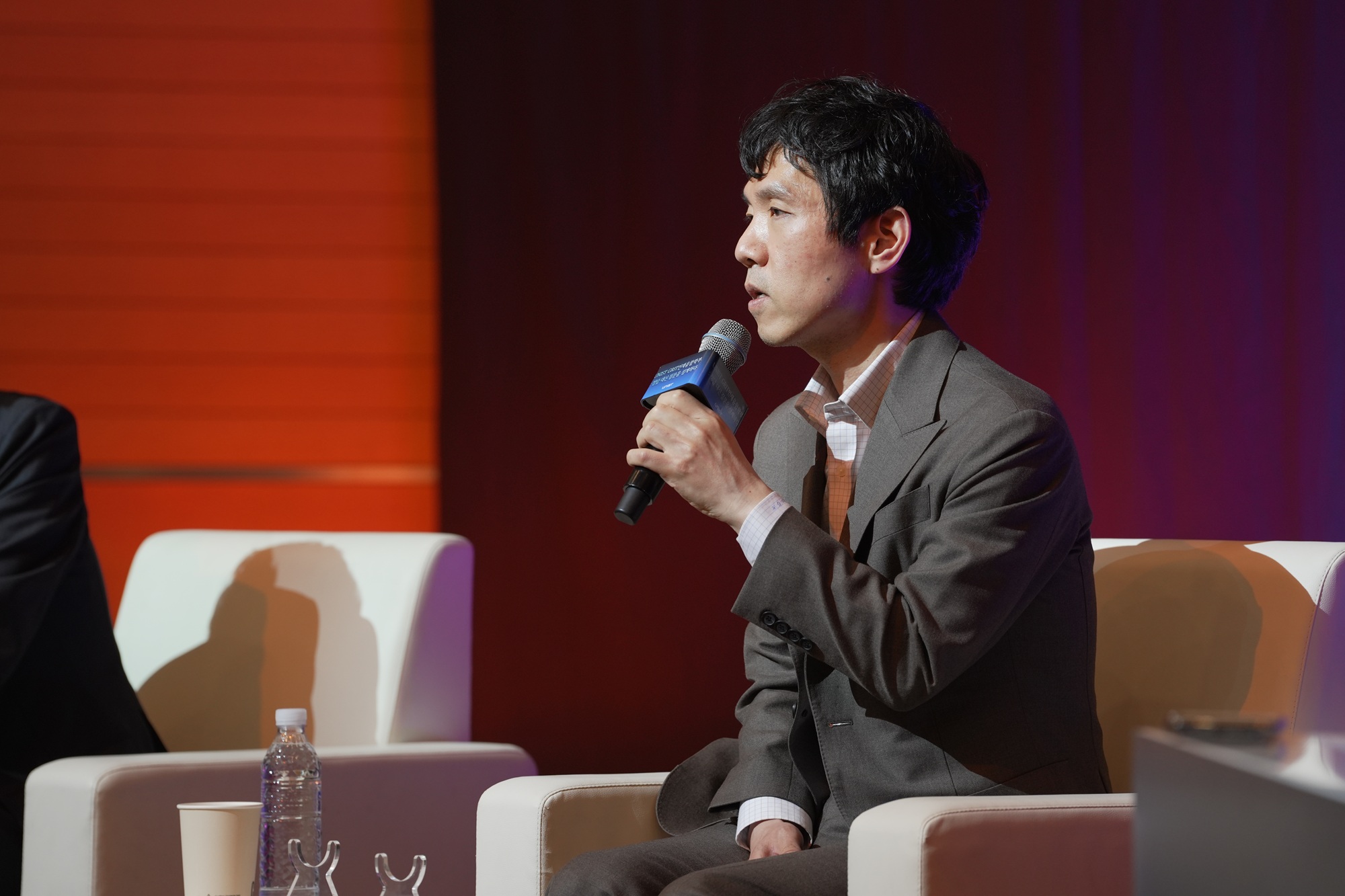
UNIST centered the inaugural Open Stage around Go because few fields confronted the arrival of AI as early—or as visibly—as professional Go. For the university, the discussion also reflected the broader educational philosophy behind the School of GRIT Convergence Studies, which emphasizes self-directed inquiry, interdisciplinary thinking, and intellectual resilience.
Scheduled to admit its first cohort in 2027, the School of GRIT Convergence Studies will allow students to design individualized academic pathways based on their own research questions and intellectual interests. The curriculum will center on project-based inquiry and close faculty mentorship, supported by a P/NR (Pass/No Record) evaluation system designed to encourage experimentation and intellectual risk-taking.
Professor Ghim said the initiative reflects the evolving role of higher education in an AI-driven world. “As knowledge becomes increasingly accessible through AI, universities must place greater emphasis on helping students develop original questions, think across disciplines, and engage deeply with uncertainty,” he said. “We want students to build not only expertise, but also the intellectual resilience required to pursue difficult problems over time.”
President Chong Rae Park of UNIST said the event highlighted the enduring importance of creativity, perseverance, and judgment in a rapidly evolving technological landscape. “AI may transform how knowledge is produced and accessed, but qualities such as judgment, creativity, and perseverance will only grow more important,” he said. “Universities have a responsibility to help students cultivate those qualities in meaningful and lasting ways.”
UNIST plans to continue the Open Stage series with invited speakers from science, technology, and the arts. Later this month, internationally recognized media artist and Ayoung Kim, also a Collaborating Professor at UNIST, will participate in a screening and artist talk as part of the series.
Related Links
Related Photo
![[사진] 이세돌 UNIST 특임교수와 이창호 국수가 GRIT인재융합학부 오픈스테이지 토크콘서트에서 관객 질문을 듣고 있다..jpg](/app/board/attach/image/575233_1778139592000.do)
![[사진] UNIST GRIT인재융합학부 오픈스테이지 토크콘서트 '반상 위로 먼저 온 미래 이창호·이세돌이 전하는 AI 시대의 한 수’ (2).jpg](/app/board/attach/image/575234_1778139592000.do)
![[사진] UNIST GRIT인재융합학부 오픈스테이지 토크콘서트 '반상 위로 먼저 온 미래 이창호·이세돌이 전하는 AI 시대의 한 수’ (4).jpg](/app/board/attach/image/575235_1778139593000.do)
![[사진] '반상 위로 먼저 온 미래 이창호·이세돌이 전하는 AI 시대의 한 수’ 사전 간담회 (1).jpg](/app/board/attach/image/575238_1778139595000.do)