UNIST site map
- Admissions
-
Academics
- Colleges and Schools
-
Academic Affairs
- Academic Calendar
- Academic Curriculum
- Requirements for Graduation
- Browse Open Courses
- Undergraduate Administration
-
Graduate Academic Affairs
- Tuition Fee Payment
- Academic Leave of Absence/ Academic Return
- Voluntary Withdrawal/ Expulsion
- Change of Major
- Change of Degree Program/ Dropping of Degree Program
- Class Period/ Attendance Period/ Academic Year・Semester
- Course Registration
- Course Drop
- Attendance/ Grade/ Exam
- Credit Transfer/ Credit Carryover
- Academic Forms
- Education Support
-
Research/Industry
- Research Aims
- Research Findings
- Researcher Search
-
Research Organizations
- UNIST Multi-Interdisciplinary Institute
- IBS Research Groups
-
UNIST Labs
- Department of Mechanical Engineering
- School of Energy and Chemical Engineering
- Department of Civil
- Department of Materials Science and Engineering
- Department of Nuclear Engineering
- Department of Industrial Engineering
- Department of Design
- Department of Biomedical Engineering
- Department of Biological Sciences
- Department of Electrical Engineering
- Department of Computer Science and Engineering
- Department of Mathematical Sciences
- Department of Chemistry
- Department of Physics
- School of Business Administration
- Graduate School of Carbon Neutrality
- Graduate School of Artificial Intelligence
- Research Support
- University-Industry Relations
- Campus Life
- News Center
- About UNIST
-
etc
- UNIST Bulletin
- Work-Life Balance Support System
- UNIST Gender Equality Plan
- Faculty Invitation for Tenure Track
- Faculty Invitation for Non-Tenure Track
- Board Meeting Minutes
- University Council Meeting Minutes
- Administrative Service Charter
- Privacy Policy
- Copyright Policy
- Rejection of Unauthorized Email Collection
- Operation and Management Policy for Video Information Processing Devices
- Information Disclosure


Connection Points of Knowledge, Everything About UNIST
Try searching.
Recommended search terms


- portal
- U Academics Innovation Center
- Leadership Center
- Dormitory
- Academic Information Center
- International Students Support
- Browse Open Courses
- Course Registration
- Graduation Requirements for Graduation
- Academic Leave of Absence/ Academic Return
- Military Service
- Certificate Issuance
- Academic Calendar
- Scholarships
- Campus Map
- Campus Life Guidebook
- Health Care Center
- Human Rights Center
- portal
- Job Opening
- Announcement for Bid
- UNIST AI Services
- UNIST Daycare Center
- Sports Center
- UI Downloads
- Announcement
- Recruitment of Professors (Non-tenure)
- Faculty Invitation for Tenure Track
- UNIST Academic Information Center
- Office of Research Facilities and Training
- Office of Research Affairs
- Rule Management System
- Academic Calendar


This is a collection of menus necessary for UNIST students .
students
- portal
- U Academics Innovation Center
- Leadership Center
- Dormitory
- Academic Information Center
- International Students Support
- Browse Open Courses
- Course Registration
- Graduation Requirements for Graduation
- Academic Leave of Absence/ Academic Return
- Military Service
- Certificate Issuance
- Academic Calendar
- Scholarships
- Campus Map
- Campus Life Guidebook
- Health Care Center
- Human Rights Center


This is a collection of menus necessary for prospective UNIST Students .
prospective Students


This is a collection of menus necessary for UNIST Faculty & Staff .
Faculty & Staff
- portal
- Job Opening
- Announcement for Bid
- UNIST AI Services
- UNIST Daycare Center
- Sports Center
- UI Downloads
- Announcement
- Recruitment of Professors (Non-tenure)
- Faculty Invitation for Tenure Track
- UNIST Academic Information Center
- Office of Research Facilities and Training
- Office of Research Affairs
- Rule Management System
- Academic Calendar


NEWS CENTER
Discover not only Research Findings and event news, but also the diverse facets of UNIST presented by reporters and writers.
News Center

UNIST News
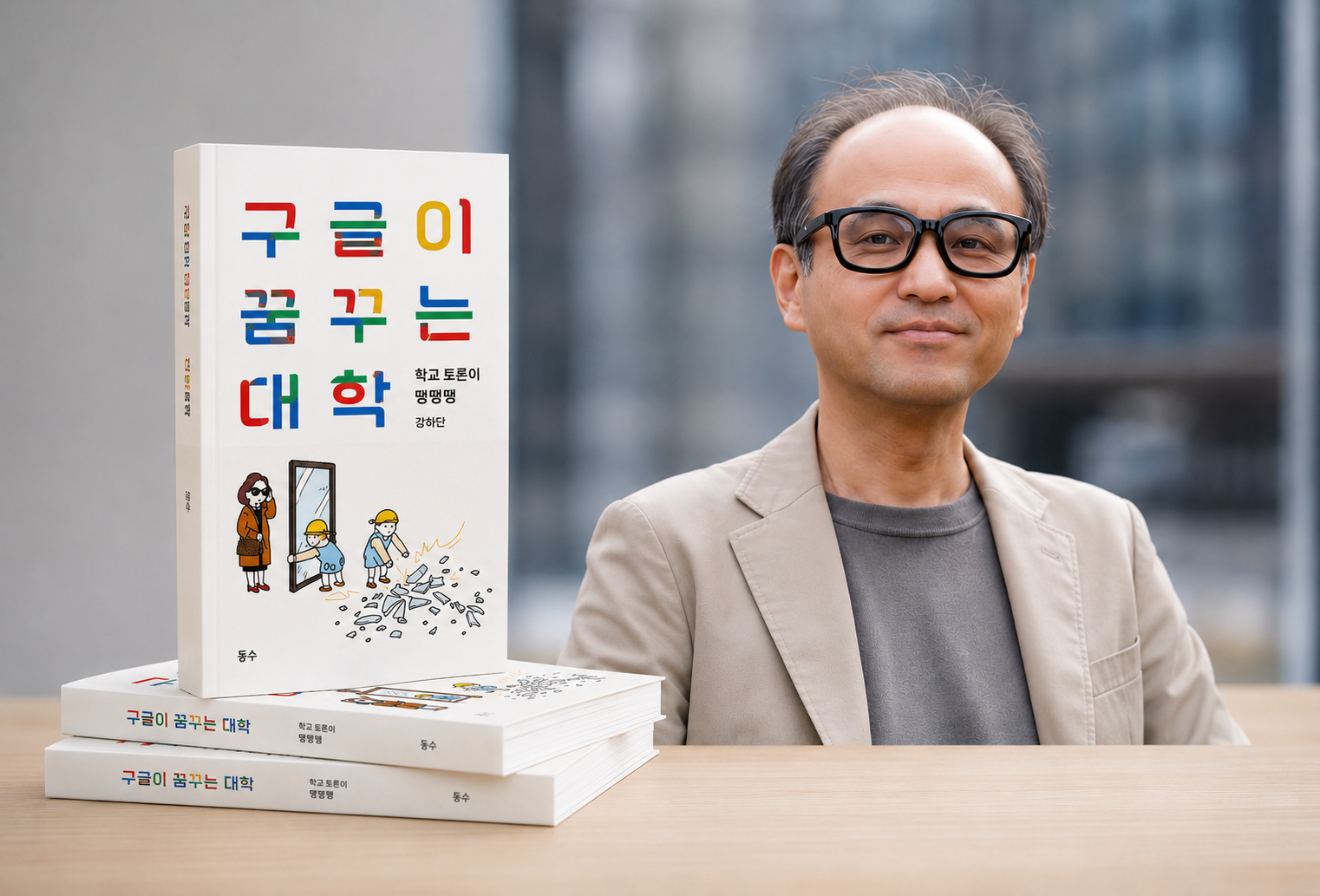
New Publication by Professor Jaewon Cho Explores the Future of Higher Education in the Age of AI
The book argues that future universities should place greater emphasis on inquiry, collaboration, and knowledge creation.
- Community
- JooHyeon Heo
- 2026.06.25
- 1665
“As artificial intelligence (AI) becomes increasingly capable of generating information and answering questions, what should students learn—and what role should universities play?”
Those questions are at the center of a new book by Professor Jaewon Cho of Civil, Urban, Earth, and Environmental Engineering at UNIST. Published under his pen name, Kang Hadan, the book—whose Korean title references a future vision of higher education—examines how education might evolve in an era shaped by AI, large language models, and digital technologies.
Professor Cho argues that many educational systems remain focused on transmitting established knowledge and rewarding students for finding correct answers. Yet today's learners face challenges—from climate change to economic uncertainty—that rarely come with predetermined solutions. In this environment, he suggests, education must place greater emphasis on inquiry, collaboration, and the creation of new knowledge.
The book proposes a future learning ecosystem in which students, teachers, and AI work together to explore questions, test ideas, and develop new ways of understanding the world. Teachers serve less as providers of answers and more as guides who help students navigate different perspectives and connect learning to real-world challenges.
A recurring theme throughout the book is the need to look beyond conventional measures of achievement. Professor Cho argues that curiosity, experimentation, collaboration, and creative problem-solving may be just as important as grades and test scores in preparing students for a rapidly changing world.
The book also examines how emerging technologies could transform the way learning is documented and recognized. Rather than focusing solely on outcomes, future educational systems may place greater value on the process of learning itself—how students ask questions, develop ideas, respond to setbacks, and build knowledge with others.
Another key theme is the role of play in education. Professor Cho suggests that meaningful learning often begins when students pursue questions out of genuine curiosity, collaborate with peers, and experiment without fear of failure.
“The amount of knowledge we need to memorize is shrinking, while the amount of knowledge we need to create is growing,” Professor Cho writes. “Education should not be about finding predetermined answers, but about developing new ways to understand the world.”
At UNIST, Professor Cho teaches and conducts research in environmental engineering, environmental ethics, and the humanities of science and technology. He previously served as director of the Science Walden, where he led interdisciplinary initiatives addressing issues such as climate change, social inequality, and the future of work.
Related Links


-
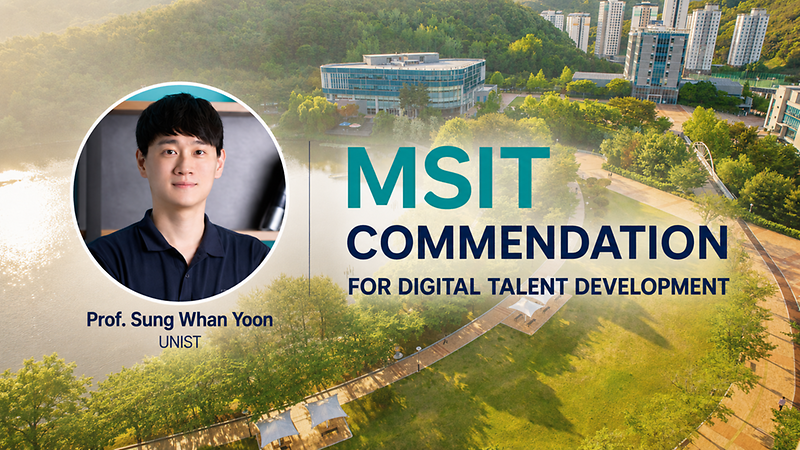
Professor Sung Whan Yoon Receives MSIT Commendation for Digital Talent Development
-
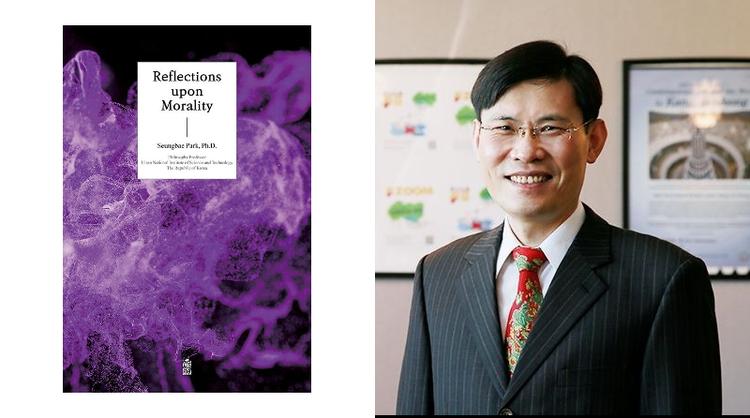
Reflections upon Morality: A New Publication by Professor Seungbae Park
-
Four UNIST Professors Elected as New Member of National Academy of Engineering of Korea
-
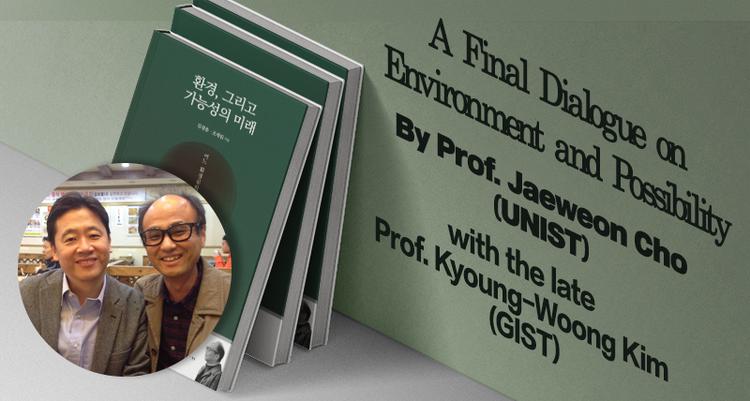
New Book Brings Together the Final Reflections of Two Environmental Engineers