UNIST site map
- Admissions
-
Academics
- Colleges and Schools
-
Academic Affairs
- Academic Calendar
- Academic Curriculum
- Requirements for Graduation
- Browse Open Courses
- Undergraduate Administration
-
Graduate Academic Affairs
- Tuition Fee Payment
- Academic Leave of Absence/ Academic Return
- Voluntary Withdrawal/ Expulsion
- Change of Major
- Change of Degree Program/ Dropping of Degree Program
- Class Period/ Attendance Period/ Academic Year・Semester
- Course Registration
- Course Drop
- Attendance/ Grade/ Exam
- Credit Transfer/ Credit Carryover
- Academic Forms
- Education Support
-
Research/Industry
- Research Aims
- Research Findings
- Researcher Search
-
Research Organizations
- UNIST Multi-Interdisciplinary Institute
- IBS Research Groups
-
UNIST Labs
- Department of Mechanical Engineering
- School of Energy and Chemical Engineering
- Department of Civil
- Department of Materials Science and Engineering
- Department of Nuclear Engineering
- Department of Industrial Engineering
- Department of Design
- Department of Biomedical Engineering
- Department of Biological Sciences
- Department of Electrical Engineering
- Department of Computer Science and Engineering
- Department of Mathematical Sciences
- Department of Chemistry
- Department of Physics
- School of Business Administration
- Graduate School of Carbon Neutrality
- Graduate School of Artificial Intelligence
- Research Support
- University-Industry Relations
- Campus Life
- News Center
- About UNIST
-
etc
- UNIST Bulletin
- Work-Life Balance Support System
- UNIST Gender Equality Plan
- Faculty Invitation for Tenure Track
- Faculty Invitation for Non-Tenure Track
- Board Meeting Minutes
- University Council Meeting Minutes
- Administrative Service Charter
- Privacy Policy
- Copyright Policy
- Rejection of Unauthorized Email Collection
- Operation and Management Policy for Video Information Processing Devices
- Information Disclosure


Connection Points of Knowledge, Everything About UNIST
Try searching.
Recommended search terms


- portal
- U Academics Innovation Center
- Leadership Center
- Dormitory
- Academic Information Center
- International Students Support
- Browse Open Courses
- Course Registration
- Graduation Requirements for Graduation
- Academic Leave of Absence/ Academic Return
- Military Service
- Certificate Issuance
- Academic Calendar
- Scholarships
- Campus Map
- Campus Life Guidebook
- Health Care Center
- Human Rights Center
- portal
- Job Opening
- Announcement for Bid
- UNIST AI Services
- UNIST Daycare Center
- Sports Center
- UI Downloads
- Announcement
- Recruitment of Professors (Non-tenure)
- Faculty Invitation for Tenure Track
- UNIST Academic Information Center
- Office of Research Facilities and Training
- Office of Research Affairs
- Rule Management System
- Academic Calendar


This is a collection of menus necessary for UNIST students .
students
- portal
- U Academics Innovation Center
- Leadership Center
- Dormitory
- Academic Information Center
- International Students Support
- Browse Open Courses
- Course Registration
- Graduation Requirements for Graduation
- Academic Leave of Absence/ Academic Return
- Military Service
- Certificate Issuance
- Academic Calendar
- Scholarships
- Campus Map
- Campus Life Guidebook
- Health Care Center
- Human Rights Center


This is a collection of menus necessary for prospective UNIST Students .
prospective Students


This is a collection of menus necessary for UNIST Faculty & Staff .
Faculty & Staff
- portal
- Job Opening
- Announcement for Bid
- UNIST AI Services
- UNIST Daycare Center
- Sports Center
- UI Downloads
- Announcement
- Recruitment of Professors (Non-tenure)
- Faculty Invitation for Tenure Track
- UNIST Academic Information Center
- Office of Research Facilities and Training
- Office of Research Affairs
- Rule Management System
- Academic Calendar


NEWS CENTER
Discover not only Research Findings and event news, but also the diverse facets of UNIST presented by reporters and writers.
News Center

UNIST News
UNIST Racing Team Takes First Place at International Autonomous Driving Competition
Team UNICORN Racing Claims First Place Among 37 International University Teams
- Community
- JooHyeon Heo
- 2026.06.15
- 1506
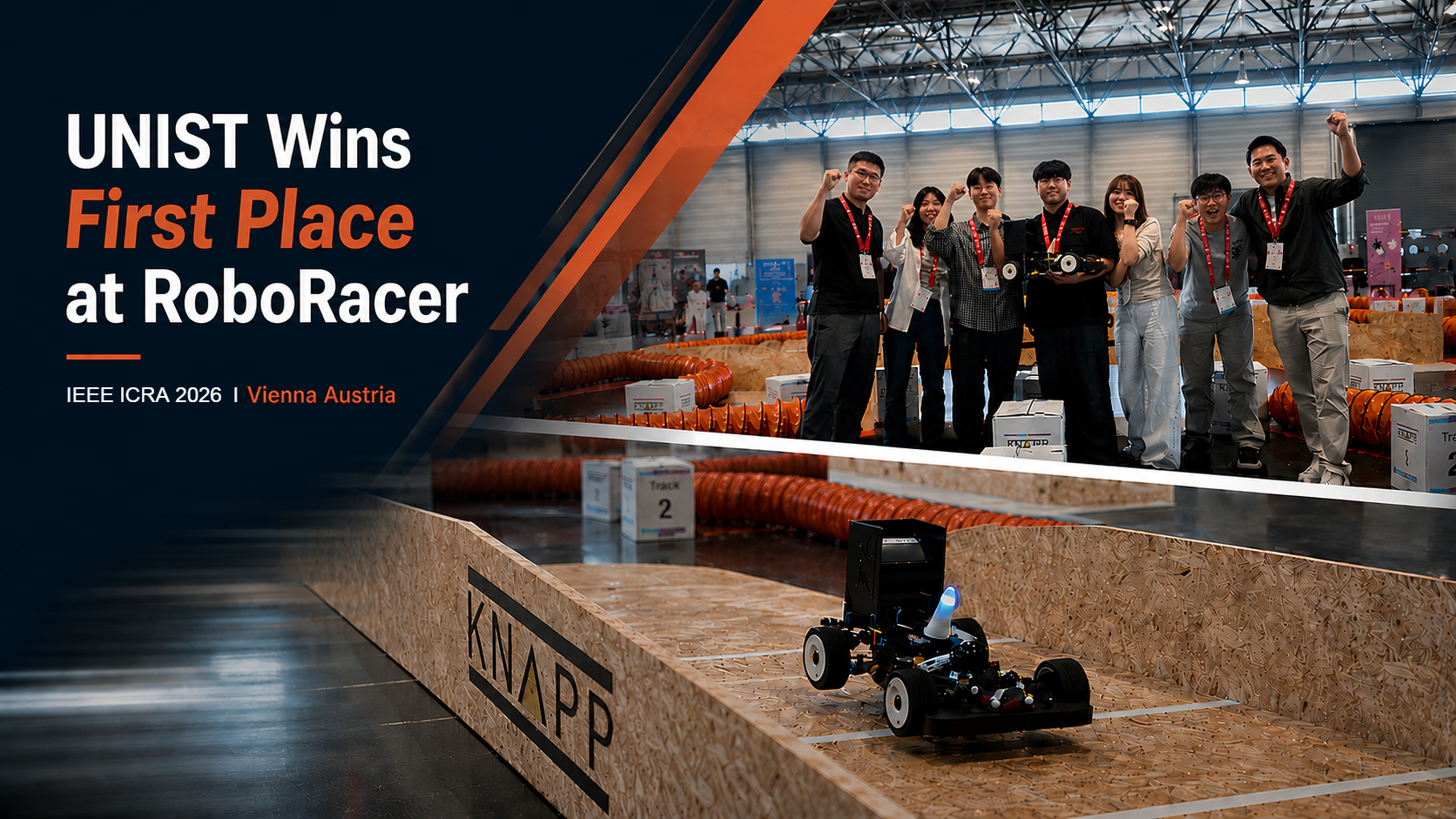
A UNIST autonomous racing team has won first place at RoboRacer, an international autonomous driving competition, held as part of the 2026 IEEE International Conference on Robotics and Automation (ICRA), one of the world's leading conferences in robotics and automation.
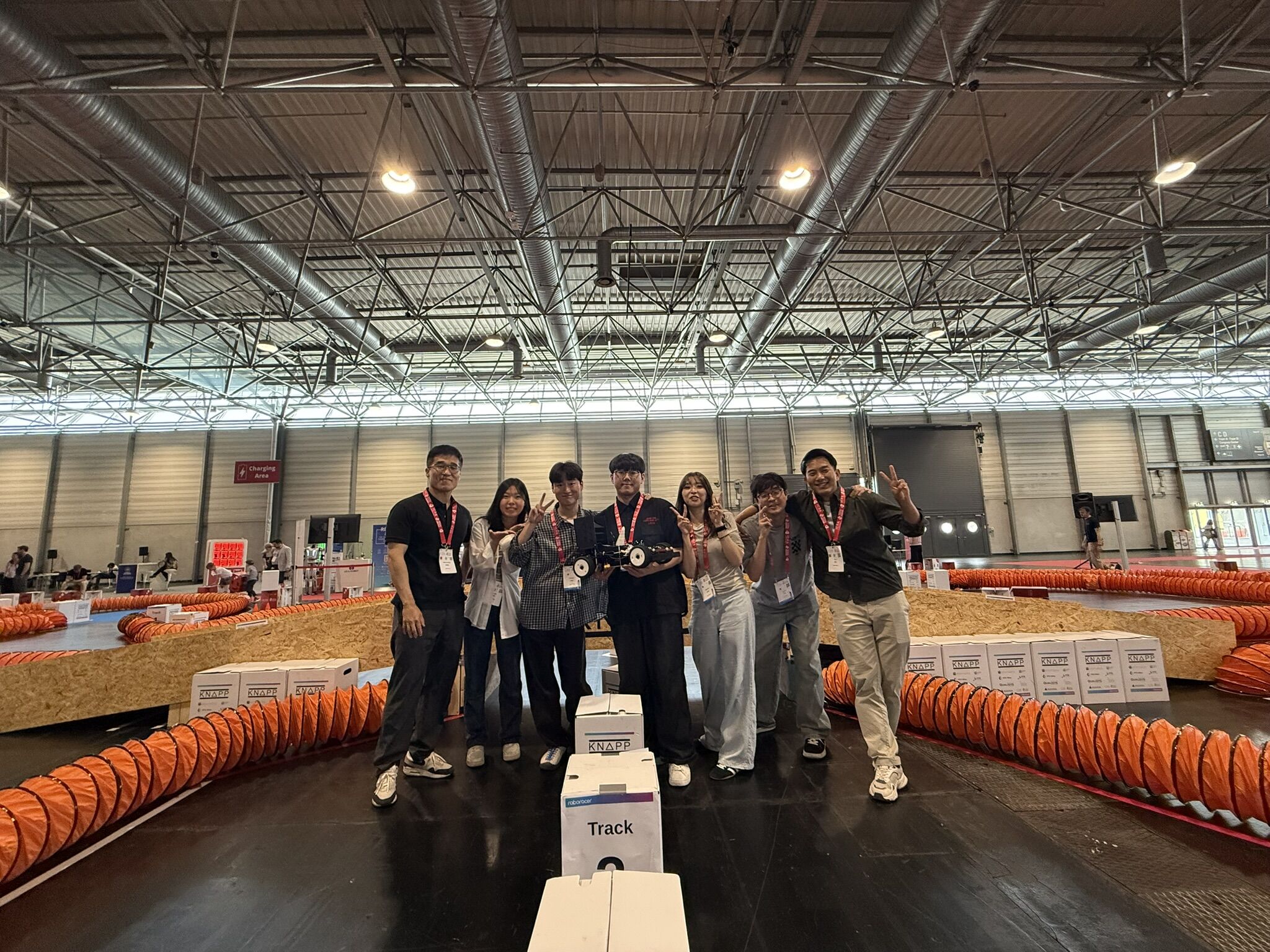
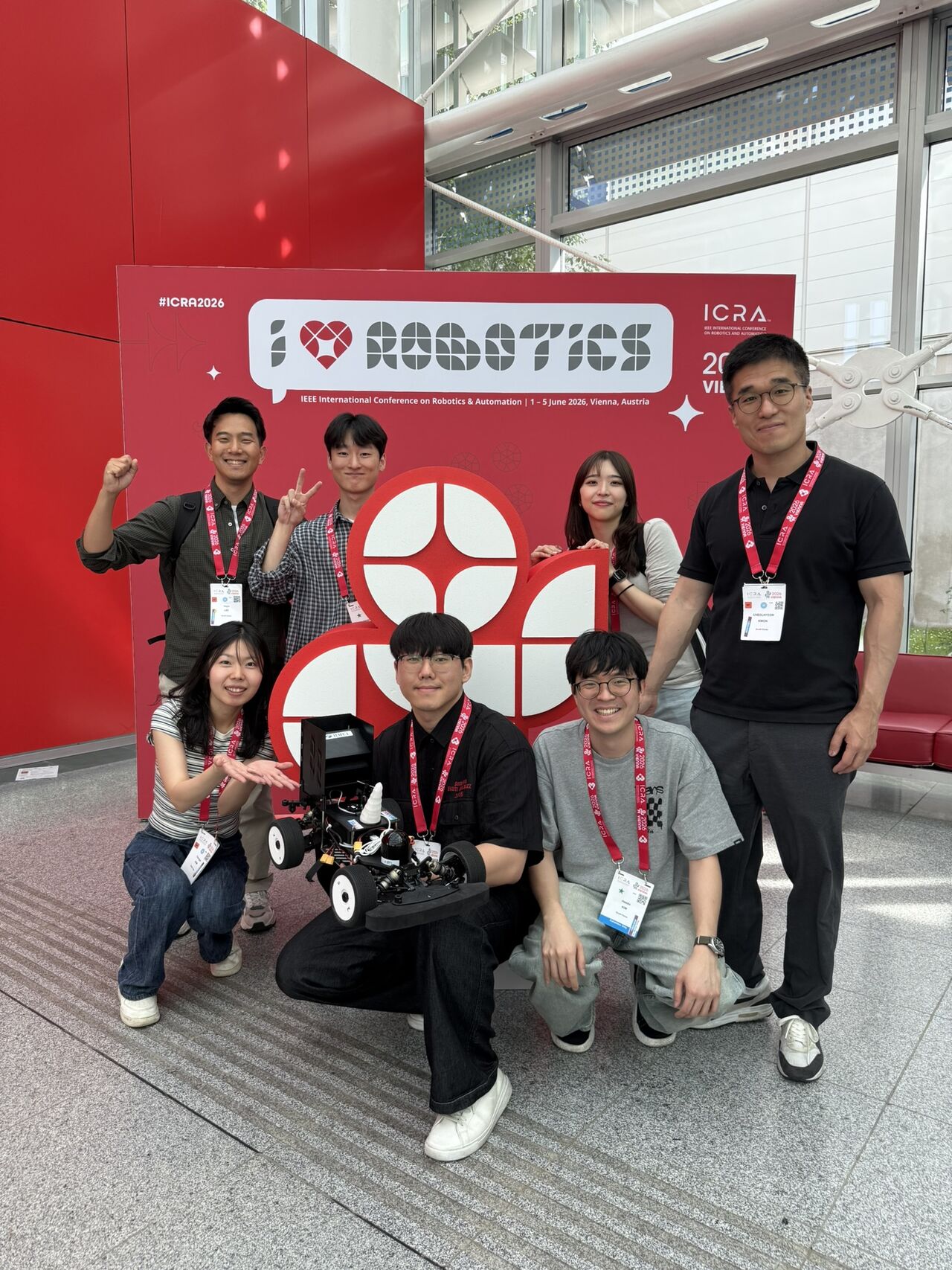
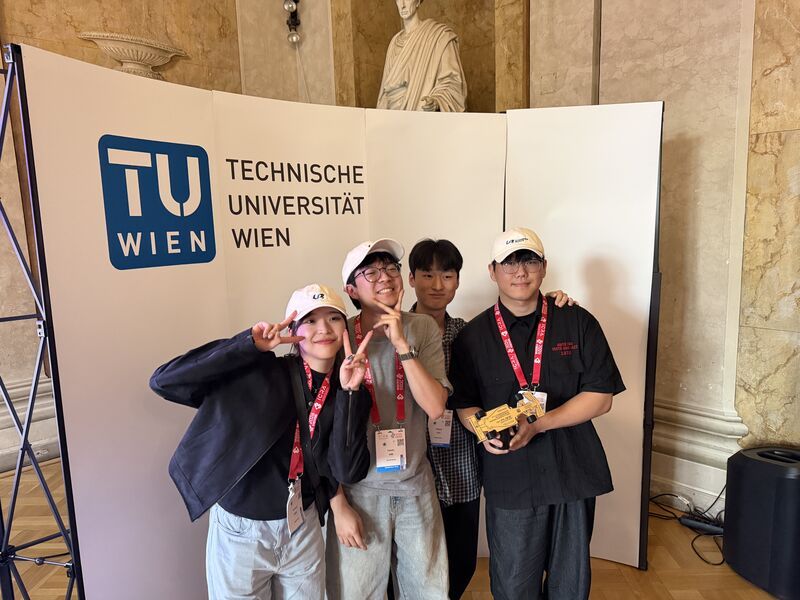
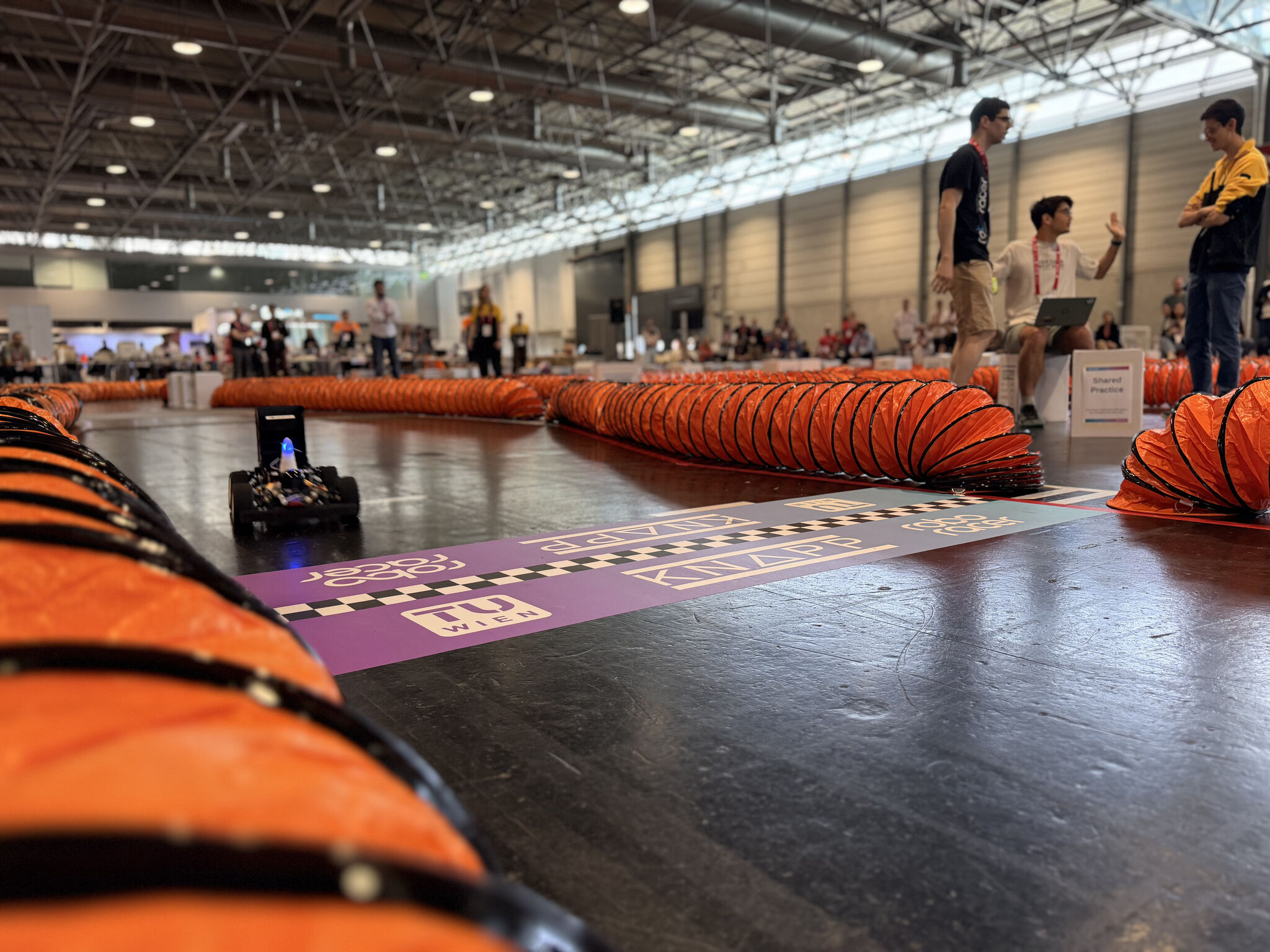
Team UNICORN Racing , led by Professor Cheolhyeon Kwon of the Department of Mechanical Engineering, claimed the championship title at the competition, which took place in Vienna, Austria, from June 1 to 5, 2026. The team finished ahead of 37 university teams from around the world, demonstrating the strength of its autonomous racing systems under demanding real-world conditions.
RoboRacer, formerly known as F1TENTH, challenges teams to develop perception, planning, and control systems for autonomous one-tenth-scale race cars operating under high-speed racing conditions.
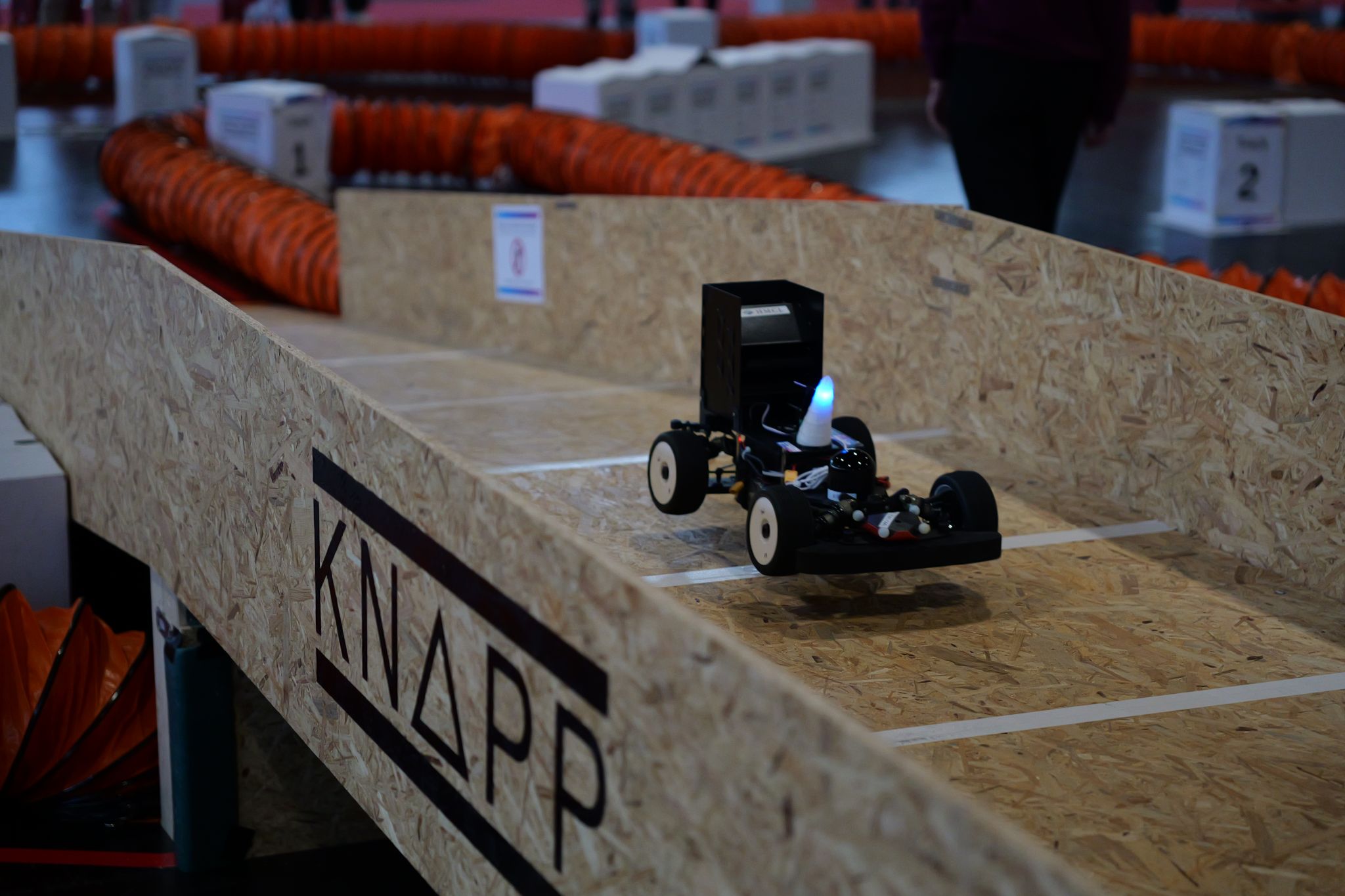
This year's course introduced significant new challenges. Unlike a conventional flat track, the racing environment included ramps, bridges, and elevation changes that caused vehicles to lift off, land, and experience sudden changes in posture. Success depends not only on speed, but also on the vehicle's ability to perceive its surroundings, accurately estimate its position, and maintain stable control under rapidly changing conditions.
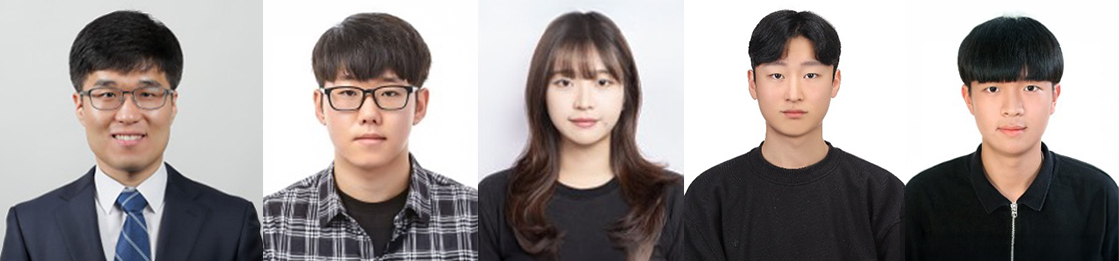
Team UNICORN Racing distinguished itself with a technical approach not used by any other team in the competition that was a three-dimensional (3D) LiDAR system. While most teams relied on conventional two-dimensional LiDAR sensors, the UNIST team used 3D LiDAR to capture richer spatial information about the racing environment.
The approach addresses a broader challenge in autonomous systems research. In complex three-dimensional environments, changes in terrain and vehicle motion can disrupt perception and localization, making reliable navigation difficult. Processing large volumes of three-dimensional sensor data in real time also requires substantial computing power, particularly on small autonomous platforms with limited onboard resources.
To overcome these challenges, the team developed an integrated system that combines 3D perception, localization, path planning, and vehicle control within a compact computational framework. The system maintained accurate localization and stable control even on sections with sharp elevation changes and landing impacts, enabling consistent performance throughout the race and helping secure the overall victory.
“This achievement is especially meaningful because it builds on last year's second-place finish and demonstrates the continued progress of our autonomous driving research,” said Professor Kwon. "Our goal is to advance technologies that enable fast and reliable autonomous driving in complex three-dimensional environments."
RoboRacer began at the University of Pennsylvania in 2016 and has since grown into a global research and education platform involving more than 100 universities worldwide. By combining real-world racing conditions with autonomous systems research, the competition provides a demanding testbed for technologies that may inform the future of intelligent mobility.
Related Photo


-
UNIST Promotes Research Cooperation for Rehabilitation of People with Speical Needs
-
Professor Sang Hoon Kang Honored with 'IJPEM Most Cited Article Award'
-
Two Faculty Members Awarded Minister of Education Commendation
-
Professor Chiehyeon Lim Appointed as Chief Digital Officer at POSCO Holdings N.EX.T Hub