UNISTUNIST

ADMISSIONS

발전기금
모바일메뉴 열기
 

UNIST site map

전체 메뉴 닫기
STUDENT
 
Scroll Down

UNIST Today

we are all

pioneers!

UNIque & beST

Nexus

UNIST Today

we are all

pioneers!

UNIque & beST

Nexus

Information for UNISTar

WHY UNIST

star

Global
Campus for
Future
Innovators

Research AREA

중점연구분야

Research
AREA

에너지·AI·미래산업에 집중하다

UNIST는 에너지 전환, AI, 미래산업이라는
대한민국의 핵심 과제에 연구 역량을 집중합니다.

  • 에너지 전환
  • 이차전지 · 수소 · 탄소중립
  • Ai 기반 산업 혁신
  • 반도체 · 소재 · 양자
EDUCATION INNOVATION

교육혁신프로그램

EDUCATION
INNOVATION

이론을 배우는 것을 넘어 직접
연구하며 성장하다

UNIST의 학부생부터 대학원생까지 연구의
보조가 아닌 주체로 성장하는 경험을 제공합니다.

  • 학부생 연구참여
  • 국제학회·논문참여
  • 소수정예 밀착 연구지도
industry collaboration

산학협력

industry
collaboration

연구에서 산업까지, 현장과 가장
가까운 UNIST

대한민국 최대 산업도시 울산에 위치한
UNIST는 연구 성과가 기업과 산업 현장으로
가장 빠르게 연결되는 구조를 갖추고 있습니다.

  • 기술사업화·창업지원
  • 울산 산업단지
  • 대기업 · 공기업과의 공동연구
Research support

연구지원

Research
support

젊은 UNIST, 연구에 최적화된
유연한 캠퍼스

UNIST는 가장 늦게 출범한 과기원으로,
관행에 얽매이지 않는 유연한 연구·교육 시스템을
갖추고 있습니다.

  • 빠른 신흥 분야 대흥
  • 단일 캠퍼스 기반
  • 생활.연구 일체형 구조
  • 개방형 연구 공간

Research Impact

star

UNIST, 피지컬 AI에 필수 ‘강화학습’ 연구로 세계 3대 AI 학회 논문 3편 동시 채택

UNIST가 피지컬 AI 기술의 핵심인 강화학습 분야에서 국제적 연구 경쟁력을 입증했다. 강화학습은 AI가 환경과 상호작용하며 시행착오를 통해 최적의 행동을 스스로 찾아내는 학습 방식으로, 로봇이나 자율주행차가 불확실하고 예측 불가능한 현실 물리 환경에 직접 부딪히며 상황을 인지하고 돌발 변수에 대처하도록 만들 수 있어 피지컬 AI 시대의 필수 기술로 꼽히고 있다. UNIST는 인공지능대학원 한승열 교수팀의 연구 성과 논문 3편이 오는 23일 브라질 리우데자네이루에서 열리는 표현학습국제학회(ICLR)에 채택되는 쾌거를 올렸다고 21일 밝혔다. ICLR은 신경정보처리시스템학회(NeurIPS), 국제머신러닝학회(ICML)와 함께 세계 3대 AI 학회로 꼽힌다. 이번 성과는 3건은 모두 강화학습 분야에서 나왔다. 각각 ‘자기 개선 스킬 학습법(SISL)’, ‘엄격한 하위 목표 실행 기술(SSE)’, ‘연속적 하위 가치 Q-러닝(S2Q) 알고리즘’이다. ■ 엉터리 데이터로 ‘스킬’ 배운 AI, 스스로 깨우쳐 복잡한 임무 완수한다! 자기 개선 스킬 학습법(SISL)은 오류가 섞인 현장 수집 데이터로 AI 로봇 등을 잘 학습시킬 수 있게 하는 기술이다. 강화학습에는 길고 복잡한 작업을 해결하기 위해 로봇 등의 행동을 스킬이라는 단위로 쪼개어 학습시키는 방식이 있다. 예를 들어 주방용 로봇을 만든다면, 냉장고나 싱크대를 ‘여닫는 행위’, 싱크대나 스토브 같은 목표 장소로 ‘이동하는 행위’를 독립된 스킬로 정의해 학습시키는 것이다. 문제는 이 AI 로봇이 스킬을 익힐 때 교재로 삼는 실제 수집 데이터에 기기 노후화나 센서 오류로 인한 심각한 노이즈가 섞여 있는 경우다. 연구팀이 제시한 SISL은 심각한 노이즈가 포함된 저품질 데이터 환경에서도 자가 개선 메커니즘을 통해 더 유용한 스킬을 능동적으로 발견하고, 스킬 모델 내의 노이즈를 지속적으로 제거하여 고품질의 스킬 라이브러리를 구축할 수 있다. 연구팀은 "기존 시스템과 달리 작업을 수행하는 상위 수준 정책과 스킬 자체를 발전시키는 개선 정책을 분리하는 구조에, 보상 예측 모델을 활용한 '최대 리턴 재라벨링(Maximum return relabeling)' 우선순위 기법을 접목한 기술"이라고 설명했다. 연구는 이상현 연구원이 제1저자로 참여했다. ■ 여러 단계 거쳐야 하는 일도 덜 헤매고 끝까지 해낸다! 강화학습 기반 AI가 여러 단계를 거쳐야 하는 복잡한 작업에서, 중간에 엉뚱한 선택을 반복하지 않고 끝까지 수행하도록 만드는 기술도 개발했다. AI 로봇이 ‘컵을 꺼내 식탁에 놓기’ 같은 일을 하려면 이동, 문 열기, 물건 집기처럼 여러 단계를 순서대로 거쳐야 한다. 기존 방식은 이런 과정을 중간 목표로 나눠 학습하지만, 실제로는 수행하기 어려운 단계까지 섞이면서 로봇이 불필요한 행동을 반복하는 문제가 있었다. 엄격한 하위 목표 실행(SSE, Strict Subgoal Execution)은 이런 문제를 줄이기 위해 설계된 계층적 강화학습 기법이다. 도달할 수 없는 목표와 실행 가능한 목표를 엄격하게 분리하고, 완전히 실패한 경우와 일부만 성공한 경우를 구분해 에이전트가 실제로 도달할 수 있는 범위를 학습하도록 함으로써 상위 수준의 의사결정 과정을 획기적으로 간소화했다. 또 어디까지는 수행됐고, 어디부터 막혔는지를 기록해 반복적으로 실패하는 경로는 피하도록 했으며, 탐색이 부족한 영역을 찾아가는 별도의 탐색 전략과 실패 기록을 반영한 경로 정제 기법을 함께 적용해 다단계 과제도 효율적으로 목표를 달성하도록 했다. 다양한 벤치마크 실험에서 이 알고리즘은 복잡하고 장기적인 계획이 필요한 기존 강화학습 방법들을 압도하는 높은 효율성과 임무 성공률을 달성했다. 황재박 연구원이 제1저자로 참여했다. 연구팀은 “성공, 실패, 부분 성공을 나눠 저장해 학습 신호를 정리하는 데이터 재구성 기법인 프론티어 익스피리언스 리플레이(Frontier Experience Replay)를 개발해, 에이전트가 실제로 도달할 수 있는 범위를 학습하도록 한 것이 핵심”이라고 설명했다. ■“협력 AI도 상황 따라 바뀐다”… ‘유연한 뇌’ S2Q 알고리즘 개발 여러 AI가 협력해 움직이는 환경에서는 상황이 바뀌면서 더 나은 선택이 뒤늦게 나타나는 경우가 많다. 예를 들어 게임이나 로봇 협력 작업에서는 처음엔 좋은 선택이었던 행동이 시간이 지나면서 더 이상 최선이 아니게 바뀌기도 한다. 기존 강화학습은 한 시점에서 가장 좋아 보이는 행동 하나에 집중해 학습하기 때문에, 이런 변화가 생기면 새로운 최적 전략을 따라가지 못하고 기존 선택에 머무르는 경우가 많았다. 연구팀의 ‘연속적 하위 가치 Q-러닝(S2Q)’은 여러 개의 대안 행동을 함께 학습하도록 설계된 방법이다. 가장 좋은 선택뿐 아니라 그 다음으로 유망한 선택들까지 유지하면서, 상황이 바뀌면 이를 빠르게 새로운 최적 전략으로 전환할 수 있도록 했다. 제1저자인 조용현 연구원은 “기존의 다중 에이전트 인공지능이 오직 하나의 고정된 최적 행동에만 의존해 학습 중 상황 변화에 대처하지 못하는 ‘경직된 시스템’이었다면, 이번에 개발된 S2Q 기술은 훌륭한 대안이 될 수 있는 여러 차선책들을 미리 기억하고 유지하여 급변하는 상황에 즉각적으로 대처하는 ‘유연한 뇌’ 역할을 하는 기술”이라고 설명했다. 스타크래프트 멀티 에이전트 챌린지(SMAC) 및 구글 리서치 풋볼(GRF) 등 고난이도 벤치마크 테스트 결과, 기존 알고리즘들이 흔히 직면하던 조기 수렴 한계를 극복하고 적응력과 전반적인 성능을 대폭 향상시켰다. 한승열 교수는 “이번 연구는 제한된 데이터와 불확실한 환경에서도 강화학습을 안정적으로 적용할 수 있는 가능성을 보여준 것”이라며 “자율주행, 로봇, 스마트 제조 등 다양한 분야로의 확장이 기대된다”고 말했다. 연구수행은 과학기술정보통신부 정보통신기획평가원의 ‘자율드론상용화를 위한 과제 지향 강화학습 핵심기술 개발’, ‘AI 스타 펠로우십 프로그램’, ‘인공지능대학원 지원 사업’과 한국연구재단의 ‘LLM 기반 다중 에이전트 강화학습을 통한 대규모 자율군집제어 End-to-End 기술 개발 사업’의 지원을 받아 이뤄졌다. 한편, 올해 학회는 오는 4월 23일부터 27일까지 브라질 리우데자네이루에서 열린다.

2026.04.28

  • 강화학습
  • 로봇
  • 멀티에이전트
  • 인공지능대학원
  • 자율드론
  • 자율주행
  • 피지컬AI

뇌 깊숙한 곳에서 찾은 도파민 신호 조절의 ‘공간 규칙’

같은 뇌 신경회로 안에서도 세부 구역에 따라 도파민의 신호 조절 방식이 달라지는 ‘공간 규칙’이 발견됐다. UNIST 생명과학과 김재익 교수팀은 기저핵 간접경로에서 도파민이 억제성 신호를 조절하는 방식이 기저핵의 내부 위치에 따라 다르다는 점을 규명했다고 20일 밝혔다. 뇌 깊숙이 위치한 기저핵은 자발적인 운동을 조절하는 신경회로로, 그중 ‘간접경로’ 회로는 불필요한 움직임을 억제하는 역할을 한다. 이 경로에서 기저핵의 선조체와 외측 창백핵(GPe)을 잇는 시냅스 연결은 가바(GABA)라는 억제성 신경전달물질을 통해 작동하며, 도파민은 이 신호의 강도를 조절하는 물질로 알려져 있다. 연구팀이 밝혀낸 바에 따르면, 도파민이 억제 신호를 낮추는 역할을 똑같이 하더라도 공간 구획에 따라 조절 방식이 달랐다. 창백핵을 4등분했을 때 배외측과 복내측 영역에서는 도파민이 D2 수용체를 통해 가바 방출 자체를 줄여 억제 신호를 약하게 만들었고, 배내측과 복외측 영역에서는 D4 수용체가 작용해 같은 신호에 대한 반응을 낮추는 방식으로 억제 신호를 줄였다. 즉, 도파민이 한쪽에서는 억제 신호 자체를 줄이고, 다른 쪽에서는 같은 신호에도 덜 민감하게 반응하도록 조절하는 방식이다. 또 파킨슨병처럼 도파인 분비를 줄인 실험 쥐의 뇌는 기존에 유지되던 이 공간별 조절 패턴이 뒤집히는 변화가 나타났다. 원래는 영향을 받지 않던 영역에서 신호 조절이 새롭게 나타나고, 반대로 기존에 강하게 작용하던 영역에서는 효과가 약해졌다. 제1저자인 이영은 연구원은 “도파민 감소가 단순히 전체 신호를 약하게 만드는 것이 아니라, 회로의 작동 방식 자체를 재편할 수 있음을 보여주는 실험 결과”라고 설명했다. 김재익 교수는 “뇌 기저핵을 통과하는 다양한 감각, 운동 정보가 창백핵의 위치에 따라 도파민에 의해 각기 다르게 변조될 수 있음을 밝혀냈다”며 “특정 뇌 영역과 수용체를 표적으로 하는 파킨슨 병 치료제와 같은 정밀 퇴행성 뇌질환 치료 기술 개발을 위한 신경과학적 기반을 마련했다”고 말했다. 이번 연구결과는 다학제적 연구결과를 소개하는 우수 학술지인 네이처 커뮤니케이션즈(Nature communications)’에 4월 3일 자로 공개됐다. 연구수행은 과학기술정보통신부 한국연구재단 중견연구(핵심연구), 바이오의료기술개발사업, 그리고 뇌기능규명조절기술개발사업의 지원을 받아 이뤄졌다.

2026.04.26

  • 4분할
  • 가바
  • 간접회로경로
  • 기저핵
  • 도파민
  • 생명과학과
  • 수의운동
  • 시냅스
  • 억제신호
  • 운동억제
  • 창백핵

독감 걸렸을 때 마시는 술이 간에 더 해로운 과학적 이유

감기나 독감에 걸려 몸속에 염증이 생긴 상태에서 술을 마시면 평소보다 간이 훨씬 더 심하게 망가지는 원인이 새롭게 밝혀졌다. UNIST 생명과학과 이상준 교수와 서울대학교 라젠드라 카르키 교수팀, 호주국립대학교 시밍만 교수팀은 알코올이 면역 시스템을 오작동하게 만들어 간세포를 죽이고 알코올성 간 질환을 악화시키는 분자 기전을 규명했다고 16일 밝혔다. 연구에 따르면, 알코올은 인터페론과 함께 작용해 간세포 사멸을 일으킨다. 인터페론은 바이러스나 세균 감염으로 몸에 염증이 생겼을 때 분비되는 물질이다. 염증으로 인터페론이 분비된 상황에서 알코올이 들어오면 세포 안에 비정상 RNA인 Z-RNA가 급격히 늘어난다. 이 Z-RNA를 면역 센서인 ZBP1 단백질이 감지하게 돼 간세포의 사멸 반응이 촉발되는 것이다. 원래 건강한 세포는 ADAR1이라는 단백질로 Z-RNA를 변형하거나 숨겨서 면역 센서가 이를 인식하지 못하게 통제하지만, 알코올은 이 ADAR1 단백질 생성도 일부 방해하는 것으로 나타났다. 이 같은 반응은 알코올성 간염이나 자가 면역 질환이 생긴 상태에도 일어날 수 있다. 인터페론은 바이러스나 세균 감염으로 유발된 염증뿐 아니라 일반적인 염증 상황에서도 분비되기 때문이다. 연구팀은 제시한 분자 기전을 동물실험으로 입증했다. 실험 쥐의 유전자를 조작해 Z-RNA를 감지하는 ZBP1 단백질을 억제하자, 알코올과 인터페론이 동시에 존재하는 조건에서도 간세포 사멸과 간 손상이 크게 줄어들었다. 또 JNK 신호 경로 억제제를 투여했을 때도 간 손상이 감소했다. Z-RNA는 JNK 신호 경로가 활성화되면서 만들어지기 때문에 JNK 신호 경로를 차단하면 Z-RNA 자체가 생성되지 않는다. 알코올과 인터페론이 동시에 작용하면 JNK 신호 경로가 활성화된다는 점도 이번 연구로 새롭게 밝혀진 사실이다. 이상준 교수는 “그간 술 자체의 독성이 간세포를 직접 손상시키는 것으로 설명되어 왔는데, 알코올이 촉발한 면역 반응이 간세포 사멸을 일으키는 또 다른 기전이 될 수 있음을 밝혀냈다”며 ”ZBP1의 작용을 억제하는 방식 등의 새로운 알콜성 간 질환 치료제 개발의 토대가 될 연구”라고 설명했다. 연구 결과는 세계적 다학제 학술지인 ‘사이언스 어드밴시스(Science advances)’지에 4월 10일 게재됐다. 본 연구는 한국연구재단(NRF) 우수신진연구사업, 국가신약개발사업(KDDF), 보건복지부 산하 한국보건산업진흥원(KHIDI) 글로벌 의사과학자 양성사업, 한국형 ARPA-H 사업, 기초과학연구원(IBS), 질병관리청 국립보건연구원 사업, 동그라미재단, 그리고 유한양행의 지원을 받아 수행되었다.

2026.04.23

  • Z-RNA
  • ZPB1
  • 간염
  • 독감
  • 면역오작동
  • 면역폭주
  • 바이러스
  • 생명과학과
  • 선천면역센서
  • 염증
  • 인터페론

“눈짓만으로 로봇 조종한다”... AI 스마트 콘택트렌즈 개발

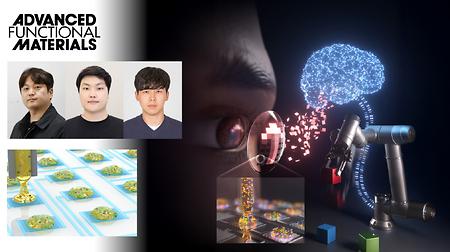
눈짓만으로 로봇을 움직일 수 있는 스마트 콘택트렌즈가 개발됐다. 렌즈를 낀 채 안구를 굴리면, 로봇 팔이 안구 방향을 따라 움직인다. 무겁고 복잡한 기존 확장현실(XR) 기기를 대신할 차세대 인간-기계 인터페이스 기술로 주목받고 있다. UNIST 기계공학과 정임두 교수(인공지능대학원 겸직) 연구팀은 센서를 렌즈에 직접 인쇄하는 특수 기술과 센서의 저해상도 신호를 고해상도로 복원하는 AI 기술을 결합해, 로봇 팔을 원격 제어할 수 있는 스마트 콘택트렌즈를 개발했다고 15일 밝혔다. 이 렌즈 위에는 100개(10x10)의 빛 검출 센서가 집적돼 있는데, 눈을 움직일 때마다 달라지는 빛 분포를 이 센서가 읽어내 시선 방향을 추적하는 원리로 작동한다. 위·아래·좌·우는 물론 대각선 방향까지 구분할 수 있으며, 이 시선 정보가 로봇 팔로 전달돼 팔이 움직인다. 안구의 깜박임으로 물건을 집을 수도 있다. 연구진은 둥근 렌즈 표면에 센서를 직접 프린팅할 수 있도록 ‘메니스커스 픽셀 프린팅(MPP)’ 기술을 개발해 적용했다. 노즐 끝에 맺힌 센서 원료 잉크를 렌즈 표면에 콕콕 찍어내는 형태의 기술이다. 메니스커스는 액체의 볼록하거나 오목한 곡면을 말하는데, 이 곡면 덕분에 잉크가 배출되는 힘과 잉크 퍼짐을 막는 힘이 균형을 이뤄 잉크를 원하는 양만큼 찍어낼 수 있다. 잉크를 건조하면 빛을 감지하는 페로브스카이트 물질만 남아 센서 역할을 하게 된다. 일반 센서 제작과 달리 센서 패턴을 새기기 위한 마스크가 필요 없고 다양한 안구 곡률에 맞춰 센서를 인쇄할 수 있어 개별 맞춤형 렌즈를 만들 수 있는 장점이 있다. 렌즈라는 작은 공간 탓에 신호 해상도가 떨어지는 문제는 인공지능 기술을 결합해 해결했다. 실제로는 100개의 센서가 있지만, 딥러닝 기반의 초해상도 기술을 적용하면 최대 6,400개(80x80)의 센서가 있는 것과 같은 신호 데이터를 얻을 수 있다. 재구성에 필요한 시간도 0.03초로 짧아 정보가 실시간 수준으로 로봇 팔에 전달될 수 있다. 안구 모형을 이용한 실험에서, 눈동자 움직임만으로 물체를 집어 옮기는 동작까지 이뤄졌으며, 방향 인식 정확도는 99.3% 수준을 기록했다. 이번 연구는 UNIST 기계공학과 공병훈, 김도현 연구원이 제1저자로 참여했다. 연구팀은 “하드웨어적 공정 혁신과 AI 기반 신호 복원 소프트웨어 기술을 결합해 렌즈라는 초소형 폼팩터의 공간적 제약을 극복한 기술”이라고 설명했다. 연구를 총괄한 정임두 교수는 “별도의 컨트롤러 없이 인간의 시각 정보를 로봇 제어 신호로 직접 변환하는 고도화된 인간-기계 상호작용(Human-Robot Interaction, HRI) 시스템 구현이 가능함을 증명했다”며 “차세대 초경량 XR 인터페이스 장치로서 눈의 움직임만으로 다양한 전자 기기를 정밀하게 제어할 수 있다는 점에서, 증강현실 기반 산업용 로봇 원격 제어, 재난·재해 환경에서의 탐사 로봇 운용, 국방 분야의 무인체계 및 드론 조종, 의료 및 재활 지원 시스템, 스마트 모빌리티 인터페이스 등 다양한 분야로 확장될 수 있는 잠재력을 지닌다“고 밝혔다. 연구 결과는 재료 과학 분야 세계적 학술지 (Impact Factor: 19.0, JCR 상위 5%이내)인 ‘어드밴스드 펑셔널 머티리얼즈(Advanced Functional Materials)’에 3월 11일 게재되었으며, 최신 호 전면 표지 논문으로 선정되어 출판될 예정이다. 연구 수행은 과학기술정보통신부 한국연구재단과 정보통신기획평가원 및 산업통상자원부의 기술개발사업 지원으로 이뤄졌다.

2026.04.22

  • XR글라스
  • 기계공학과
  • 메니스커스픽셀프린팅
  • 사람기계인터페이스
  • 스마트글라스
  • 스마트콘택트렌즈
  • 원격조종
  • 페로브스카이트센서
  • 폼팩터

버려진 바이오자원, 수소와 화학소재로 재탄생!

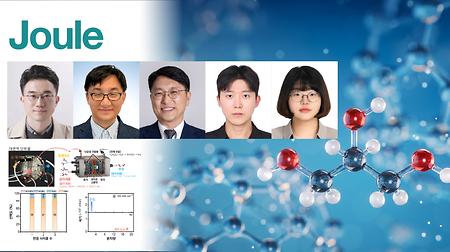
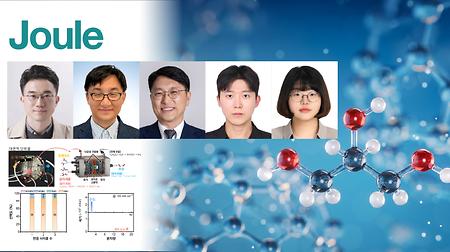
*본 보도자료는 한국재료연구원 주관으로 작성되었습니다. (보도자료 바로 가기) □ 한국재료연구원(KIMS, 원장 최철진) 에너지·환경재료연구본부 수소전지재료연구센터 양주찬 박사 연구팀은 울산과학기술원(UNIST, 총장 박종래) 에너지화학공학과 장지욱, 임한권, 이호식 교수 연구팀과 공동으로, 바이오디젤(식물성 기름 등을 활용한 친환경 연료) 산업 부산물인 글리세롤을 활용해 수소와 고부가가치 화학물질을 동시에 생산할 수 있는 고효율 전기화학 시스템을 개발했다. 이번 연구는 기존 수전해 공정의 핵심 병목이었던 산소 발생 반응(OER, Oxygen Evolution Reaction)을 대체해, 수소 생산 효율을 높이고 활용 범위를 확장한 차세대 전환 기술을 완성했다는 점에서 의미가 있다. □ 수소는 탄소중립 시대의 핵심 에너지원으로 주목받고 있으며, 이를 친환경적으로 생산하기 위한 수전해 기술 개발이 활발히 진행되고 있다. 하지만 기존의 수전해 방식은 물을 전기로 분해하는 과정에서 양극에서 필수적으로 동반되는 산소 발생 반응(OER)이 에너지를 많이 요구하고 반응 속도도 느려 전체 공정 효율을 떨어뜨리는 한편, 경제성까지 낮추는 한계가 있었다. □ 연구팀은 이러한 한계를 극복하고자, 물을 대체해 유기물인 글리세롤을 활용하고 이의 산화 반응(GOR, Glycerol Oxidation Reaction)을 양극에 적용한 음이온 교환막 수전해 시스템을 개발했다. 글리세롤은 바이오디젤 생산 과정에서 대량으로 발생하는 저가 부산물로, 이를 활용하면 기존 대비 더 적은 에너지로 반응을 유도할 수 있다. 또한 구리-코발트 기반의 비귀금속 촉매를 적용해 고가의 귀금속 없이도 높은 반응 활성과 안정성을 확보했으며, 1.31V의 비교적 낮은 전압에서도 110mA/㎠의 높은 전류밀도를 구현했다. □ 특히 이번 기술은 수소 생산과 동시에 포름산염(formate)과 같은 화학 원료를 함께 만들어낼 수 있어 기존 수전해 기술과 차별화된다. 기존 수전해 기술이 수소만 생산하는 단일 공정이었다면, 이번 기술은 에너지와 화학소재를 동시에 생산하는 복합 공정으로 확장한 것이다. 연구팀은 생성되는 물질의 약 96%를 원하는 화학물질(포름산염)로 전환하는 데 성공했으며, 79㎠ 규모의 대면적 전해셀에서도 안정적인 성능을 확인해 실험실 단계를 넘어 실제 산업 공정 적용 가능성도 입증했다. □ 이번 기술은 폐바이오 자원을 활용해 수소와 화학 원료를 동시에 생산할 수 있는 전기화학 플랫폼으로, 그린수소 생산 비용 절감과 자원 활용 효율을 동시에 높일 수 있다는 점에서 의미를 가진다. 특히 에너지와 화학 산업을 하나의 공정으로 연결하는 탄소중립형 생산 기술로, 기존의 분리된 생산 구조를 통합할 수 있다는 가능성이 있다. 여기에 나아가 연속공정 전환과 메가와트(MW)급 스케일로 확장할 수 있어 실제 산업 공정에 적용할 수 있는 실용적 기술로 발전이 기대된다. □ 연구책임자인 KIMS 양주찬 책임연구원은 "이번 연구는 저렴한 비귀금속 촉매를 대량으로 합성하고, 이를 실제 상용화 가능한 수준의 대용량 전해조 시스템에 적용해 성능을 입증했다는 데 큰 의미가 있다"고 강조했다. 또한 UNIST 장지욱 교수는 "글리세롤과 같은 바이오 부산물을 고부가가치 화합물로 전환하는 기술은 탄소 중립 달성과 수소 경제 활성화를 동시에 앞당길 수 있는 핵심 전략이 될 것"이라고 말했다. □ 본 연구는 국가과학기술연구회, 한국에너지기술평가원, 한국연구재단, 한국산업기술평가관리원의 국가연구개발사업의 지원을 받아 수행됐다. 또한 한국과학기술정보연구원의 슈퍼컴퓨팅 인프라와 포항가속기연구소의 방사광 가속기 시설을 활용하여 핵심 분석 및 계산 연구를 진행했다. 연구 결과는 에너지 분야 세계적 권위 학술지인 줄(Joule, IF: 35.4)에 2026년 3월 18일자로 온라인 게재됐다.

2026.04.22

  • 글리세롤
  • 바이오디젤폐기물
  • 수소
  • 에너지화학공학과
  • 포름산염

상온에서도 밝게 빛나는 양자광원 구현 성공

* 본 보도자료는 기초과학연구원(IBS) 주관으로 작성되었습니다. (보도자료 바로 가기) 2차원 반도체는 머리카락 굵기의 최대 10만분의 1수준에 불과한 매우 얇은 소재로, 효율적인 광소자를 구현할 수 있는 차세대 소재로 주목받고 있다. 그러나 상온에서는 빛을 만들어내는 엑시톤이 쉽게 퍼져나가 특정 위치에서 안정적인 발광이 어려운 한계가 있었다. UNIST 화학과 서영덕 교수(다차원 탄소재료 연구단 부연구단장)과 POSTECH 물리학과·반도체공학과·융합대학원·반도체대학원 박경덕 교수 공동 연구팀은 상온에서도 밝게 빛나는 고효율 양자광원을 구현하는 데 성공했다. 엑시톤은 전자와 정공이 결합한 준입자로, 반도체에서 빛을 방출하는 핵심 역할을 한다. 특히 특정 위치에 가두어진 ‘국소화 엑시톤’은 안정적인 발광이 가능해 양자광원으로 활용될 수 있다. 그러나 상온에서는 열에너지로 인해 엑시톤이 쉽게 확산되고, 물질 내 과잉 전하로 인해 발광 효율이 크게 저하되는 한계가 있었다. 연구팀은 이를 극복하기 위해 2차원 반도체 아래에 지름 500나노미터(nm, nanometer) 크기의 나노홀 구조를 도입해 엑시톤이 특정 위치로 모이도록 유도했다. 이 구조는 마치 움푹 파인 그릇처럼, 엑시톤이 자연스럽게 중심으로 모여 한 점에 머물도록 만든다. 또한 열처리를 통해 반도체와 금 기판 사이의 물 층을 제거해 과잉 전하를 줄이고, 엑시톤이 에너지를 잃지 않고 빛으로 방출될 수 있는 환경을 만들었다. 그 결과, 엑시톤은 나노홀 중심의 매우 작은 영역에 효과적으로 갇히게 되었으며, 약 98%의 높은 구속 효율이 확인됐다. 또한 발광 효율은 기존 대비 약 130배 향상되어, 상온에서도 밝고 안정적인 양자광원 구현이 가능함을 입증했다. 이번 연구는 2차원 반도체에서 구현한 광원이 QLED TV에 사용되는 양자점처럼 밝고 안정적인 특성을 가질 수 있음을 보여준다. 또한 나노 구조를 더욱 작게 만들고 빛을 비추는 조건을 정밀하게 조절하면, 지금까지 어려웠던 상온 고효율 단일양자광 생성도 가능할 것으로 기대된다. 특히 2차원 반도체는 반도체 웨이퍼 공정을 통해 넓은 면적으로 제작할 수 있어, 향후 양자통신과 양자컴퓨팅 등 다양한 산업 기술로의 확장이 가능할 전망이다. 제1저자 POSTECH, IBS 문태영 학생연구원은 “빛을 내는 입자를 한 점에 모아 가두는 방식으로, 상온에서도 밝게 빛나는 양자광원을 구현한 것이 이번 연구의 핵심”이라며 “이러한 구조는 다양한 광양자 소자들로 확장될 수 있는 기반이 될 것”이라고 밝혔다. 공동교신저자 서영덕 부연구단장은 “2차원 반도체에서 빛이 만들어지고 사라지는 과정을 정밀하게 제어해 성능을 크게 끌어올린 점이 중요하다”며 “이번 기술은 향후 상온에서 단일광자를 만드는 광원으로 발전할 수 있는 중요한 기술적 전환점이 될 것”이라고 말했다. 이번 연구 결과는 국제학술지 사이언스 어드밴시스(Science Advances) 3월 13일에 게재됐다.

2026.04.21

  • IBS
  • 구속효율
  • 기초과학연구원
  • 발광효율
  • 상온양자광원
  • 양자광원
  • 엑시톤
  • 화학과

더보기

Research Impact

star

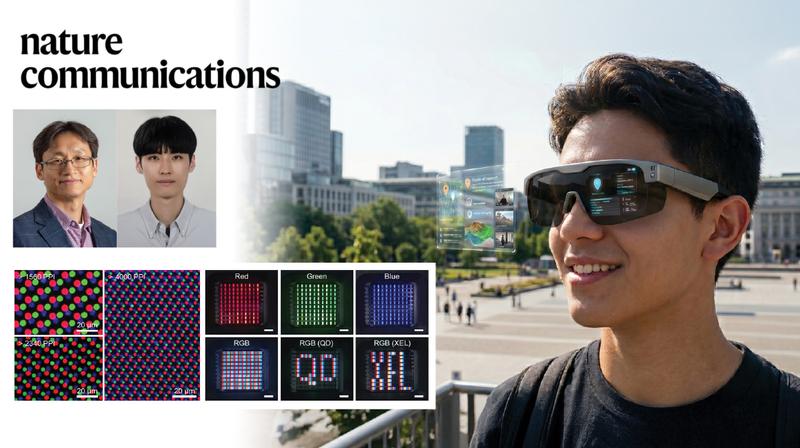
Breakthrough QD Display Technology Achieves 4,000 PPI Resolution — Ideal for XR Glasses

Abstract Colloidal quantum dots (QDs) are leading candidates for next-generation optoelectronics owing to their tuneable bandgaps, narrow emission linewidths, and high luminescence quantum yields. For virtual-, augmented-, and mixed-reality display applications of these materials, patterning full-color QDs at μm-length scales is essential. However, existing photolithographic approaches often degrade QD luminance characteristics by exposing them to harsh processing conditions, or they compromise the structural fidelity of the resulting patterns. Here we report a photoresist-guided indirect (PIN) photopatterning strategy that includes (i) lithographic formation of sacrificial PR patterns, (ii) deposition of a crosslinked QD film on top, and (iii) PR stripping that removes the sacrificial PR, leaving behind crosslinked QD patterns on the substrate. QD crosslinking is mediated by a diazo-based ligand thermocrosslinker, Diazo-4-LiXer. Leveraging low-temperature (110–120 °C)-activated carbene chemistry, Diazo-4-LiXer bridges neighbouring QDs while maintaining their intrinsic photoluminescence and electroluminescence through repeated processing. Moreover, Diazo-4-LiXer enables thermocrosslinking without affecting the underlying photoresist pre-patterns, which serve as structural templates determining the thickness and fidelity of the QD patterns. Using PIN photopatterning, we realize high-fidelity RGB patterns exceeding 4,000 pixels per inch resolution and demonstrate integration-level scalability by fabricating a 10 × 10 passive-matrix full-colour RGB QD–LED array. Researchers, affiliated with UNIST have announced a significant advancement in quantum dot (QD) display technology, enabling ultra-fine, high-resolution patterning of QDs suitable for next-generation XR glasses. This innovation promises brighter, more vivid images even in outdoor environments. Professor BongSoo Kim from the Department of Chemistry at UNIST, in collaboration with Professor Moon Sung Kang of Sogang University and Dr. Chan-mo Kang at Electronics and Telecommunications Research Institute (ETRI), have developed a novel photopatterning technique that maintains the integrity of quantum dots while achieving micron-scale precision. To meet the demanding resolution required for XR displays—exceeding 3,000 pixels per inch (PPI)—the team’s method patterns quantum dots into 2-micrometer (μm) pixels. This enables over 4,000 PPI, meaning more than 10 million pixels can be packed into a space about the size of a coin, ensuring sharp, immersive visuals. The process employs a custom-developed additive, Diazo-4-LiXer, which facilitates thermocrosslinking at low temperatures (110–120°C) via carbene chemistry, preserving the quantum dots’ luminescent properties. It involves creating a sacrificial photoresist (PR) template, depositing a crosslinked quantum dot film, then removing the PR to leave behind precisely patterned quantum dots—without damage or shape distortion. This technique not only achieves high fidelity and density but also enables the fabrication of full-color RGB quantum dot LED arrays, demonstrating its potential for commercial application. Professor Kim commented, “Our method allows for ultra-high resolution patterning of quantum dots while maintaining their exceptional optical properties. It opens new avenues for advanced XR glasses and microdisplays, where brightness, color purity, and resolution are crucial.” The findings of this research have been published in Nature Communications on March 19, 2026. The study has been supported by the Samsung Research Funding & Incubation Center of Samsung Electronics, the National Research Foundation of Korea (NRF), and the Ministry of Science and ICT (MSIT). Journal Reference Hyeokjun Kim, Hyobin Ham, Chang Hyeok Lim, et al., "Photoresist-guided indirect photopatterning of quantum dots via carbene-mediated ligand thermocrosslinking," Nat. Commun., (2026).

2026.04.27

  • 4000PPI
  • BongSoo Kim
  • Chemistry
  • Crosslinker
  • Department of Chemistry
  • Microdisplay
  • Nature Communications
  • Pattern Fidelity
  • Photopatterning
  • Photoreist
  • QD-LED
  • Quantum Dot
  • Thermocrosslinking
  • VR
  • XR

UNIST Demonstrates Global Competitiveness in Reinforcement Learning with Three Papers Accepted to ICLR 2026

UNIST has demonstrated strong international competitiveness in reinforcement learning, a core technology for physical AI, with three papers by Professor Seungyul Han’s research group from the Graduate School of Artificial Intelligence accepted to the International Conference on Learning Representations (ICLR 2026), held in Rio de Janeiro, Brazil, from April 23 to 27, 2026. ICLR, alongside NeurIPS and ICML, is widely regarded as one of the world’s leading artificial intelligence conferences. This year, approximately 5,300 papers—about 27% of more than 19,000 submissions—were accepted, making the selection of three papers from a single research group a notable achievement. The accepted studies address key challenges in reinforcement learning, where AI systems learn optimal actions through interaction with their environment—an approach essential for applications, such as robotics and autonomous systems operating in complex, real-world conditions. The first study proposes Self-Improving Skill Learning (SISL), a method designed to enable robust learning from noisy offline data. By decomposing long-horizon tasks into reusable skills and refining them through prioritized updates, SISL mitigates the impact of imperfect data and supports stable adaptation across complex tasks. The second study introduces Strict Subgoal Execution (SSE), which improves long-horizon planning by distinguishing feasible subgoals from unreachable ones. By leveraging past failures and partial successes, the method enhances planning efficiency and increases overall task reliability in goal-conditioned environments. The third study presents Successive Sub-value Q-learning (S2Q), a framework for multi-agent reinforcement learning (MARL) that retains multiple high-value action candidates. This approach enables agents to adapt more effectively in dynamic environments where optimal strategies shift over time, improving both coordination and overall performance. The research was led by Sanghyun Lee, Jaebak Hwang, and Yonghyeon Cho as first authors, respectively, and supported by programs funded by the Ministry of Science and ICT (MSIT) and the National Research Foundation of Korea (NRF). Professor Han said, “Our research demonstrates that reinforcement learning can be applied more reliably in environments with limited data and uncertainty, with strong potential for applications in autonomous driving, robotics, and smart manufacturing.” Journal Reference [1] Sanghyeon Lee, Sangjun Bae, Yisak Park, Seungyul Han, "Self-Improving Skill Learning for Robust Skill-based Meta-Reinforcement Learning," ICLR 2026. [2] Jaebak Hwang, Sanghyeon Lee, Jeongmo Kim, Seungyul Han, "Strict Subgoal Execution: Reliable Long-Horizon Planning in Hierarchical Reinforcement Learning," ICLR 2026. [3] Yonghyeon Jo, Sunwoo Lee, Seungyul Han, "Retaining Suboptimal Actions to Follow Shifting Optima in Multi-Agent Reinforcement Learning," ICLR 2026.

2026.04.27

  • and Yonghyeon Cho
  • Jaebak Hwang
  • S2Q
  • Sanghyun Lee
  • Self-Improving Skill Learning
  • Seungyul Han
  • SISL
  • SSE
  • Strict Subgoal Execution
  • Sub-value Q-learning

New Study Unveils Region-Specific Dopamine Regulation in the Basal Ganglia

Abstract Dopamine affects voluntary movement by modulating basal ganglia function. However, the contribution of dopamine on striatopallidal synapses, an initial hub in the indirect pathway connecting the striatum to the GPe, remains poorly understood because of the sparse dopaminergic innervation. Here, we combine optogenetic projection targeting, whole cell patch clamp recordings in acute brain slices from mice, and computational modeling to overcome this limitation. We show that dopamine activates D2 receptors (D2Rs) and D4 receptors (D4Rs) differentially in distinct GPe subregions. In a pinwheel-like fashion, dorsolateral and ventromedial GPe expresses high levels of D2Rs, which exert presynaptic inhibition, while in dorsomedial and ventrolateral GPe D4Rs cause postsynaptic inhibition. Dopamine depletion by 6-OHDA reshapes the region-specific effect of dopamine, shifting it in the opposite direction and contributing to hypokinesia. These findings reveal the mechanism by which the different modality information conveyed spatially through the indirect pathway is differentially modulated by dopamine at striatopallidal synapses. Researchers at UNIST have identified a novel spatial rule, governing how dopamine modulates inhibitory signals in the brain’s basal ganglia, deepening our understanding of motor control and opening new avenues for targeted therapies in neurodegenerative diseases, such as Parkinson’s. The study, led by Professor Jae-Ick Kim of the Department of Biological Sciences, reveals that dopamine’s influence on synapses within the indirect pathway of the basal ganglia varies depending on the specific subregion. Using advanced techniques—including optogenetics, electrophysiology, and computational modeling—the team demonstrated that dopamine differentially regulates GABAergic inhibitory signals through distinct receptor types in different parts of the external globus pallidus (GPe). Specifically, dopamine reduces inhibitory GABA release via D2 receptors in the dorsolateral and ventromedial GPe regions, weakening inhibition. Conversely, in the dorsomedial and ventrolateral regions, dopamine acts through D4 receptors to suppress postsynaptic activity, also diminishing overall inhibition. This regional specificity suggests that dopamine fine-tunes motor signals in a highly localized manner. Remarkably, in a Parkinson’s model characterized by dopamine depletion, these region-specific modulation patterns are reversed, indicating that the spatial regulation of dopamine is critical for normal motor function. Such insights could inform the development of more precise interventions targeting specific brain regions and receptor subtypes. Professor Lee commented on the findings, "Understanding how dopamine differently modulates circuits based on region and receptor type provides a foundation for developing targeted therapies for movement disorders." Youngeun Lee, the lead researcher, added, "Our study highlights the importance of regional and receptor-specific modulation within the brain's motor circuits, which could lead to more effective treatment strategies." Published in Nature Communications on April 3, this research offers vital neurophysiological insights for designing treatments for movement disorders. This study has been supported by the Mid-Career Researcher Program and the Bio & Medical Technology Development Program of the National Research Foundation of Korea (NRF), funded by the Ministry of Science and ICT (MSIT). Journal Reference Youngeun Lina Lee, Maria Reva, Ki Jung Kim, et al ., “Distinct modes of dopamine modulation on striatopallidal synaptic transmission,” Nat. Commun ., (2026).

2026.04.27

  • Basal Ganglia
  • Bio
  • Department of Biological Sciences
  • Dopamine
  • GPe
  • Jae-Ick Kim
  • Motor Function
  • Nature Communications
  • Synapse
  • Synaptic Transmission

Breakthrough Unveils How Alcohol Amplifies Liver Damage During Illness

Abstract Alcohol consumption has short- and long-term impacts on physical and mental health. Although multiple host and environmental factors contribute to alcohol-related disease, the innate immune sensors that detect toxic signals from alcohol remain poorly defined. Here, we show that alcohol cooperates with sterile- or infection-induced interferon signaling to drive inflammatory cell death, cytokine release, and liver injury in humans and mice. We identified the pattern recognition receptor Z-DNA binding protein 1 (ZBP1) as a key innate immune sensor mediating pyroptosis, apoptosis, and necroptosis in response to combined ethanol and interferon stimulation. While interferon elevated ZBP1, ethanol suppressed adenosine deaminase acting on RNA 1 (ADAR1) expression. Together, interferon and ethanol activated JNK signaling to promote Z-RNA formation, triggering ZBP1. These findings reveal a mechanism by which alcohol and interferon converge to induce ZBP1-dependent inflammatory cell death and liver pathology, providing mechanistic insight and highlighting potential therapeutic targets for alcohol-related disease. A research team, affiliated with UNIST has uncovered a novel molecular pathway explaining why alcohol consumption can lead to severe liver damage, particularly when individuals are already battling infections, such as cold and influenza. Led by Professor SangJoon Lee from the Department of Biological Sciences at UNIST, alongside Professors Rajendra Karki of Seoul National University and Si Ming Man of The Australian National University, the research sheds light on how alcohol interacts with the immune system to accelerate liver cell death and exacerbate liver disease. The team discovered that, in the presence of interferon—a key immune signaling molecule produced during infections—alcohol triggers an inflammatory cascade within liver cells. Specifically, alcohol increases the level of Z-RAN, an abnormal form of RNA, which is detected by the pattern recognition receptor Z-DNA binding protein 1 (ZBP1). This activation initiates inflammatory cell death, contributing to liver damage. Under normal circumstances, the protein ADAR1 suppresses Z-RNA formation, preventing unwarranted immune activation. However, the study revealed that alcohol impairs ADAR1 production, allowing Z-RNA to accumulate and activate ZBP1. This process involves the JNK signaling pathway, which was validated through animal experiments showing that inhibiting ZBP1 or blocking JNK signaling significantly reduced liver injury—even in the presence of alcohol and interferon. Professor Lee explained, "While the direct toxicity of alcohol on liver cells has long been recognized, our findings highlight an immune-mediated pathway that exacerbates liver damage during illness. This discovery opens new possibilities for targeted therapies, such as ZBP1 inhibitors, to treat alcohol-related liver diseases." The findings of this research were published in Science Advances on April 10, 2026. The study was supported by the National Research Foundation of Korea (NRF), the Korea Drug Development Find (KDDF), the Institute for Basic Science (IBS), the Circle Foundation, and Yuhan Corporation. It has also been supported through the Global Physician-Scientist Training Program and the ARPHA-H Project from the Korea Health Industry Development Institute (KHIDI) under the Ministry of Health and Welfare (MOHW). Journal Reference Yeonseo Jang, Hoeun Bae, SuHyeon Oh, et al ., “Innate immune sensing of dietary alcohol ignites inflammation to drive alcohol-related disease,” Adv. Sci ., (2026).

2026.04.24

  • Alcohol Consumption
  • Bio
  • Department of Biological Sciences
  • Immune System
  • Immunology
  • Infections
  • Influenza
  • Liver Disease
  • SangJoon Lee
  • Science Advances
  • Z-RNA
  • ZBP1

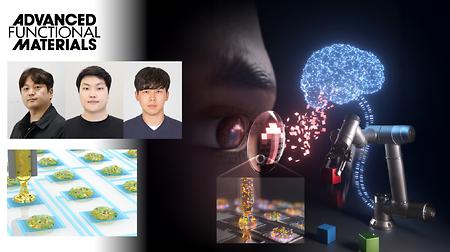
UNIST Unveils Smart Contact Lens with Meniscus Pixel Printing for Vision-Based Robotic Control

Abstract Contact lenses are emerging as strong candidates for next-generation extended reality (XR) interfaces due to their lightweight and ergonomic form factor. However, integrating photodetector arrays onto the limited area of a lens remains challenging with conventional micropatterning approaches, which rely on masks, multistep processes, and specialized equipment that inherently limit throughput and scalability. To address these constraints, we introduce a Meniscus Pixel Printing (MPP) strategy that enables rapid, mask-free patterning of MAPbI3 perovskite photodetectors without costly or complex fabrication tools. MPP uses a self-confined meniscus at a pipette tip to deterministically transfer perovskite ink, enabling 200 µm pixels to be printed within 1 s per pixel. In addition to planar substrates, MPP demonstrates stable pixel patterning on curved surfaces, highlighting its geometric adaptability and process versatility. Using this approach, we fabricate a 10 × 10 perovskite photodetector array and demonstrate stable photoresponse, retaining 92% of its initial performance after two months of storage. To overcome limited pixel density, a deep-learning-based super-resolution (SR) model reconstructs 10 × 10 inputs into 80 × 80 optical information with 97.2% accuracy and 0.03 s latency. Additionally, an AI-based eye-tracking system recognizes nine eye gestures with 99.3% accuracy, enabling smooth hands-free robotic arm control. A research team, led by Professor Im Doo Jung from the Department of Mechanical Engineering at UNIST, has developed a groundbreaking smart contact lens that enables users to control robots through eye movements. This innovative device combines embedded optical sensors with AI-based signal processing, offering a lightweight, intuitive human-machine interface with vast potential across industries. The lens incorporates a 10×10 array of light sensors capable of detecting subtle changes in light distribution caused by eye movements, including gaze direction and blinks. These signals are transmitted to control external robotic systems, as demonstrated with a robotic arm. Notably, the team employed a novel Meniscus Pixel Printing (MPP) technique to directly print sensors onto the curved lens surface without masks or complex fabrication steps, ensuring high precision and customizability. In addition to robotic control, the system demonstrates vision sensing capabilities by reconstructing optical information. To address the limited signal resolution inherent to micro-scale devices, the researchers applied deep-learning-based super-resolution algorithms, reconstructing high-fidelity signals equivalent to an 80x80 sensor array in just 0.03 seconds. This enables real-time, accurate control based solely on eye movements, achieving recognition accuracies of up to 99.3% under experimental conditions. This technology marks a significant advancement in ultra-compact human-machine interfaces, enabling precise, hands-free control of electronic devices. Potential applications include remote robotic operation, medical assistive devices, exploration in hazardous environments, defense systems, and smart mobility. Published in the March 2026 issue of Advanced Functional Materials (Impact Factor: 19.0, JCR Top 5%)—a top-tier journal in materials science—the research was selected as the Front Cover of the latest issue. The study received support from the National Research Foundation of Korea (NRF), the Ministry of Science and ICT (MSIT), the Institute of Information & Communications Technology Planning & Evaluation (IITP), and the Ministry of Trade, Industry, and Energy (MOTIE). Journal Reference Byung-Hoon Gong, Dohyean Kim, Jiyun Jeong, et al ., “Meniscus Pixel Printing for Contact-Lens Vision Sensing and Robotic Control,” Adv. Funct. Mater. , (2026).

2026.04.23

  • Advanced Functional Materials
  • Department of Mechanical Engineering
  • Form Factor
  • Im Doo Jung
  • ME
  • Meniscus Pixel Printing
  • MPP
  • Perovskite Sensor
  • Robotic Control
  • Smart Contact Lenses
  • Vision Sensing

Innovative Scalable Electrochemical Approach for Transforming Waste Glycerol into Hydrogen and High-Value Chemicals

Abstract Interest in electrochemical glycerol oxidation reactions (GORs) continues to grow as a promising strategy for hydrogen production. By replacing the oxygen evolution reaction (OER), GOR reduces energy consumption while generating hydrogen at the cathode and value-added formate at the anode, offering techno-economic advantages over conventional water electrolysis. However, its practical implementation is still hindered by reliance on precious metal catalysts and performance losses in scaled-up systems. Here, we synthesized a non-precious CuCo oxide (CCO) electrocatalyst at a tens-of-grams scale through co-precipitation and simple surface treatment. When applied to an anion exchange membrane (AEM) electrolyzer, the modified CuCo oxide achieved 110 mA cm−2 at 1.31 Vcell using a 7 cm2 non-precious GOR anode with 96% formate selectivity. The system was further scaled to a 79 cm2 anode, delivering 3.2 A at 1.31 Vcell. This study demonstrates a practical and economically favorable pathway for scalable hydrogen production via glycerol valorization in AEM electrolyzers. A joint research team, led by Professors Ji-Wook Jang, Hankwon Lim, and Hosik Lee from the School of Energy and Chemical Engineering at UNIST, in collaboration with Dr. Juchan Yang from the Energy & Environment Materials Research Division at Korea Institute of Materials Science (KIMS), has announced the development of a high-performance, scalable electrochemical system that transforms waste glycerol—an industrial byproduct of biodiesel production—into hydrogen and value-added chemicals, such as formate. This innovative system replaces the conventional oxygen evolution reaction (OER) in water electrolysis with glycerol oxidation, resulting in reduced energy consumption and enhanced efficiency. Using a copper-cobalt oxide catalyst, the system a current density of 110 mA/cm² at just 1.31 V, with 96% selectivity for formate. The technology was successfully scaled to a 79 cm² electrode, demonstrating its potential for industrial applications. This advancement provides a sustainable, cost-effective pathway for large-scale hydrogen production through glycerol valorization. By simultaneously generating hydrogen and valuable chemicals from waste biomass, the approach promises significant reductions in green hydrogen costs and improved resource efficiency. Additionally, integrating energy and chemical manufacturing processes supports global efforts toward carbon neutrality and a sustainable hydrogen economy. Moreover, its scalability and compatibility with continuous operation suggest promising prospects for industrial deployment and further scale-up to megawatt-level systems. Juchan Yang, Principal Researcher at KIMS, emphasizes, “This study demonstrates the large-scale synthesis of low-cost, non-precious catalysts and their successful integration into a practical electrolyzer system, marking a significant step toward commercial viability.” Professor Ji-Wook Jang of UNIST adds, “Transforming biomass waste like glycerol into high-value chemicals and hydrogen not only accelerates carbon neutrality but also offers strategic advantages in building a sustainable hydrogen economy.” The findings of this research were published online in Joule (IF: 35.4) on March 18, 2026. The study was supported by the National Research Council of Science & Technology (NST), the Korea Institute of Energy Technology Evaluation and Planning (KETEP), the National Research Foundation of Korea (NRF), and the Korea Institute of Industrial Technology (KEIT). Core analyzes and computational modeling were conducted using supercomputing resources provided by the Korea Institute of Science and Technology Information (KISTI), with technical support, as well as the synchrotron radiation source at the 6D beamline of the Pohang Accelerator Laboratory. Journal Reference Ki-Yong Yoon, Seon Woo Hwang, Hee Yoon Roh et al. , “Commercial-scale glycerol valorization using surface-modified copper cobalt oxide catalyst in high-capacity anion exchange membrane electrolyzer,” Joule , (2026).
2026.04.23

  • Catalysis
  • ECE
  • ECHE
  • Glycerol
  • Hankwon Lim
  • Hosik Lee
  • Hydrogen Production
  • Ji-Wook Jang
  • Joule
  • School of Energy and Chemical Engineering
  • Surface Engineering

더보기

UNIST Insight

star

UNISTAR Voices 
Shaping Futures, 
Inspiring the 
World

더보기

Life at UNIST

star