UNIST site map
- Admissions
-
Academics
- Colleges and Schools
-
Academic Affairs
- Academic Calendar
- Academic Curriculum
- Requirements for Graduation
- Browse Open Courses
- Undergraduate Administration
-
Graduate Academic Affairs
- Tuition Fee Payment
- Academic Leave of Absence/ Academic Return
- Voluntary Withdrawal/ Expulsion
- Change of Major
- Change of Degree Program/ Dropping of Degree Program
- Class Period/ Attendance Period/ Academic Year・Semester
- Course Registration
- Course Drop
- Attendance/ Grade/ Exam
- Credit Transfer/ Credit Carryover
- Academic Forms
- Education Support
-
Research/Industry
- Research Aims
- Research Findings
- Researcher Search
-
Research Organizations
- UNIST Multi-Interdisciplinary Institute
- IBS Research Groups
-
UNIST Labs
- Department of Mechanical Engineering
- School of Energy and Chemical Engineering
- Department of Civil
- Department of Materials Science and Engineering
- Department of Nuclear Engineering
- Department of Industrial Engineering
- Department of Design
- Department of Biomedical Engineering
- Department of Biological Sciences
- Department of Electrical Engineering
- Department of Computer Science and Engineering
- Department of Mathematical Sciences
- Department of Chemistry
- Department of Physics
- School of Business Administration
- Graduate School of Carbon Neutrality
- Graduate School of Artificial Intelligence
- Research Support
- University-Industry Relations
- Campus Life
- News Center
- About UNIST
-
etc
- UNIST Bulletin
- Work-Life Balance Support System
- UNIST Gender Equality Plan
- Faculty Invitation for Tenure Track
- Faculty Invitation for Non-Tenure Track
- Board Meeting Minutes
- University Council Meeting Minutes
- Administrative Service Charter
- Privacy Policy
- Copyright Policy
- Rejection of Unauthorized Email Collection
- Operation and Management Policy for Video Information Processing Devices
- Information Disclosure


Connection Points of Knowledge, Everything About UNIST
Try searching.
Recommended search terms


- portal
- U Academics Innovation Center
- Leadership Center
- Dormitory
- Academic Information Center
- International Students Support
- Browse Open Courses
- Course Registration
- Graduation Requirements for Graduation
- Academic Leave of Absence/ Academic Return
- Military Service
- Certificate Issuance
- Academic Calendar
- Scholarships
- Campus Map
- Campus Life Guidebook
- Health Care Center
- Human Rights Center
- portal
- Job Opening
- Announcement for Bid
- UNIST AI Services
- UNIST Daycare Center
- Sports Center
- UI Downloads
- Announcement
- Recruitment of Professors (Non-tenure)
- Faculty Invitation for Tenure Track
- UNIST Academic Information Center
- Office of Research Facilities and Training
- Office of Research Affairs
- Rule Management System
- Academic Calendar


This is a collection of menus necessary for UNIST students .
students
- portal
- U Academics Innovation Center
- Leadership Center
- Dormitory
- Academic Information Center
- International Students Support
- Browse Open Courses
- Course Registration
- Graduation Requirements for Graduation
- Academic Leave of Absence/ Academic Return
- Military Service
- Certificate Issuance
- Academic Calendar
- Scholarships
- Campus Map
- Campus Life Guidebook
- Health Care Center
- Human Rights Center


This is a collection of menus necessary for prospective UNIST Students .
prospective Students


This is a collection of menus necessary for UNIST Faculty & Staff .
Faculty & Staff
- portal
- Job Opening
- Announcement for Bid
- UNIST AI Services
- UNIST Daycare Center
- Sports Center
- UI Downloads
- Announcement
- Recruitment of Professors (Non-tenure)
- Faculty Invitation for Tenure Track
- UNIST Academic Information Center
- Office of Research Facilities and Training
- Office of Research Affairs
- Rule Management System
- Academic Calendar


NEWS CENTER
Discover not only Research Findings and event news, but also the diverse facets of UNIST presented by reporters and writers.
News Center

UNIST News
New Research Reveals High-Performance Organic Solar Cells Surpassing AI Predictions
Published in Adv. Energy Mater., the study achieves 19.67% PEC with eco-friendly manufacturing—uncovering molecular aggregation effects ignored by AI.
- Research
- JooHyeon Heo
- 2026.05.22
- 69

Abstract
Researchers from UNIST and Sungkyunkwan University have created a new type of organic solar cell (OSC) that outperforms existing predictions and highlights a hidden factor in device performance. The secret lies in how molecules clump together in solution—a phenomenon that traditional AI models overlook.
Professor Changduk Yang from the School of Energy and Chemical Engineering, in collaboration with Professor Doo-Hyun Ko from Sungkyunkwan University, reported a new OSC with a power conversion efficiency (PEC) of 19.67% through a clean, environmentally friendly process.
OSCs are lightweight, flexible, and capable of covering large surfaces. They can be integrated into building facades, windows, and wearable devices. The manufacturing process involves dissolving organic materials in solvents and coating them onto substrates—an approach that’s simple and scalable.
The researchers designed a new molecule, named YBOV, with branched side chains that promote strong pre-aggregation in solution. This aggregation acts like a seed during film formation, guiding molecules to pack more orderly. The result is a crystalline, densely packed active layer that improves charge flow and boosts efficiency.
Notably, devices made with YBOV achieved high performance even when produced with eco-friendly ortho-xylene solvent, avoiding toxic chlorinated options.
YBOV also proved versatile. When added to different donor materials or used as an acceptor in various blends, it consistently increased device efficiency. Its aggregation behavior enhances performance across a range of formulations.
However, this clustering effect escapes prediction by standard AI models. When trained on 750 device measurements, the models underestimated the open-circuit voltage for YBOV-based cells. This shows that AI, which predicts based on molecular structure alone, cannot fully capture the collective behaviors that influence real-world performance.
“Our work introduces a new design principle,” said the research team. “It considers how molecules behave in solution—something AI cannot currently predict. Combining this insight with eco-friendly processing opens new paths for commercializing high-performance, sustainable organic solar cells.”
Supported by the National Research Foundation of Korea (NRF) and the InnoCore program of the Ministry of Science and ICT (MSIT), the study involved Seokhwan Jeong, Donghoo Won, and Zhe Sun from UNIST who contributed equally. The findings of this research were published in Advanced Energy Materials on April 20, 2026.
Journal Reference
Seokhwan Jeong, Donghoo Won, Zhe Sun, et al., "Beyond Descriptor-Based AI Design: Sp2-Hybridized Branched Side Chains Enable Pre-Aggregation–Driven Seeding Effects in Green-Solvent-Processed Organic Solar Cells," Adv. Energy Mater., (2026).
Related Links
Related Photo




-
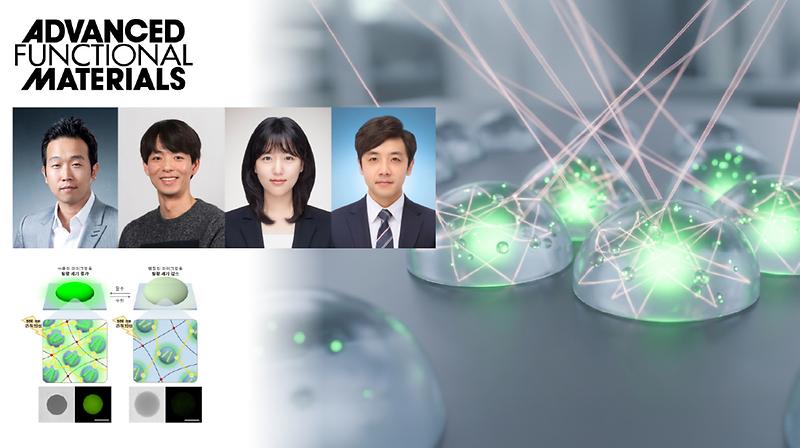
New Study Unveils Water-Responsive Luminescent Material
-
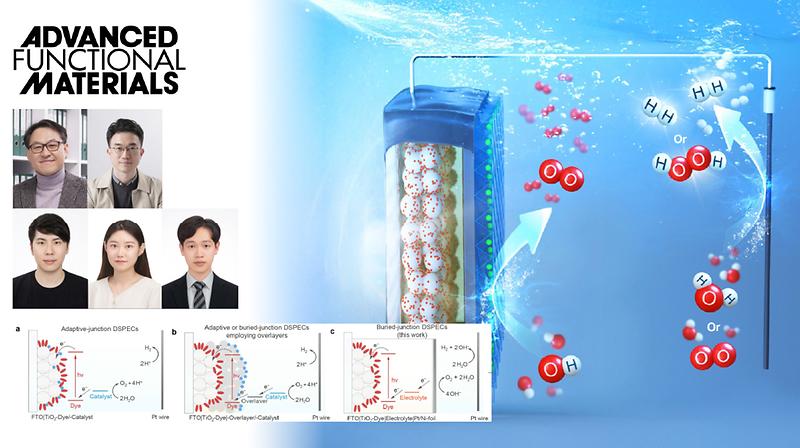
New Study Unveils High-Performance Dye-Sensitized Electrode for Artificial Photosynthesis
-
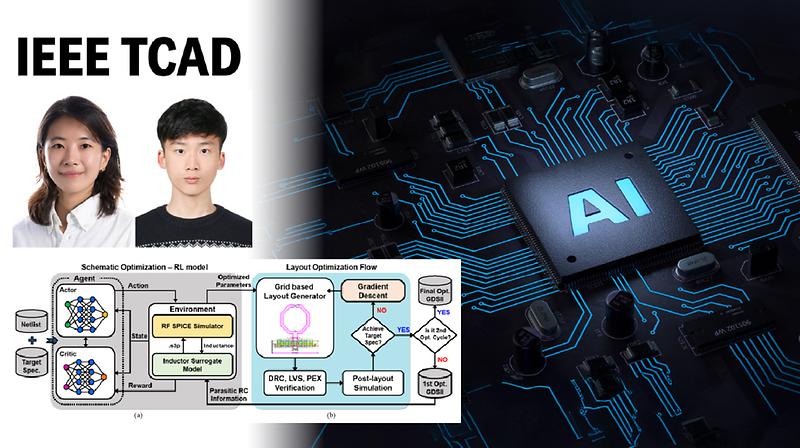
Revolutionizing Semiconductor Design: AI Cuts Development Time from Months to Just One Day
-
Innovative Scalable Electrochemical Approach for Transforming Waste Glycerol into Hydrogen and High-Value Chemicals