UNISTUNIST

ADMISSIONS

발전기금
모바일메뉴 열기
 

UNIST site map

전체 메뉴 닫기
STUDENT
 
Scroll Down

UNIST Today

we are all

pioneers!

UNIque & beST

Nexus

UNIST Today

we are all

pioneers!

UNIque & beST

Nexus

Information for UNISTar

WHY UNIST

star

Global
Campus for
Future
Innovators

Research AREA

중점연구분야

Research
AREA

에너지·AI·미래산업에 집중하다

UNIST는 에너지 전환, AI, 미래산업이라는
대한민국의 핵심 과제에 연구 역량을 집중합니다.

  • 에너지 전환
  • 이차전지 · 수소 · 탄소중립
  • Ai 기반 산업 혁신
  • 반도체 · 소재 · 양자
EDUCATION INNOVATION

교육혁신프로그램

EDUCATION
INNOVATION

이론을 배우는 것을 넘어 직접
연구하며 성장하다

UNIST의 학부생부터 대학원생까지 연구의
보조가 아닌 주체로 성장하는 경험을 제공합니다.

  • 학부생 연구참여
  • 국제학회·논문참여
  • 소수정예 밀착 연구지도
industry collaboration

산학협력

industry
collaboration

연구에서 산업까지, 현장과 가장
가까운 UNIST

대한민국 최대 산업도시 울산에 위치한
UNIST는 연구 성과가 기업과 산업 현장으로
가장 빠르게 연결되는 구조를 갖추고 있습니다.

  • 기술사업화·창업지원
  • 울산 산업단지
  • 대기업 · 공기업과의 공동연구
Research support

연구지원

Research
support

젊은 UNIST, 연구에 최적화된
유연한 캠퍼스

UNIST는 가장 늦게 출범한 과기원으로,
관행에 얽매이지 않는 유연한 연구·교육 시스템을
갖추고 있습니다.

  • 빠른 신흥 분야 대흥
  • 단일 캠퍼스 기반
  • 생활.연구 일체형 구조
  • 개방형 연구 공간

Research Impact

star

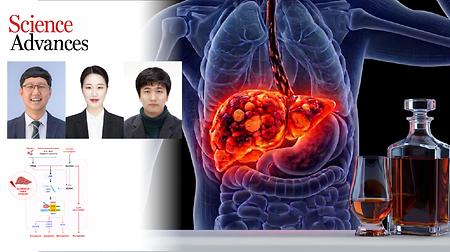
독감 걸렸을 때 마시는 술이 간에 더 해로운 과학적 이유

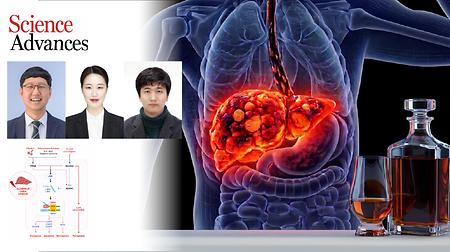
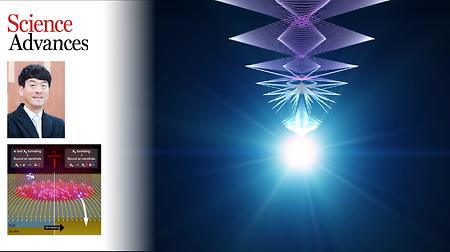
감기나 독감에 걸려 몸속에 염증이 생긴 상태에서 술을 마시면 평소보다 간이 훨씬 더 심하게 망가지는 원인이 새롭게 밝혀졌다. UNIST 생명과학과 이상준 교수와 서울대학교 라젠드라 카르키 교수팀, 호주국립대학교 시밍만 교수팀은 알코올이 면역 시스템을 오작동하게 만들어 간세포를 죽이고 알코올성 간 질환을 악화시키는 분자 기전을 규명했다고 16일 밝혔다. 연구에 따르면, 알코올은 인터페론과 함께 작용해 간세포 사멸을 일으킨다. 인터페론은 바이러스나 세균 감염으로 몸에 염증이 생겼을 때 분비되는 물질이다. 염증으로 인터페론이 분비된 상황에서 알코올이 들어오면 세포 안에 비정상 RNA인 Z-RNA가 급격히 늘어난다. 이 Z-RNA를 면역 센서인 ZBP1 단백질이 감지하게 돼 간세포의 사멸 반응이 촉발되는 것이다. 원래 건강한 세포는 ADAR1이라는 단백질로 Z-RNA를 변형하거나 숨겨서 면역 센서가 이를 인식하지 못하게 통제하지만, 알코올은 이 ADAR1 단백질 생성도 일부 방해하는 것으로 나타났다. 이 같은 반응은 알코올성 간염이나 자가 면역 질환이 생긴 상태에도 일어날 수 있다. 인터페론은 바이러스나 세균 감염으로 유발된 염증뿐 아니라 일반적인 염증 상황에서도 분비되기 때문이다. 연구팀은 제시한 분자 기전을 동물실험으로 입증했다. 실험 쥐의 유전자를 조작해 Z-RNA를 감지하는 ZBP1 단백질을 억제하자, 알코올과 인터페론이 동시에 존재하는 조건에서도 간세포 사멸과 간 손상이 크게 줄어들었다. 또 JNK 신호 경로 억제제를 투여했을 때도 간 손상이 감소했다. Z-RNA는 JNK 신호 경로가 활성화되면서 만들어지기 때문에 JNK 신호 경로를 차단하면 Z-RNA 자체가 생성되지 않는다. 알코올과 인터페론이 동시에 작용하면 JNK 신호 경로가 활성화된다는 점도 이번 연구로 새롭게 밝혀진 사실이다. 이상준 교수는 “그간 술 자체의 독성이 간세포를 직접 손상시키는 것으로 설명되어 왔는데, 알코올이 촉발한 면역 반응이 간세포 사멸을 일으키는 또 다른 기전이 될 수 있음을 밝혀냈다”며 ”ZBP1의 작용을 억제하는 방식 등의 새로운 알콜성 간 질환 치료제 개발의 토대가 될 연구”라고 설명했다. 연구 결과는 세계적 다학제 학술지인 ‘사이언스 어드밴시스(Science advances)’지에 4월 10일 게재됐다. 본 연구는 한국연구재단(NRF) 우수신진연구사업, 국가신약개발사업(KDDF), 보건복지부 산하 한국보건산업진흥원(KHIDI) 글로벌 의사과학자 양성사업, 한국형 ARPA-H 사업, 기초과학연구원(IBS), 질병관리청 국립보건연구원 사업, 동그라미재단, 그리고 유한양행의 지원을 받아 수행되었다.

2026.04.23

  • Z-RNA
  • ZPB1
  • 간염
  • 독감
  • 면역오작동
  • 면역폭주
  • 바이러스
  • 생명과학과
  • 선천면역센서
  • 염증
  • 인터페론

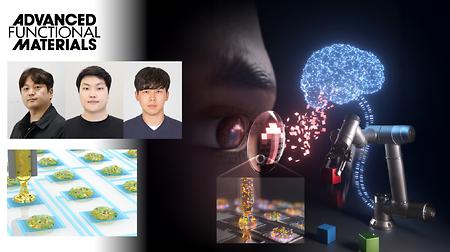
“눈짓만으로 로봇 조종한다”... AI 스마트 콘택트렌즈 개발

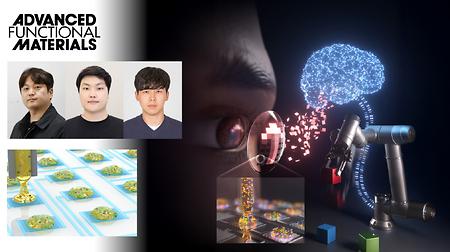
눈짓만으로 로봇을 움직일 수 있는 스마트 콘택트렌즈가 개발됐다. 렌즈를 낀 채 안구를 굴리면, 로봇 팔이 안구 방향을 따라 움직인다. 무겁고 복잡한 기존 확장현실(XR) 기기를 대신할 차세대 인간-기계 인터페이스 기술로 주목받고 있다. UNIST 기계공학과 정임두 교수(인공지능대학원 겸직) 연구팀은 센서를 렌즈에 직접 인쇄하는 특수 기술과 센서의 저해상도 신호를 고해상도로 복원하는 AI 기술을 결합해, 로봇 팔을 원격 제어할 수 있는 스마트 콘택트렌즈를 개발했다고 15일 밝혔다. 이 렌즈 위에는 100개(10x10)의 빛 검출 센서가 집적돼 있는데, 눈을 움직일 때마다 달라지는 빛 분포를 이 센서가 읽어내 시선 방향을 추적하는 원리로 작동한다. 위·아래·좌·우는 물론 대각선 방향까지 구분할 수 있으며, 이 시선 정보가 로봇 팔로 전달돼 팔이 움직인다. 안구의 깜박임으로 물건을 집을 수도 있다. 연구진은 둥근 렌즈 표면에 센서를 직접 프린팅할 수 있도록 ‘메니스커스 픽셀 프린팅(MPP)’ 기술을 개발해 적용했다. 노즐 끝에 맺힌 센서 원료 잉크를 렌즈 표면에 콕콕 찍어내는 형태의 기술이다. 메니스커스는 액체의 볼록하거나 오목한 곡면을 말하는데, 이 곡면 덕분에 잉크가 배출되는 힘과 잉크 퍼짐을 막는 힘이 균형을 이뤄 잉크를 원하는 양만큼 찍어낼 수 있다. 잉크를 건조하면 빛을 감지하는 페로브스카이트 물질만 남아 센서 역할을 하게 된다. 일반 센서 제작과 달리 센서 패턴을 새기기 위한 마스크가 필요 없고 다양한 안구 곡률에 맞춰 센서를 인쇄할 수 있어 개별 맞춤형 렌즈를 만들 수 있는 장점이 있다. 렌즈라는 작은 공간 탓에 신호 해상도가 떨어지는 문제는 인공지능 기술을 결합해 해결했다. 실제로는 100개의 센서가 있지만, 딥러닝 기반의 초해상도 기술을 적용하면 최대 6,400개(80x80)의 센서가 있는 것과 같은 신호 데이터를 얻을 수 있다. 재구성에 필요한 시간도 0.03초로 짧아 정보가 실시간 수준으로 로봇 팔에 전달될 수 있다. 안구 모형을 이용한 실험에서, 눈동자 움직임만으로 물체를 집어 옮기는 동작까지 이뤄졌으며, 방향 인식 정확도는 99.3% 수준을 기록했다. 이번 연구는 UNIST 기계공학과 공병훈, 김도현 연구원이 제1저자로 참여했다. 연구팀은 “하드웨어적 공정 혁신과 AI 기반 신호 복원 소프트웨어 기술을 결합해 렌즈라는 초소형 폼팩터의 공간적 제약을 극복한 기술”이라고 설명했다. 연구를 총괄한 정임두 교수는 “별도의 컨트롤러 없이 인간의 시각 정보를 로봇 제어 신호로 직접 변환하는 고도화된 인간-기계 상호작용(Human-Robot Interaction, HRI) 시스템 구현이 가능함을 증명했다”며 “차세대 초경량 XR 인터페이스 장치로서 눈의 움직임만으로 다양한 전자 기기를 정밀하게 제어할 수 있다는 점에서, 증강현실 기반 산업용 로봇 원격 제어, 재난·재해 환경에서의 탐사 로봇 운용, 국방 분야의 무인체계 및 드론 조종, 의료 및 재활 지원 시스템, 스마트 모빌리티 인터페이스 등 다양한 분야로 확장될 수 있는 잠재력을 지닌다“고 밝혔다. 연구 결과는 재료 과학 분야 세계적 학술지 (Impact Factor: 19.0, JCR 상위 5%이내)인 ‘어드밴스드 펑셔널 머티리얼즈(Advanced Functional Materials)’에 3월 11일 게재되었으며, 최신 호 전면 표지 논문으로 선정되어 출판될 예정이다. 연구 수행은 과학기술정보통신부 한국연구재단과 정보통신기획평가원 및 산업통상자원부의 기술개발사업 지원으로 이뤄졌다.

2026.04.22

  • XR글라스
  • 기계공학과
  • 메니스커스픽셀프린팅
  • 사람기계인터페이스
  • 스마트글라스
  • 스마트콘택트렌즈
  • 원격조종
  • 페로브스카이트센서
  • 폼팩터

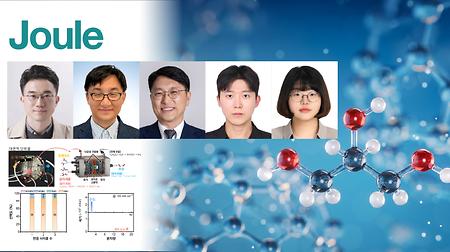
버려진 바이오자원, 수소와 화학소재로 재탄생!

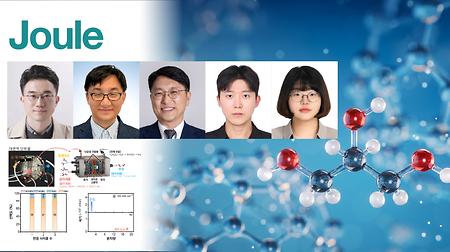
*본 보도자료는 한국재료연구원 주관으로 작성되었습니다. (보도자료 바로 가기) □ 한국재료연구원(KIMS, 원장 최철진) 에너지·환경재료연구본부 수소전지재료연구센터 양주찬 박사 연구팀은 울산과학기술원(UNIST, 총장 박종래) 에너지화학공학과 장지욱, 임한권, 이호식 교수 연구팀과 공동으로, 바이오디젤(식물성 기름 등을 활용한 친환경 연료) 산업 부산물인 글리세롤을 활용해 수소와 고부가가치 화학물질을 동시에 생산할 수 있는 고효율 전기화학 시스템을 개발했다. 이번 연구는 기존 수전해 공정의 핵심 병목이었던 산소 발생 반응(OER, Oxygen Evolution Reaction)을 대체해, 수소 생산 효율을 높이고 활용 범위를 확장한 차세대 전환 기술을 완성했다는 점에서 의미가 있다. □ 수소는 탄소중립 시대의 핵심 에너지원으로 주목받고 있으며, 이를 친환경적으로 생산하기 위한 수전해 기술 개발이 활발히 진행되고 있다. 하지만 기존의 수전해 방식은 물을 전기로 분해하는 과정에서 양극에서 필수적으로 동반되는 산소 발생 반응(OER)이 에너지를 많이 요구하고 반응 속도도 느려 전체 공정 효율을 떨어뜨리는 한편, 경제성까지 낮추는 한계가 있었다. □ 연구팀은 이러한 한계를 극복하고자, 물을 대체해 유기물인 글리세롤을 활용하고 이의 산화 반응(GOR, Glycerol Oxidation Reaction)을 양극에 적용한 음이온 교환막 수전해 시스템을 개발했다. 글리세롤은 바이오디젤 생산 과정에서 대량으로 발생하는 저가 부산물로, 이를 활용하면 기존 대비 더 적은 에너지로 반응을 유도할 수 있다. 또한 구리-코발트 기반의 비귀금속 촉매를 적용해 고가의 귀금속 없이도 높은 반응 활성과 안정성을 확보했으며, 1.31V의 비교적 낮은 전압에서도 110mA/㎠의 높은 전류밀도를 구현했다. □ 특히 이번 기술은 수소 생산과 동시에 포름산염(formate)과 같은 화학 원료를 함께 만들어낼 수 있어 기존 수전해 기술과 차별화된다. 기존 수전해 기술이 수소만 생산하는 단일 공정이었다면, 이번 기술은 에너지와 화학소재를 동시에 생산하는 복합 공정으로 확장한 것이다. 연구팀은 생성되는 물질의 약 96%를 원하는 화학물질(포름산염)로 전환하는 데 성공했으며, 79㎠ 규모의 대면적 전해셀에서도 안정적인 성능을 확인해 실험실 단계를 넘어 실제 산업 공정 적용 가능성도 입증했다. □ 이번 기술은 폐바이오 자원을 활용해 수소와 화학 원료를 동시에 생산할 수 있는 전기화학 플랫폼으로, 그린수소 생산 비용 절감과 자원 활용 효율을 동시에 높일 수 있다는 점에서 의미를 가진다. 특히 에너지와 화학 산업을 하나의 공정으로 연결하는 탄소중립형 생산 기술로, 기존의 분리된 생산 구조를 통합할 수 있다는 가능성이 있다. 여기에 나아가 연속공정 전환과 메가와트(MW)급 스케일로 확장할 수 있어 실제 산업 공정에 적용할 수 있는 실용적 기술로 발전이 기대된다. □ 연구책임자인 KIMS 양주찬 책임연구원은 "이번 연구는 저렴한 비귀금속 촉매를 대량으로 합성하고, 이를 실제 상용화 가능한 수준의 대용량 전해조 시스템에 적용해 성능을 입증했다는 데 큰 의미가 있다"고 강조했다. 또한 UNIST 장지욱 교수는 "글리세롤과 같은 바이오 부산물을 고부가가치 화합물로 전환하는 기술은 탄소 중립 달성과 수소 경제 활성화를 동시에 앞당길 수 있는 핵심 전략이 될 것"이라고 말했다. □ 본 연구는 국가과학기술연구회, 한국에너지기술평가원, 한국연구재단, 한국산업기술평가관리원의 국가연구개발사업의 지원을 받아 수행됐다. 또한 한국과학기술정보연구원의 슈퍼컴퓨팅 인프라와 포항가속기연구소의 방사광 가속기 시설을 활용하여 핵심 분석 및 계산 연구를 진행했다. 연구 결과는 에너지 분야 세계적 권위 학술지인 줄(Joule, IF: 35.4)에 2026년 3월 18일자로 온라인 게재됐다.

2026.04.22

  • 글리세롤
  • 바이오디젤폐기물
  • 수소
  • 에너지화학공학과
  • 포름산염

상온에서도 밝게 빛나는 양자광원 구현 성공

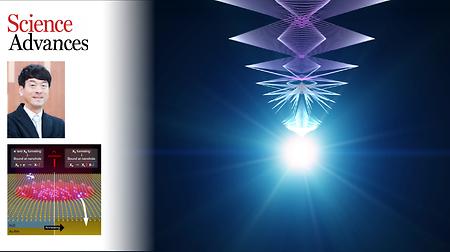
* 본 보도자료는 기초과학연구원(IBS) 주관으로 작성되었습니다. (보도자료 바로 가기) 2차원 반도체는 머리카락 굵기의 최대 10만분의 1수준에 불과한 매우 얇은 소재로, 효율적인 광소자를 구현할 수 있는 차세대 소재로 주목받고 있다. 그러나 상온에서는 빛을 만들어내는 엑시톤이 쉽게 퍼져나가 특정 위치에서 안정적인 발광이 어려운 한계가 있었다. UNIST 화학과 서영덕 교수(다차원 탄소재료 연구단 부연구단장)과 POSTECH 물리학과·반도체공학과·융합대학원·반도체대학원 박경덕 교수 공동 연구팀은 상온에서도 밝게 빛나는 고효율 양자광원을 구현하는 데 성공했다. 엑시톤은 전자와 정공이 결합한 준입자로, 반도체에서 빛을 방출하는 핵심 역할을 한다. 특히 특정 위치에 가두어진 ‘국소화 엑시톤’은 안정적인 발광이 가능해 양자광원으로 활용될 수 있다. 그러나 상온에서는 열에너지로 인해 엑시톤이 쉽게 확산되고, 물질 내 과잉 전하로 인해 발광 효율이 크게 저하되는 한계가 있었다. 연구팀은 이를 극복하기 위해 2차원 반도체 아래에 지름 500나노미터(nm, nanometer) 크기의 나노홀 구조를 도입해 엑시톤이 특정 위치로 모이도록 유도했다. 이 구조는 마치 움푹 파인 그릇처럼, 엑시톤이 자연스럽게 중심으로 모여 한 점에 머물도록 만든다. 또한 열처리를 통해 반도체와 금 기판 사이의 물 층을 제거해 과잉 전하를 줄이고, 엑시톤이 에너지를 잃지 않고 빛으로 방출될 수 있는 환경을 만들었다. 그 결과, 엑시톤은 나노홀 중심의 매우 작은 영역에 효과적으로 갇히게 되었으며, 약 98%의 높은 구속 효율이 확인됐다. 또한 발광 효율은 기존 대비 약 130배 향상되어, 상온에서도 밝고 안정적인 양자광원 구현이 가능함을 입증했다. 이번 연구는 2차원 반도체에서 구현한 광원이 QLED TV에 사용되는 양자점처럼 밝고 안정적인 특성을 가질 수 있음을 보여준다. 또한 나노 구조를 더욱 작게 만들고 빛을 비추는 조건을 정밀하게 조절하면, 지금까지 어려웠던 상온 고효율 단일양자광 생성도 가능할 것으로 기대된다. 특히 2차원 반도체는 반도체 웨이퍼 공정을 통해 넓은 면적으로 제작할 수 있어, 향후 양자통신과 양자컴퓨팅 등 다양한 산업 기술로의 확장이 가능할 전망이다. 제1저자 POSTECH, IBS 문태영 학생연구원은 “빛을 내는 입자를 한 점에 모아 가두는 방식으로, 상온에서도 밝게 빛나는 양자광원을 구현한 것이 이번 연구의 핵심”이라며 “이러한 구조는 다양한 광양자 소자들로 확장될 수 있는 기반이 될 것”이라고 밝혔다. 공동교신저자 서영덕 부연구단장은 “2차원 반도체에서 빛이 만들어지고 사라지는 과정을 정밀하게 제어해 성능을 크게 끌어올린 점이 중요하다”며 “이번 기술은 향후 상온에서 단일광자를 만드는 광원으로 발전할 수 있는 중요한 기술적 전환점이 될 것”이라고 말했다. 이번 연구 결과는 국제학술지 사이언스 어드밴시스(Science Advances) 3월 13일에 게재됐다.

2026.04.21

  • IBS
  • 구속효율
  • 기초과학연구원
  • 발광효율
  • 상온양자광원
  • 양자광원
  • 엑시톤
  • 화학과

노화된 망막세포에만 ‘킬러 약물’ 전달..“황반변성 시각 기능 회복”

고령화 시대를 맞아 황반변성 환자가 급증하는 가운데, 시력을 떨어뜨리는 근본 원인 세포만을 선택적으로 제거해 시기능을 되돌리는 기술이 개발됐다. 황반변성은 망막의 황반 손상으로 인해 중심 시야가 흐리거나 뒤틀려 보이는 질환으로, 백내장, 녹내장과 더불어 3대 실명 원인 질환으로 꼽힌다. UNIST 화학과 유자형 교수와 건국대병원 안과 정혜원 교수팀은 노화된 망막색소상피세포(RPE)만 골라서 제거 약물을 전달하는 나노 입자를 개발해, 실험쥐의 시각 기능을 일부 회복하는 성과를 거뒀다고 9일 밝혔다. 망막색소상피세포의 노화는 건성 노인성 황반변성의 주요 원인으로 지목되고 있다. 노화 상태에 접어든 RPE는 단순히 기능을 멈춘 세포가 아니라, 주변에 독성 염증 물질을 뿜어내며 건강한 정상 세포까지 파괴하는 역할을 하기 때문이다. 최근 이 노화 세포를 제거할 수 있는 세놀리틱스(Senolytics) 계열 약물이 주목받고 있지만, 정상 세포에 이 약물이 들어가면 독성 부작용이 일어난다. 연구진이 개발한 나노입자는 노화 세포에만 이 약물을 전달하는 역할을 한다. 노화 RPE는 표면에 Bst2라는 단백질이 많은데, 나노입자 겉면에 이 단백질에만 결합하는 특이 항체를 장착했기 때문이다. 노화 RPE 세포에 도달한 나노입자는 세포 안쪽으로 들어가 분해되면서, 내부에 들어있던 노화 세포 사멸 약물(ABT-263)을 방출한다. 혹시 나노입자가 정상 세포에 오배달되더라도, 노화 세포 특유의 고농도 글루타치온 환경에서만 분해가 일어나게 설계돼 안전하다. 노화된 RPE 표면에 Bst2라는 단백질이 많다는 점도 이번 연구를 통해 처음으로 밝혀졌다. 연구진은 자연 노화 쥐와 화학 약물로 병리적 노화를 유도한 쥐의 유전자 데이터를 교차 분석해, 노화 세포 표지자로서 Bst2를 발굴해 냈다. 개발된 나노입자에 약물을 담아 쥐의 안구에 주사한 결과, 정상 세포 손상 없이 노화 세포만 제거됐으며, 빛에 대한 전기적 반응(망막 전위도)이 유의미하게 커지며 시각 기능이 회복되는 것을 확인했다. 정혜원 교수는 “증상 완화에 머물렀던 기존 치료 방식과 달리, 질환의 출발점 자체를 겨냥했다는 점에 차별점이 있다”며 “마땅한 표준치료법이 없는 건성 노인성 황반변성에서 새로운 치료 접근이 될 수 있을 것으로 기대한다”고 말했다. 유자형 교수는 “노화세포 표면에만 나타나는 단백질을 새롭게 발굴해 노화세포만을 표적하는 약물 전달 나노입자를 설계할 수 있었다”며 “나노입자 표면의 특이 항체만 교체하면 다른 노인성 질환 노화세포 표적 치료에 활용 가능할 것”이라고 밝혔다. 이번 연구는 과학기술정보통신부 한국연구재단(NRF)과 보건복지부 한국보건산업진흥원(KHIDI)의 한국형 ARPA-H 프로젝트 등의 지원을 받아 수행됐으며, 결과는 국제학술지 네이처 커뮤니케이션즈(Nature Communications)에 3월 18일자로 게재됐다.

2026.04.17

  • 3대실명원인
  • 노화망막세포제거
  • 망막세포
  • 세놀리틱스
  • 화학과
  • 황반변성

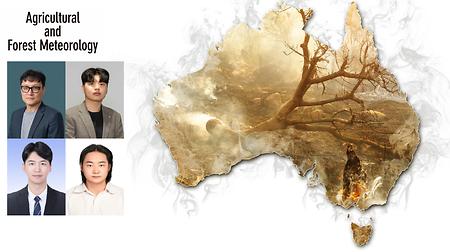
‘엘니뇨’ 밀리고 ‘남극 진동’ 뜨니 호주 산불 더 극심해졌다 !

호주 남동부 지역의 산불 위험이 매년 극단적으로 널뛰는 예측 불허 국면에 진입했다는 분석 결과가 나왔다. 변동성이 커진 원인으로는 ‘남극환상모드’라는 대기 순환 패턴의 영향력 강화가 지목됐다. 지구환경도시건설공학과 이명인 교수팀은 1981년부터 2022년까지 호주 남동부 지역의 산불 기상 조건을 분석해 이 같은 사실을 밝혀냈다. 이 교수팀의 연구에 따르면, 호주 남동부의 산불 위험이 2000년대 초반을 기점으로 ‘체제 전환(Regime Shift)’이라 부를 만큼 급격하고 불규칙한 변화를 겪고 있다. 이전 시기(1981~2001년)에 비해 최근 20여 년(2002~2022년) 사이 극심한 산불 발생 위험일(Fire Weather Days)은 약 5배나 급증했으며, 해마다 산불의 강도가 널뛰는 ‘변동성’ 또한 2배 이상 확대됐다. 주목할 점은 산불을 일으키는 ‘지휘자’가 바뀌었다는 것이다. 과거에는 적도 태평양 수온이 변하는 ‘엘니뇨-남방진동(ENSO)’이 호주 산불에 큰 영향을 미쳤으나, 최근에는 남극을 감싸고 도는 대기 순환 패턴인 ‘남극환상모드(SAM)’가 산불 변동성을 결정짓는 가장 강력한 원인으로 부상했다. 이러한 주도권의 변화는 땅과 대기가 서로 영향을 주고받는 ‘지면-대기 결합’이 강화되었기 때문이라는 분석이다. 가뭄으로 인해 지면이 바짝 마르면, 지면이 수분을 어느 정도 머금고 있던 상태보다 태양열이 지표면 온도를 더 급격히 높이고, 이는 다시 대기를 건조하게 만들어 산불이 나기 쉬운 ‘복합 극한 기상(고온, 건조, 가뭄)’을 유도하는 악순환이 깊어진 것이다. 기후 변화는 농업 분야에도 직접적인 타격을 주고 있는 것으로 나타났다. 연구팀은 산불 위험의 변동성이 커질수록 이 지역의 주요 작물인 옥수수 수확량 또한 비례해 크게 변동하는 현상을 확인했다. 기후-산불-농업을 통합한 사회·경제적 재난 관리의 중요성을 보여주는 대목이다. 제1저자인 김기욱 연구원은 “과거에는 산불 예측 시 엘니뇨 현상을 주로 참고했다면, 이제는 남극 지역의 대기 흐름(SAM)과 지면의 건조 상태를 더욱 면밀히 관찰해야 한다”며 “이번 연구는 호주뿐 아니라 기후 변화로 인해 산불이 대형화·일상화되고 있는 전 세계 여러 지역의 산불 예측 성능을 높이는 데 기여할 것”이라고 설명했다. 이명인 교수는 “단순한 기온 상승을 넘어 기상 요인들의 복합적인 상호작용으로 인해 산불의 예측 불가능성이 커지고 있다”며 “강화된 복합 극한 기상 재난의 신호를 기후 모델에 정교하게 반영한다면 미래 기후 재난에 대비한 영향 예보 시스템을 한 단계 고도화할 수 있을 것”이라고 밝혔다. 이번 연구는 UNIST 이명인 교수팀의 주도로 하와이대학교(University of Hawaii), POSTECH 등 국제 공동 연구팀이 참여했으며, 연구 결과는 산림 및 농업 연구 관련 최상위 국제 학술지 ‘농림기상학(Agricultural and Forest Meteorology)’에 4월 11일자로 게재됐다. 연구 수행은 환경부의 ‘신기후체제 대응 환경기술개발’ 사업의 지원을 받아 이뤄졌다.

2026.04.16

  • 건조기후
  • 기후변화
  • 남극환상모드
  • 도시건설공학과
  • 엘리뇨
  • 지구환경도시건설공학과
  • 지면대기결합력강화
  • 호주산불

더보기

Research Impact

star

Breakthrough Unveils How Alcohol Amplifies Liver Damage During Illness

Abstract Alcohol consumption has short- and long-term impacts on physical and mental health. Although multiple host and environmental factors contribute to alcohol-related disease, the innate immune sensors that detect toxic signals from alcohol remain poorly defined. Here, we show that alcohol cooperates with sterile- or infection-induced interferon signaling to drive inflammatory cell death, cytokine release, and liver injury in humans and mice. We identified the pattern recognition receptor Z-DNA binding protein 1 (ZBP1) as a key innate immune sensor mediating pyroptosis, apoptosis, and necroptosis in response to combined ethanol and interferon stimulation. While interferon elevated ZBP1, ethanol suppressed adenosine deaminase acting on RNA 1 (ADAR1) expression. Together, interferon and ethanol activated JNK signaling to promote Z-RNA formation, triggering ZBP1. These findings reveal a mechanism by which alcohol and interferon converge to induce ZBP1-dependent inflammatory cell death and liver pathology, providing mechanistic insight and highlighting potential therapeutic targets for alcohol-related disease. A research team, affiliated with UNIST has uncovered a novel molecular pathway explaining why alcohol consumption can lead to severe liver damage, particularly when individuals are already battling infections, such as cold and influnenza. Led by Professor SangJoon Lee from the Department of Biological Sciences at UNIST, alongside Professors Rajendra Karki of Seoul National University and Si Ming Man of the Australian National University, the research sheds light on how alcohol interacts with the immune system to accelerate liver cell death and exacerbate liver disease. The team discovered that, in the presence of interferon—a key immune signaling molecule produced during infections—alcohol triggers an inflammatory cascade within liver cells. Specifically, alcohol increases the level of Z-RAN, an abnormal form of RNA, which is detected by the pattern recognition receptor Z-DNA binding protein 1 (ZBP1). This activation initiates inflammatory cell death, contributing to liver damage. Under normal circumstances, the protein ADAR1 suppresses Z-RNA formation, preventing unwarranted immune activation. However, the study revealed that alcohol impairs ADAR1 production, allowing Z-RNA to accumulate and activate ZBP1. This process involves the JNK signaling pathway, which was validated through animal experiments showing that inhibiting ZBP1 or blocking JNK signaling significantly reduced liver injury—even in the presence of alcohol and interferon. Professor Lee explained, "While the direct toxicity of alcohol on liver cells has long been recognized, our findings highlight an immune-mediated pathway that exacerbates liver damage during illness. This discovery opens new possibilities for targeted therapies, such as ZBP1 inhibitors, to treat alcohol-related liver diseases." The findings of this research were published in Science Advances on April 10, 2026. The study was supported by the National Research Foundation of Korea (NRF), the Korea Drug Development Find (KDDF), the Institute for Basic Science (IBS), the Circle Foundation, and Yuhan Corporation. It has also been supported through the Global Physician-Scientist Training Program and the ARPHA-H Project from the Korea Health Industry Development Institute (KHIDI) under the Ministry of Health and Welfare (MOHW). Journal Reference Yeonseo Jang, Hoeun Bae, SuHyeon Oh, et al ., “Innate immune sensing of dietary alcohol ignites inflammation to drive alcohol-related disease,” Adv. Sci ., (2026).

2026.04.24

  • Bio
  • Department of Biological Sciences
  • SangJoon Lee
  • Science Advances
  • Z-RNA
  • ZBP1

UNIST Unveils Smart Contact Lens with Meniscus Pixel Printing for Vision-Based Robotic Control

Abstract Contact lenses are emerging as strong candidates for next-generation extended reality (XR) interfaces due to their lightweight and ergonomic form factor. However, integrating photodetector arrays onto the limited area of a lens remains challenging with conventional micropatterning approaches, which rely on masks, multistep processes, and specialized equipment that inherently limit throughput and scalability. To address these constraints, we introduce a Meniscus Pixel Printing (MPP) strategy that enables rapid, mask-free patterning of MAPbI3 perovskite photodetectors without costly or complex fabrication tools. MPP uses a self-confined meniscus at a pipette tip to deterministically transfer perovskite ink, enabling 200 µm pixels to be printed within 1 s per pixel. In addition to planar substrates, MPP demonstrates stable pixel patterning on curved surfaces, highlighting its geometric adaptability and process versatility. Using this approach, we fabricate a 10 × 10 perovskite photodetector array and demonstrate stable photoresponse, retaining 92% of its initial performance after two months of storage. To overcome limited pixel density, a deep-learning-based super-resolution (SR) model reconstructs 10 × 10 inputs into 80 × 80 optical information with 97.2% accuracy and 0.03 s latency. Additionally, an AI-based eye-tracking system recognizes nine eye gestures with 99.3% accuracy, enabling smooth hands-free robotic arm control. A research team, led by Professor Im Doo Jung from the Department of Mechanical Engineering at UNIST, has developed a groundbreaking smart contact lens that enables users to control robots through eye movements. This innovative device combines embedded optical sensors with AI-based signal processing, offering a lightweight, intuitive human-machine interface with vast potential across industries. The lens incorporates a 10×10 array of light sensors capable of detecting subtle changes in light distribution caused by eye movements, including gaze direction and blinks. These signals are transmitted to control external robotic systems, as demonstrated with a robotic arm. Notably, the team employed a novel Meniscus Pixel Printing (MPP) technique to directly print sensors onto the curved lens surface without masks or complex fabrication steps, ensuring high precision and customizability. In addition to robotic control, the system demonstrates vision sensing capabilities by reconstructing optical information. To address the limited signal resolution inherent to micro-scale devices, the researchers applied deep-learning-based super-resolution algorithms, reconstructing high-fidelity signals equivalent to an 80x80 sensor array in just 0.03 seconds. This enables real-time, accurate control based solely on eye movements, achieving recognition accuracies of up to 99.3% under experimental conditions. This technology marks a significant advancement in ultra-compact human-machine interfaces, enabling precise, hands-free control of electronic devices. Potential applications include remote robotic operation, medical assistive devices, exploration in hazardous environments, defense systems, and smart mobility. Published in the March 2026 issue of Advanced Functional Materials (Impact Factor: 19.0, JCR Top 5%)—a top-tier journal in materials science—the research was selected as the Front Cover of the latest issue. The study received support from the National Research Foundation of Korea (NRF), the Ministry of Science and ICT (MSIT), the Institute of Information & Communications Technology Planning & Evaluation (IITP), and the Ministry of Trade, Industry, and Energy (MOTIE). Journal Reference Byung-Hoon Gong, Dohyean Kim, Jiyun Jeong, et al ., “Meniscus Pixel Printing for Contact-Lens Vision Sensing and Robotic Control,” Adv. Funct. Mater. , (2026).

2026.04.23

  • Advanced Functional Materials
  • Department of Mechanical Engineering
  • Form Factor
  • Im Doo Jung
  • ME
  • Meniscus Pixel Printing
  • MPP
  • Perovskite Sensor
  • Robotic Control
  • Smart Contact Lenses
  • Vision Sensing

Innovative Scalable Electrochemical Approach for Transforming Waste Glycerol into Hydrogen and High-Value Chemicals

Abstract Interest in electrochemical glycerol oxidation reactions (GORs) continues to grow as a promising strategy for hydrogen production. By replacing the oxygen evolution reaction (OER), GOR reduces energy consumption while generating hydrogen at the cathode and value-added formate at the anode, offering techno-economic advantages over conventional water electrolysis. However, its practical implementation is still hindered by reliance on precious metal catalysts and performance losses in scaled-up systems. Here, we synthesized a non-precious CuCo oxide (CCO) electrocatalyst at a tens-of-grams scale through co-precipitation and simple surface treatment. When applied to an anion exchange membrane (AEM) electrolyzer, the modified CuCo oxide achieved 110 mA cm−2 at 1.31 Vcell using a 7 cm2 non-precious GOR anode with 96% formate selectivity. The system was further scaled to a 79 cm2 anode, delivering 3.2 A at 1.31 Vcell. This study demonstrates a practical and economically favorable pathway for scalable hydrogen production via glycerol valorization in AEM electrolyzers. A joint research team, led by Professors Ji-Wook Jang, Hankwon Lim, and Hosik Lee from the School of Energy and Chemical Engineering at UNIST, in collaboration with Dr. Juchan Yang from the Energy & Environment Materials Research Division at Korea Institute of Materials Science (KIMS), has announced the development of a high-performance, scalable electrochemical system that transforms waste glycerol—an industrial byproduct of biodiesel production—into hydrogen and value-added chemicals, such as formate. This innovative system replaces the conventional oxygen evolution reaction (OER) in water electrolysis with glycerol oxidation, resulting in reduced energy consumption and enhanced efficiency. Using a copper-cobalt oxide catalyst, the system a current density of 110 mA/cm² at just 1.31 V, with 96% selectivity for formate. The technology was successfully scaled to a 79 cm² electrode, demonstrating its potential for industrial applications. This advancement provides a sustainable, cost-effective pathway for large-scale hydrogen production through glycerol valorization. By simultaneously generating hydrogen and valuable chemicals from waste biomass, the approach promises significant reductions in green hydrogen costs and improved resource efficiency. Additionally, integrating energy and chemical manufacturing processes supports global efforts toward carbon neutrality and a sustainable hydrogen economy. Moreover, its scalability and compatibility with continuous operation suggest promising prospects for industrial deployment and further scale-up to megawatt-level systems. Juchan Yang, Principal Researcher at KIMS, emphasizes, “This study demonstrates the large-scale synthesis of low-cost, non-precious catalysts and their successful integration into a practical electrolyzer system, marking a significant step toward commercial viability.” Professor Ji-Wook Jang of UNIST adds, “Transforming biomass waste like glycerol into high-value chemicals and hydrogen not only accelerates carbon neutrality but also offers strategic advantages in building a sustainable hydrogen economy.” The findings of this research were published online in Joule (IF: 35.4) on March 18, 2026. The study was supported by the National Research Council of Science & Technology (NST), the Korea Institute of Energy Technology Evaluation and Planning (KETEP), the National Research Foundation of Korea (NRF), and the Korea Institute of Industrial Technology (KEIT). Core analyzes and computational modeling were conducted using supercomputing resources provided by the Korea Institute of Science and Technology Information (KISTI), with technical support, as well as the synchrotron radiation source at the 6D beamline of the Pohang Accelerator Laboratory. Journal Reference Ki-Yong Yoon, Seon Woo Hwang, Hee Yoon Roh et al. , “Commercial-scale glycerol valorization using surface-modified copper cobalt oxide catalyst in high-capacity anion exchange membrane electrolyzer,” Joule , (2026).

2026.04.23

  • Catalysis
  • ECE
  • ECHE
  • Glycerol
  • Hankwon Lim
  • Hosik Lee
  • Hydrogen Production
  • Ji-Wook Jang
  • Joule
  • School of Energy and Chemical Engineering
  • Surface Engineering

New Study Uncovers Shift in Climate Drivers Intensifying Wildfires in Australia

Abstract Wildfire variability in Southeastern Australia (SEA) has intensified in recent decades, posing increasing risks to ecosystems and agriculture under a changing climate. However, the mechanisms driving the recent amplification of extreme fire weather remain unclear. Using austral-summer data from 1981–2022, we quantify interannual links between the Forest Fire Danger Index (FFDI) and land–atmosphere variables. Fire Weather Days (FWD) are defined as days exceeding an extreme FFDI threshold each fire season and are validated against satellite-based burned area and fire intensity across SEA. We show that recent fire risk in SEA is characterized not by a gradual increase but by a regime shift in extreme fire weather conditions. An early-2000s transition is marked by enhanced interannual variability and an approximately fivefold increase in FWD, linked to increased positive skewness in daily FFDI. Among FFDI components, the drought factor (DF), representing hydrological stress, exhibits the largest increase in extreme occurrences, especially when co-occurring with high temperature (T) and low relative humidity (RH). The contribution of compound DF & RH & T events to total FWD more than doubles between 1981–2001 (P1) and 2002–2022 (P2). Segmented regression further reveals strengthened interannual FWD sensitivity to DF in P2. In P1, variability reflected atmospheric warming and drying, whereas P2 is characterized by intensified land–atmosphere coupling that amplifies hydrological stress and compound extremes. This transition coincides with changes in large-scale circulation, with the Southern Annular Mode (SAM) emerging as the dominant driver of FWD variability in the recent period, while ENSO exerted a stronger influence earlier. Increased FWD variability is also closely linked to interannual maize yield fluctuations across SEA. These findings highlight a hydrologically-driven regime shift in extreme fire weather and underscore the need for integrated climate-fire-agriculture risk assessment. An international team of researchers, affiliated with UNIST, has identified a dramatic transformation in wildfire patterns across Southeastern Australia (SEA). Analyzing data from 1981 to 2022, the research shows that since the early 2000s, the region has experienced a fivefold increase in extreme fire weather days, driven increasingly by the Southern Annular Mode (SAM) rather than the traditionally dominant El Niño–Southern Oscillation (ENSO). This shift highlights new challenges in predicting and managing wildfires under a changing climate. Led by Professor Myong-In Lee from the Department of Civil, Urban, Earth and Environmental Engineering at UNIST, this study was conducted in collaboration with experts from the University of Hawaii and POSTECH. In this study, the team identified a regime shift beginning in the early 2000s, characterized by emphasized interannual variability and a sharp rise in extreme fire weather days. Over the past two decades, wildfire risk volatility has more than doubled. This change is primarily attributed to the strengthening of land-atmosphere coupling, where drought conditions intensify surface heating, creating a feedback loop that fuels more frequent and severe wildfires. beginning in the early 2000s, marked by heightened interannual variability and a sharp rise in extreme fire weather days. Over the past two decades, wildfire risk volatility has more than doubled. This change is primarily driven by strengthened land–atmosphere coupling: drought conditions dry out surface soils, creating a feedback loop that amplifies surface heating and fosters more frequent and severe wildfires. While ENSO has traditionally been the main climate driver influencing Australian wildfires, recent evidence indicates that the SAM’s influence has grown, now serving as the dominant factor regulating wildfire variability. Kiwook Kim, the main author of the study, comments, “Our findings emphasize the need for enhanced monitoring of atmospheric circulation patterns and soil moisture levels. This knowledge is vital for improving fire risk predictions and informing climate adaptation strategies to safeguard communities and ecosystems.” “Understanding how climate factors influence wildfires is more critical than ever,” says Professor Lee. “Recognizing the increasing role of the Southern Annular Mode and the complex land-atmosphere interactions enables us to develop more accurate prediction models and better prepare for future wildfire seasons.” The findings of this research were published in Agricultural and Forest Meteorology on April 11, 2026. This research was supported by the Korea Environment Industry & Technology Institute (KEITI) under the Climate Change R&D Project for New Climate Regime project, funded by the Ministry of Environment (MOE) of Korea. Journal Reference Kiwook Kim, Myong-In Lee, Seungseok Lee, et al. , “Local and remote drivers of increased variability in extreme wildfire conditions in Southeastern Australia,” Agric. For. Meteorol., (2026).

2026.04.22

  • CUEEn
  • Department of Civil Urban Earth and Environmental Engineering
  • ENSO
  • Fire Weather Days
  • FWD
  • Myong-In Lee
  • SEA
  • Southeastern Australia
  • UEE
  • Wildfire

Bright Quantum Light Emission Achieved at Room Temperature in 2D Semiconductors

A joint research team, led by Professor Yung Doug Suh of UNIST, who also serves as Associate Director of the Center for Multidimensional Carbon Materials within the Institute for Basic Science (IBS) and Professor Kyoung-Duck Park from POSTECH, has succeeded in realizing a high-efficiency quantum light source that emits bright lights even at room temperature. The achievement overcomes a longstanding limitation of two-dimensional semiconductors—atomically thin materials typically about 100,000 times thinner than a human hair—which previously required either cryogenic temperatures or complex electrical gating structures to produce efficient light emission. At the heart of the study are excitons, the light-emitting quasiparticles that form when electrons bind with “holes”—the absence of an electron that behaves like a positive charge—in a semiconductor. In two-dimensional semiconductors, excitons are especially important because they can enable ultrathin and highly efficient optical devices. However, there has been a major problem: at room temperature, excitons tend to spread out too easily, making it difficult to generate bright light from a precise location. Recently, researchers have become increasingly interested in localized excitons—excitons that are trapped in a confined nanoscale region. A useful analogy is a ball rolling on a flat floor versus a ball sitting in a bowl. On a flat surface, the ball moves around freely, but in a small hollow, it remains trapped in one place. Localized excitons behave similarly: once confined, they can emit light more stably and with better control over wavelength, making them attractive candidates for ideal quantum light sources. But room temperature makes this difficult. As thermal energy rises, excitons can escape from the trapping region, just as a ball may bounce out of a shallow bowl. At the same time, excess charges remaining in the material can interact with excitons or drain away their energy, causing the system to lose energy as heat instead of light. For this reason, the light-emission efficiency of localized excitons in two-dimensional semiconductors has typically remained below 1% under ambient conditions. To overcome this challenge, the team designed a 500-nanometer nanohole structure beneath a monolayer of MoS2, a representative two-dimensional semiconductor. This nanohole acts like a nanoscale bowl, naturally funneling excitons toward its center and confining them to a tiny region. According to the researchers’ simulations, about 98% of excitons in the nanohole region were funneled into the center and formed localized exciton states, indicating highly efficient confinement within the nanoscale region. At the same time, the researchers addressed another major source of loss: excess electrons in the material. During the transfer process used to place the MoS2 layer onto the gold substrate, a thin residual water layer forms naturally at the interface. This layer acts as a dielectric barrier that prevents efficient charge transfer, allowing excess electrons to remain in the semiconductor and degrade emission. By applying thermal annealing, the team removed this water layer and enabled electrons to flow from the MoS₂ into the gold substrate. This effectively neutralized the material and greatly suppressed nonradiative loss pathways. As a result, the system produced bright localized exciton emission under ambient conditions, with the photoluminescence quantum yield increasing by about 130 times compared with the pre-annealed state. The researchers report that the quantum yield in the nanohole region increased from 0.076% (basically unusable) to about 10% (clearly visible bright light), far above the typical value for pristine monolayer MoS₂ at room temperature. By using the quantum confinement effect to trap light-emitting excitonic states within an extremely small region, the researchers demonstrated a practical route toward bright and stable quantum emission over large areas. This result is significant because it shows that quantum emitters made from two-dimensional semiconductors can achieve brightness and stability approaching that of quantum dots used in QLED displays, while retaining the additional advantages of atomically thin materials. The work also suggests a path toward even more advanced devices. By making the nanostructures smaller and further optimizing the optical excitation conditions, the researchers believe it may become possible to achieve high-efficiency single-photon emission at room temperature, something that has remained extremely challenging until now. Professor Kyoung-Duck Park said, “The key achievement of this study is that we realized a quantum light source that emits brightly even at room temperature by gathering and confining light-emitting particles into a single nanoscale point. This structure can serve as a foundation for a wide range of future photonic and quantum devices.” The team also demonstrated that the localized exciton emission could be dynamically and reversibly controlled. By applying gigapascal-scale pressure using the tip of an atomic force microscope, they were able to modulate the strain at the nanohole and thereby tune the behavior of the localized excitons. In annealed samples, this led to an approximately 120% increase in localized exciton emission intensity, and the effect disappeared when the pressure was released, showing that the process is fully reversible. Associate Director Yung Doug Suh of IBS said, “An important aspect of this work is that we were able to dramatically improve performance by precisely controlling how light is generated and lost in a two-dimensional semiconductor. This technology could become an important turning point toward future room-temperature single-photon sources.” Another important aspect of the study is its practical scalability. Many previous strategies for realizing efficient localized exciton emission relied on complex electrical device architectures or cryogenic environments, both of which make real-world implementation difficult. In contrast, the present method uses a relatively simple combination of nanostructuring and thermal processing. Because the approach is compatible with established semiconductor wafer-scale fabrication processes, the work opens the door to scalable, integrated quantum light-source technologies for applications, such as quantum communication, quantum computing, and next-generation nano-LEDs. Beyond quantum communication and quantum computing, the researchers say the platform may also be useful for high-efficiency nanoscale light sources, tunable optoelectronic devices, and future nanophotonic technologies. More broadly, the work provides a new design strategy for controlling excitons in low-dimensional materials: by simultaneously confining excitons spatially and neutralizing unwanted charges, it becomes possible to stabilize bright quantum emission even under ordinary room-temperature conditions. The findings of this research were published in Science Advances on March 13, 2026. Yung Doug Suh Professor, Department of Chemistry, UNIST Associate Director, IBS Center for Multidimensional Carbon Materials (CMCM) E: ydougsuh@gmail.com William I. Suh Public Information Officer IBS Public Relations Team T: +82-42-878-8137 E:willisuh@ibs.re.kr Story Source Materials provided by theInstitute of Basic Science. Notes for Editors The online version of the original article can be foundHERE. Journal Reference Taeyoung Moon, Hyeongwoo Lee, Jihae Lee, et al ., “Highly radiative emission of room temperature–localized excitons enabled by charge-neutralized 0D quantum wells in 2D semiconductors,” Sci. Adv. , (2026). DOI: 10.1126/sciadv.ady2186

2026.04.20

  • Chemistry
  • CMCM
  • Department of Chemistry
  • Excitons
  • IBS Center for Multidimensional Carbon Materials
  • NanoLED
  • Quantum Communication
  • Quantum Computing
  • Quantum Light
  • Room Temperature
  • Science Advances
  • Thermal Annealing
  • Yung Doug Suh

Breakthrough Observation of Transient Intermediate in Nitrite-to-Nitric Oxide Conversion

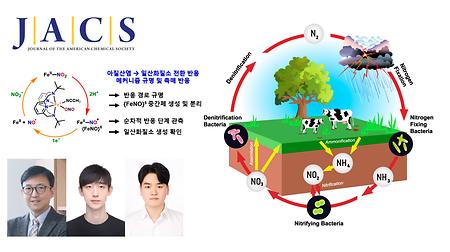
Abstract The reduction of nitrite (NO2–) to nitric oxide (NO) is a fundamental transformation within both the global nitrogen cycle and enzymatic signaling pathways. Although extensively investigated, the elusive {FeNO}6 intermediate implicated in the 2H+/1e– reduction pathway has rarely been observed or isolated due to the inherent instability. Here, we present a comprehensive mechanistic investigation of nitrite reduction by a mononuclear iron(II)-nitrite complex, [FeII(TBDAP)(NO2)(CH3CN)]+ (1) (TBDAP = N,N′-di-tert-butyl-2,11-diaza[3.3](2,6)-pyridinophane). Treatment of 1 with 2.5 equiv of triflic acid (HOTf) affords the {FeNO}6 (2) intermediate, which was characterized using a combination of various physicochemical techniques and DFT calculations. Isotopic labeling using Na15NO2 confirmed the formation of 2 via heterolytic N–O bond cleavage. Kinetic studies revealed a HOTf-independent rate constant and a markedly negative value of activation entropy for the formation of 2, suggesting that the rate-determining step involves an associative reaction between Fe(II) and NO+. Electrochemical analysis showed a reversible redox couple for 2, and subsequent one-electron reduction by ferrocene released NO. The generation of NO was confirmed through trapping experiments using [Co(TPP)], resulting in the formation of [Co(TPP)(NO)]. The experimental findings establish {FeNO}6 as an isolable and reactive intermediate, offering new insight into the mechanistic landscape of nitrite reduction. Researchers from UNIST and Jeonbuk National University have, for the first time, captured and analyzed a short-lived iron (Fe)-based intermediate involved in converting nitrite (NO2–) to nitric oxide (NO)—a key process in the nitrogen cycle and biological signaling. This discovery, made at ultra-low temperatures, provides new insights into how vital molecules are produced in nature and in biological systems. Using a specialized Fe(ll)-nitrite complex and reaction conditions at -40°C, Professor Jaeheung Cho from the Department of Chemistry at UNIST, in collaboration with Professor Kyung-Bin Cho at Jeonbuk National University isolated the elusive {FeNO}⁶ intermediate, a critical step preceding NO release. Spectroscopic and computational analyses confirmed that this species forms after NO2– accepts a proton and undergoes bond cleavage, with the nitrogen-oxygen ion binding to Fe. Further electron transfer then liberates NO. The study also revealed that the reaction pathway varies depending on whether proton and electron transfers occur sequentially or simultaneously, providing nuanced insight into reaction mechanisms. Professor Cho remarked, “This is the first direct observation of the intermediate in NO2– reduction to NO. Understanding this step could inform targeted therapies for vascular diseases and inspire the design of new catalysts with improved efficiency.” According to the research team, this discovery advances fundamental knowledge of nitrogen cycle chemistry and biological NO production, with potential applications in medicine and sustainable catalysis. By elucidating the reaction pathway, the research opens avenues for developing innovative treatments and catalytic systems. These findings were published in the Journal of the American Chemical Society (JACS) on March 20, 2026. The study has been supported by the Ministry of Science and ICT (MSIT), the National Research Foundation of Korea (NRF), and the Ministry of Health and Welfare (MOHW). Journal Reference Seungwon Sun, Youngjin Jeon, Youngseob Lee, et al., “Unveiling an {FeNO}6 Intermediate: A Sequential Mechanistic Investigation of Nitrite Reduction in a Mononuclear Iron(II) Complex,” JACS, (2026).

2026.04.16

  • Chemistry
  • Department of Chemistry
  • JACS
  • Jaeheung Cho
  • Jeonbuk National University
  • Nitric Oxide
  • Nitrite
  • Nitrogen Cycle

더보기

UNIST Insight

star

UNISTAR Voices 
Shaping Futures, 
Inspiring the 
World

더보기

Life at UNIST

star