UNIST site map
- Admissions
-
Academics
- Colleges and Schools
-
Academic Affairs
- Academic Calendar
- Academic Curriculum
- Requirements for Graduation
- Browse Open Courses
- Undergraduate Administration
-
Graduate Academic Affairs
- Tuition Fee Payment
- Academic Leave of Absence/ Academic Return
- Voluntary Withdrawal/ Expulsion
- Change of Major
- Change of Degree Program/ Dropping of Degree Program
- Class Period/ Attendance Period/ Academic Year・Semester
- Course Registration
- Course Drop
- Attendance/ Grade/ Exam
- Credit Transfer/ Credit Carryover
- Academic Forms
- Education Support
-
Research/Industry
- Research Aims
- Research Findings
- Researcher Search
-
Research Organizations
- UNIST Multi-Interdisciplinary Institute
- IBS Research Groups
-
UNIST Labs
- Department of Mechanical Engineering
- School of Energy and Chemical Engineering
- Department of Civil
- Department of Materials Science and Engineering
- Department of Nuclear Engineering
- Department of Industrial Engineering
- Department of Design
- Department of Biomedical Engineering
- Department of Biological Sciences
- Department of Electrical Engineering
- Department of Computer Science and Engineering
- Department of Mathematical Sciences
- Department of Chemistry
- Department of Physics
- School of Business Administration
- Graduate School of Carbon Neutrality
- Graduate School of Artificial Intelligence
- Research Support
- University-Industry Relations
- Campus Life
- News Center
- About UNIST
-
etc
- UNIST Bulletin
- Work-Life Balance Support System
- UNIST Gender Equality Plan
- Faculty Invitation for Tenure Track
- Faculty Invitation for Non-Tenure Track
- Board Meeting Minutes
- University Council Meeting Minutes
- Administrative Service Charter
- Privacy Policy
- Copyright Policy
- Rejection of Unauthorized Email Collection
- Operation and Management Policy for Video Information Processing Devices
- Information Disclosure


Connection Points of Knowledge, Everything About UNIST
Try searching.
Recommended search terms


- portal
- U Academics Innovation Center
- Leadership Center
- Dormitory
- Academic Information Center
- International Students Support
- Browse Open Courses
- Course Registration
- Graduation Requirements for Graduation
- Academic Leave of Absence/ Academic Return
- Military Service
- Certificate Issuance
- Academic Calendar
- Scholarships
- Campus Map
- Campus Life Guidebook
- Health Care Center
- Human Rights Center
- portal
- Job Opening
- Announcement for Bid
- UNIST AI Services
- UNIST Daycare Center
- Sports Center
- UI Downloads
- Announcement
- Recruitment of Professors (Non-tenure)
- Faculty Invitation for Tenure Track
- UNIST Academic Information Center
- Office of Research Facilities and Training
- Office of Research Affairs
- Rule Management System
- Academic Calendar


This is a collection of menus necessary for UNIST students .
students
- portal
- U Academics Innovation Center
- Leadership Center
- Dormitory
- Academic Information Center
- International Students Support
- Browse Open Courses
- Course Registration
- Graduation Requirements for Graduation
- Academic Leave of Absence/ Academic Return
- Military Service
- Certificate Issuance
- Academic Calendar
- Scholarships
- Campus Map
- Campus Life Guidebook
- Health Care Center
- Human Rights Center


This is a collection of menus necessary for prospective UNIST Students .
prospective Students


This is a collection of menus necessary for UNIST Faculty & Staff .
Faculty & Staff
- portal
- Job Opening
- Announcement for Bid
- UNIST AI Services
- UNIST Daycare Center
- Sports Center
- UI Downloads
- Announcement
- Recruitment of Professors (Non-tenure)
- Faculty Invitation for Tenure Track
- UNIST Academic Information Center
- Office of Research Facilities and Training
- Office of Research Affairs
- Rule Management System
- Academic Calendar


NEWS CENTER
Discover not only Research Findings and event news, but also the diverse facets of UNIST presented by reporters and writers.
News Center

UNIST News
New Study Unveils Direct Energy Deposition for Smart Micro Reactor
Their findings have been published in Virtual and Physical Prototyping on October 10, 2024.
- Research
- JooHyeon Heo
- 2024.10.31
- 1153

Abstract Nuclear microreactors (MRs) have attracted significant attention for their versatility in installation locations, especially with the growing demand for sustainable green energy in large data processing facilities. However, ensuring their safe operation necessitates frequent inspections, which can be challenging for practical efficient management. This study proposes a novel approach using direct energy deposition to incorporate an optical fiber sensor into MR components, enabling real-time monitoring with artificial intelligence. The embedded optical fiber generates real-time data that allows for AI-driven in-vivo thermal deformation analysis. Our smart MR component can detect structural anomalies, identify abnormal operations, and assess operational conditions through augmented reality interfaces and AI technology.
As the demand for electricity rises in the age of artificial intelligence (AI), global tech companies are focusing on small nuclear reactors as a sustainable energy solution. A new remote monitoring technology, capable of detecting potential hazards in these reactors within just two seconds using advanced AI. This innovative system enables real-time monitoring of internal conditions, significantly reducing management costs and enhancing safety.
A research team, jointly led by Professor Im Doo Jung (Department of Mechanical Engineering, UNIST) and Professor Namhun Kim (Department of Mechanical Engineering/AI Graduate School, UNIST), along with Professor Hyungmo Kim from Gyeongsang National University, has introduced a smart component system designed for remote surveillance of small nuclear reactors. This system incorporates embedded optical fiber sensors that continuously monitor components and alert users to any abnormal conditions.
The breakthrough lies in a novel technology that combines 3D printing with AI, enabling the rapid processing of multiple continuous variables from optical fiber sensors. The team successfully manufactured smart nuclear parts using a Directed Energy Deposition (DED) printing method, seamlessly integrating fiber optic sensors within the metal components. This design ensures stability even in the harsh environments typical of nuclear reactors. The AI system rapidly analyzes data from the optical sensors to monitor thermal deformation in real time, allowing operators to detect irregularities and assess conditions remotely through an augmented reality (AR)-based digital twin interface.
 Figure 1. Figure 1. DED sensor embedding and monitoring process.
In contrast to traditional large-scale nuclear reactors, microreactors (MRs) can provide stable power generation near energy-intensive facilities. However, maintaining safety in these plants is paramount. This new technology is poised to significantly enhance the safety and operational efficiency of next-generation small nuclear reactors by enabling AI to monitor critical thermal deformation signals that are often undetectable by human inspection.
Professor Jung noted, "We tackled the challenges associated with traditional inspection methods through our AI convergence technology, which can greatly enhance the stable and efficient operation of next-generation small nuclear power plants." He further predicted that "this convergence technology could extend its applications beyond nuclear power, potentially benefiting diverse industries such as autonomous manufacturing systems, aerospace, and advanced defense."
The findings of this research have been published in Virtual and Physical Prototyping (IF: 10.3, JCR < 7% in Manufacturing) on October 10, 2024. The research was supported by the National Research Foundation of Korea (NRF), the Ministry of Science and ICT (MSIT), the Korea Institute of Information & Communication Technology Planning & Evaluation (IITP), the Korea Institute of Energy Technology Evaluation and Planning (KETEP), and the Ministry of Trade, Industry and Energy (MOTIE).
Journal Reference
Hayeol Kim, Junyoung Seo, Adrian Matias Chung Baek, et al., "Direct energy deposition for smart micro reactor," Virtual Phys. Prototyp., (2024).
-
Ultrafast 3D Microfabrication Technology Produces Complex Structures in Just 60 Seconds
-
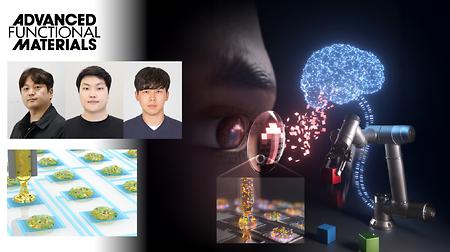
UNIST Unveils Smart Contact Lens with Meniscus Pixel Printing for Vision-Based Robotic Control
-
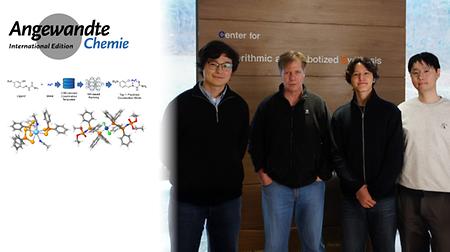
When Chemical Intuition Meets Neural Networks: Hybrid AI Algorithm Predicts Metal–Ligand Coordination Structures
-
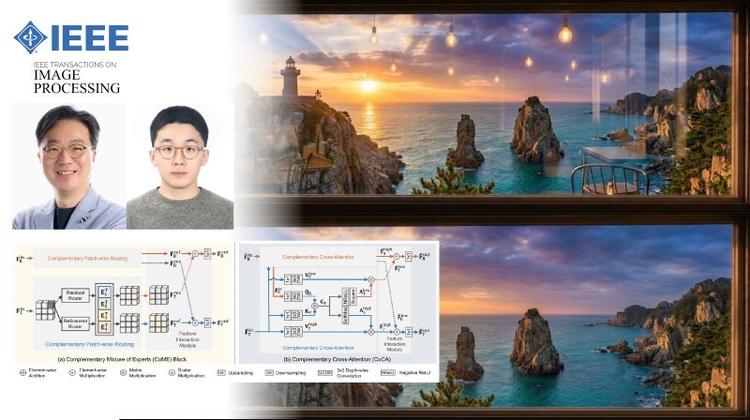
New Study Unveils Adaptive AI Breakthrough for Reflection Separation in the Wild