UNIST site map
- Admissions
-
Academics
- Colleges and Schools
-
Academic Affairs
- Academic Calendar
- Academic Curriculum
- Requirements for Graduation
- Browse Open Courses
- Undergraduate Administration
-
Graduate Academic Affairs
- Tuition Fee Payment
- Academic Leave of Absence/ Academic Return
- Voluntary Withdrawal/ Expulsion
- Change of Major
- Change of Degree Program/ Dropping of Degree Program
- Class Period/ Attendance Period/ Academic Year・Semester
- Course Registration
- Course Drop
- Attendance/ Grade/ Exam
- Credit Transfer/ Credit Carryover
- Academic Forms
- Education Support
-
Research/Industry
- Research Aims
- Research Findings
- Researcher Search
-
Research Organizations
- UNIST Multi-Interdisciplinary Institute
- IBS Research Groups
-
UNIST Labs
- Department of Mechanical Engineering
- School of Energy and Chemical Engineering
- Department of Civil
- Department of Materials Science and Engineering
- Department of Nuclear Engineering
- Department of Industrial Engineering
- Department of Design
- Department of Biomedical Engineering
- Department of Biological Sciences
- Department of Electrical Engineering
- Department of Computer Science and Engineering
- Department of Mathematical Sciences
- Department of Chemistry
- Department of Physics
- School of Business Administration
- Graduate School of Carbon Neutrality
- Graduate School of Artificial Intelligence
- Research Support
- University-Industry Relations
- Campus Life
- News Center
- About UNIST
-
etc
- UNIST Bulletin
- Work-Life Balance Support System
- UNIST Gender Equality Plan
- Faculty Invitation for Tenure Track
- Faculty Invitation for Non-Tenure Track
- Board Meeting Minutes
- University Council Meeting Minutes
- Administrative Service Charter
- Privacy Policy
- Copyright Policy
- Rejection of Unauthorized Email Collection
- Information Disclosure


Connection Points of Knowledge, Everything About UNIST
Try searching.
Recommended search terms


- portal
- U Academics Innovation Center
- Leadership Center
- Dormitory
- Academic Information Center
- International Students Support
- Browse Open Courses
- Course Registration
- Graduation Requirements for Graduation
- Academic Leave of Absence/ Academic Return
- Military Service
- Certificate Issuance
- Academic Calendar
- Scholarships
- Campus Map
- Campus Life Guidebook
- Health Care Center
- Human Rights Center
- portal
- Job Opening
- Announcement for Bid
- UNIST AI Services
- UNIST Daycare Center
- Sports Center
- UI Downloads
- Announcement
- Recruitment of Professors (Non-tenure)
- Faculty Invitation for Tenure Track
- UNIST Academic Information Center
- Office of Research Facilities and Training
- Office of Research Affairs
- Rule Management System
- Academic Calendar


This is a collection of menus necessary for UNIST students .
students
- portal
- U Academics Innovation Center
- Leadership Center
- Dormitory
- Academic Information Center
- International Students Support
- Browse Open Courses
- Course Registration
- Graduation Requirements for Graduation
- Academic Leave of Absence/ Academic Return
- Military Service
- Certificate Issuance
- Academic Calendar
- Scholarships
- Campus Map
- Campus Life Guidebook
- Health Care Center
- Human Rights Center


This is a collection of menus necessary for prospective UNIST Students .
prospective Students


This is a collection of menus necessary for UNIST Faculty & Staff .
Faculty & Staff
- portal
- Job Opening
- Announcement for Bid
- UNIST AI Services
- UNIST Daycare Center
- Sports Center
- UI Downloads
- Announcement
- Recruitment of Professors (Non-tenure)
- Faculty Invitation for Tenure Track
- UNIST Academic Information Center
- Office of Research Facilities and Training
- Office of Research Affairs
- Rule Management System
- Academic Calendar


NEWS CENTER
Discover not only Research Findings and event news, but also the diverse facets of UNIST presented by reporters and writers.
News Center

UNIST News
Discovery of Key Gene Offers New Hope in Treating Chronic Myeloid Leukemia
The findings of this research have been published in the online version of Leukemia on July 30, 2024.
- Research
- JooHyeon Heo
- 2024.09.20
- 1873

Abstract Chronic myeloid leukemia (CML), caused by BCR::ABL1 fusion gene, is known to regulate disease progression by altering the expression of genes. However, the molecular mechanisms underlying these changes are largely unknown. In this study, we identified RNA Exonuclease 5 (REXO5/LOC81691) as a novel gene with elevated mRNA expression levels in chronic myeloid leukemia (CML) patients. Additionally, using the REXO5 knockout (KO) K562 cell lines, we revealed a novel role for REXO5 in the DNA damage response (DDR). Compared to wild-type (WT) cells, REXO5 KO cells showed an accumulation of R-loops and increased DNA damage. We demonstrated that REXO5 translocates to sites of DNA damage through its RNA recognition motif (RRM) and selectively binds to R loops. Interestingly, we identified that REXO5 regulates R-loop levels by degrading mRNA within R-loop using its exonuclease domain. REXO5 KO showed ATR-CHK1 activation. Collectively, we demonstrated that REXO5 plays a key role in the physiological control of R-loops using its exonuclease domain. These findings may provide novel insights into how REXO5 expression changes contribute to CML pathogenesis.
A key gene that could enhance the treatment success rates of chronic myeloid leukemia (CML) has emerged.
Professor Hongtae Kim and his research team in the Department of Biological Sciences at UNIST unveiled a novel role for REXO5 (RNA Exonuclease 5) in the DNA damage response (DDR) in collaboration with Professor Dong-Wook Kim from Eulji University and Professor Jae Jin Kim from Hallym University. Their findings suggest that REXO5 is linked to leukemia development through its role in increasing genomic instability.
CML arises from the rapid proliferation of abnormal blood cells driven by the BCR::ABL1 fusion gene, which encourages hematopoietic stem cells to produce blood cells uncontrollably. While targeted treatments like imatinib (Gleevec) have improved patient survival rates and offered potential cures, some patients face life-threatening challenges, including drug resistance or progression to the acute phase of the disease.
 Figure 1. Schematic image, showing the R-loop resolution by REXO5 (left) and the inhibition of R-loop resolution by REXO5 mutation (right).
In their research, the team identified elevated levels of REXO5 expression in samples from 60 patients with CML, marking the first time the connection between REXO5 and the DNA damage response in leukemia has been established. Although REXO5 is known for its role in RNA processing, its involvement in CML progression was previously unrecognized.
The REXO5 protein has been shown to contribute to increased genomic instability through the formation of R-loop structures, where RNA attaches to damaged DNA. Insufficient levels of REXO5 lead to reduced DNA replication during the S-phase of the cell cycle, significantly impeding cell growth.
Moreover, REXO5 plays a crucial role in repairing damaged DNA by utilizing its RNA binding sites to interact with R-loop RNA strands and subsequently degrade them.
Professor Hongtae Kim emphasized the significance of this discovery, stating, "We have unveiled the key molecular mechanisms by which REXO5 contributes to blood cancer." He added, "This achievement lays the groundwork for developing a leukemia treatment strategy focused on the DNA damage response."
Professor Dong-Wook Kim noted the implications of this research, saying, "We have highlighted the potential for slowing or inhibiting the acute progression of CML through new therapeutic approaches that regulate the REXO5 protein."
The findings of this research have been published in the online version of Leukemia on July 30, 2024. This study was supported by the National Research Foundation of Korea (NRF) and the Ministry of Science and ICT (MSIT).
Journal Reference
Ye Jin Lee, Seo Yun Lee, Soomi Kim, et al., "REXO5 promotes genomic integrity through regulating R-loop using its exonuclease activity," Leukemia, (2024).
-
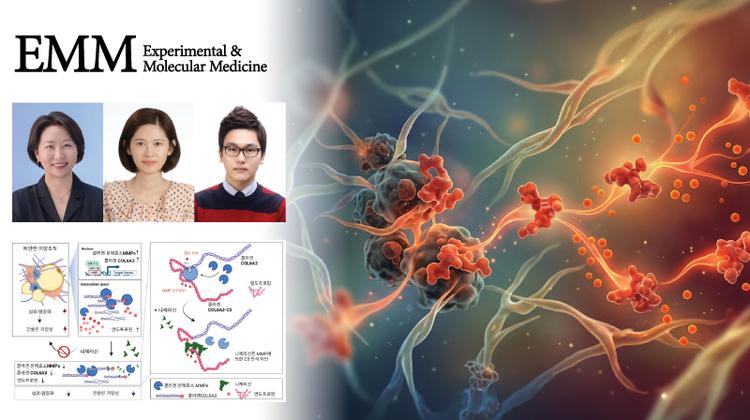
Targeting COL6A3-C5 with Nigericin to Reduce Endotrophin and Enhance Metabolic Health in Obesity
-
UNIST Achieves International Acclaim for Pioneering AI-Driven Music Learning Technology
-
New Study Identifies How Obesity-Related Liver Cancer Becomes More Aggressive and Resistant to Treatment
-
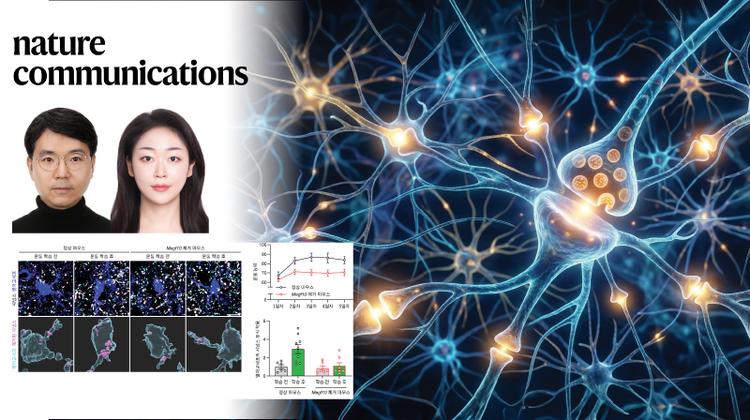
Dopamine Selects, Astrocytes Refine: A New Mechanism for Motor-learning Circuit Rewiring