Matter That Responds: From Materials to Active Systems
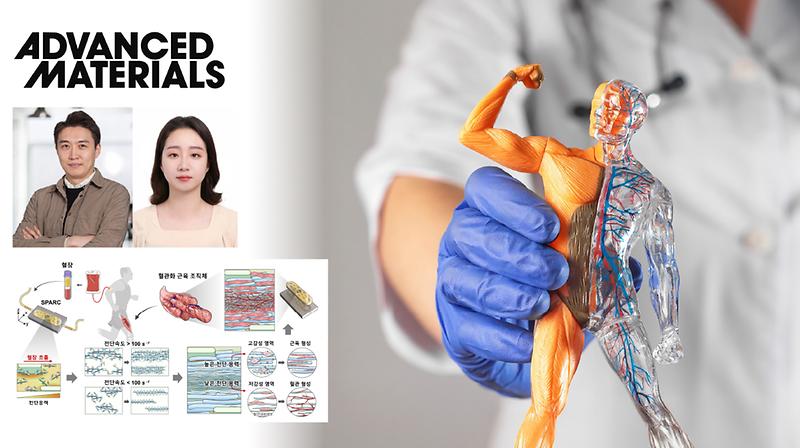
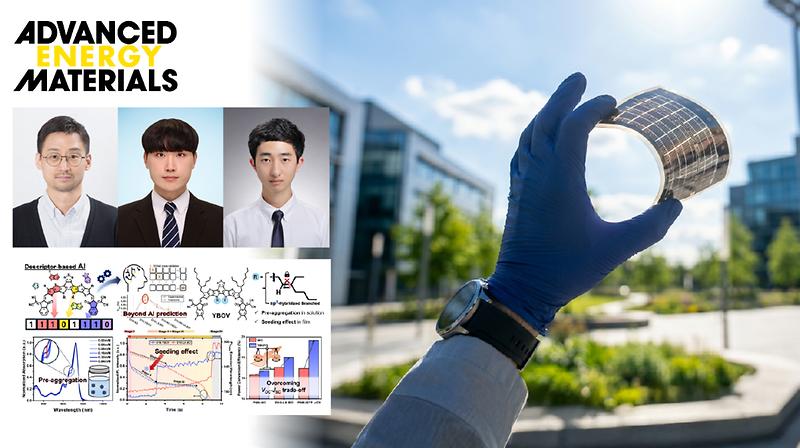
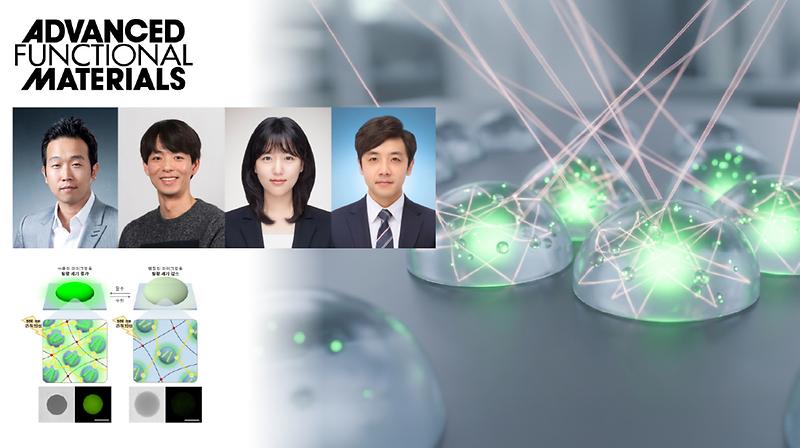
《Editor's Note: Across fields ranging from biomedical engineering and organic electronics to photonics, chemistry, and quantum materials, UNIST researchers are rethinking the role of matter itself. Their latest work—rebuilding damaged tissue, making light respond to water and strain, reopening therapeutic pathways for drug-resistant cancer, and engineering sensors that read subtle human signals—points to a new frontier in science: materials are no longer passive building blocks. They are becoming active systems designed to respond. 》 Matter that Heals Healing is no longer only a biological process. It is increasingly becoming a matter of design. In one study, UNIST researchers developed a blood-derived fibrin scaffold that helps regenerate muscle tissue and blood vessels together, offering a promising route for treating severe muscle injuries and volumetric tissue loss. The work shows how patient-derived materials can be engineered to guide the body's own repair mechanisms, creating a more integrated path toward tissue reconstruction. Another team approached healing from a different scale: the molecular defense systems that cancer cells use to survive. By identifying a way to destabilize key DNA repair proteins, researchers demonstrated a strategy to make drug-resistant cancers vulnerable again to PARP inhibitor therapy. Together, these studies show how matter and molecules can be designed not simply to replace what is damaged, but to reshape the conditions for recovery. • Blood-Based Scaffold Enables Vascular-Integrated Muscle Repair (Adv. Mater. | Apr., 2026) • Destabilizing DNA Repair Proteins to Overcome PARP Inhibitor Resistance (Nat. Commun. | Apr., 2026) Matter that Signals Materials gain new functionality when they can sense and interpret their surroundings. This month, UNIST researchers advanced several technologies that turned physical change into meaningful signals. A hydrogel-based photonic material brightens and fades in response to water, enabling hidden patterns and QR codes to appear or disappear with moisture. A flexible nanoscale optical device produces stronger light signals when bent, challenging the long-held assumption that mechanical deformation weakens performance. In another study, researchers showed how electric current can drive spin polarization in chiral nanowires, pointing to future spintronic devices that operate without magnetic fields. The same principle extends to the body. An atomically engineered MXene sensor can detect temperature, pressure, and subtle physiological signals such as coughing, swallowing, blinking, pulse waves, and gait patterns. These breakthroughs suggest a future in which materials do not merely transmit information. They generate, amplify, and interpret it. • Water-Responsive Luminescent Material (Adv. Funct. Mater. | Apr., 2026) • Nanoscale Optical Device Produces Stronger Signals When Bent (Sci. Adv. | May, 2026) • Current-Driven Spin Polarization in Chiral Nanowires (ACS Nano | Apr., 2026) • Wearable MXene Sensor for Real-Time Human–Machine Interfaces (Adv. Funct. Mater. | Apr., 2026) Matter that Builds Before materials can respond, they must first be built with precision. At the molecular level, UNIST researchers are expanding the ways matter can be assembled, organized, and tuned. One team developed high-performance organic solar cells that exceeded conventional AI-based predictions by focusing on how molecules behave in solution before forming thin films. Instead of relying only on molecular descriptors, the study highlights the importance of collective behavior—pre-aggregation, ordering, and interactions that emerge before a device is even made. Another team introduced a new way to reshape the backbone of pentacene-based organic semiconductors, giving researchers finer control over molecules used in flexible displays, sensors, solar cells, and optoelectronic devices. In chemistry, a radical relay strategy enabled multiple molecular components to be connected in a single controlled reaction, offering a more efficient route to complex molecules for pharmaceuticals and advanced materials. Together, these studies reveal the deeper architecture behind responsive matter. The future of technology will not be built only by discovering new substances. It will depend on learning how to program the way molecules assemble, interact, and perform. • Organic Solar Cells Beyond AI Predictions (Adv. Energy Mater. | Apr., 2026) • Rebuilding Organic Semiconductor Backbones (Angew. Chem. Int. Ed. | Apr., 2026) • Radical Relay Strategy Enables One-Step Multi-Component Molecular Assembly (Adv. Sci. | Apr., 2026) Across its laboratories, UNIST is showing that responsiveness is more than a material property. It is a design principle. Whether guiding tissue regeneration, controlling light, sensing the body, directing electron spin, or assembling molecules with greater precision, these studies point toward a common future: one where matter is engineered not just to endure changing conditions, but to read them, adapt to them, and act within them.
2026.06.01