UNISTUNIST

ADMISSIONS

발전기금
모바일메뉴 열기
 

UNIST site map

전체 메뉴 닫기
STUDENT
 
Scroll Down

UNIST Today

we are all

pioneers!

UNIque & beST

Nexus

UNIST Today

we are all

pioneers!

UNIque & beST

Nexus

Information for UNISTar

WHY UNIST

star

Global
Campus for
Future
Innovators

Research AREA

중점연구분야

Research
AREA

에너지·AI·미래산업에 집중하다

UNIST는 에너지 전환, AI, 미래산업이라는
대한민국의 핵심 과제에 연구 역량을 집중합니다.

  • 에너지 전환
  • 이차전지 · 수소 · 탄소중립
  • Ai 기반 산업 혁신
  • 반도체 · 소재 · 양자
EDUCATION INNOVATION

교육혁신프로그램

EDUCATION
INNOVATION

이론을 배우는 것을 넘어 직접
연구하며 성장하다

UNIST의 학부생부터 대학원생까지 연구의
보조가 아닌 주체로 성장하는 경험을 제공합니다.

  • 학부생 연구참여
  • 국제학회·논문참여
  • 소수정예 밀착 연구지도
industry collaboration

산학협력

industry
collaboration

연구에서 산업까지, 현장과 가장
가까운 UNIST

대한민국 최대 산업도시 울산에 위치한
UNIST는 연구 성과가 기업과 산업 현장으로
가장 빠르게 연결되는 구조를 갖추고 있습니다.

  • 기술사업화·창업지원
  • 울산 산업단지
  • 대기업 · 공기업과의 공동연구
Research support

연구지원

Research
support

젊은 UNIST, 연구에 최적화된
유연한 캠퍼스

UNIST는 가장 늦게 출범한 과기원으로,
관행에 얽매이지 않는 유연한 연구·교육 시스템을
갖추고 있습니다.

  • 빠른 신흥 분야 대흥
  • 단일 캠퍼스 기반
  • 생활.연구 일체형 구조
  • 개방형 연구 공간

Research Impact

star

"피부 붙여 체온·기침·맥박까지 읽는다"... 온도·압력 감지 맥신 센서 개발

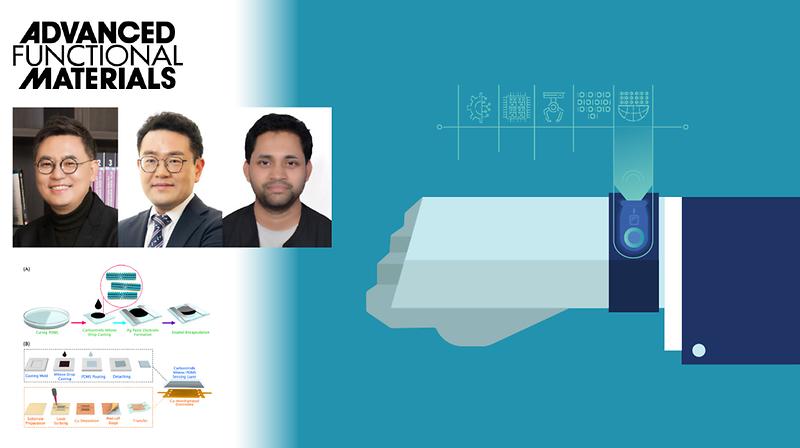
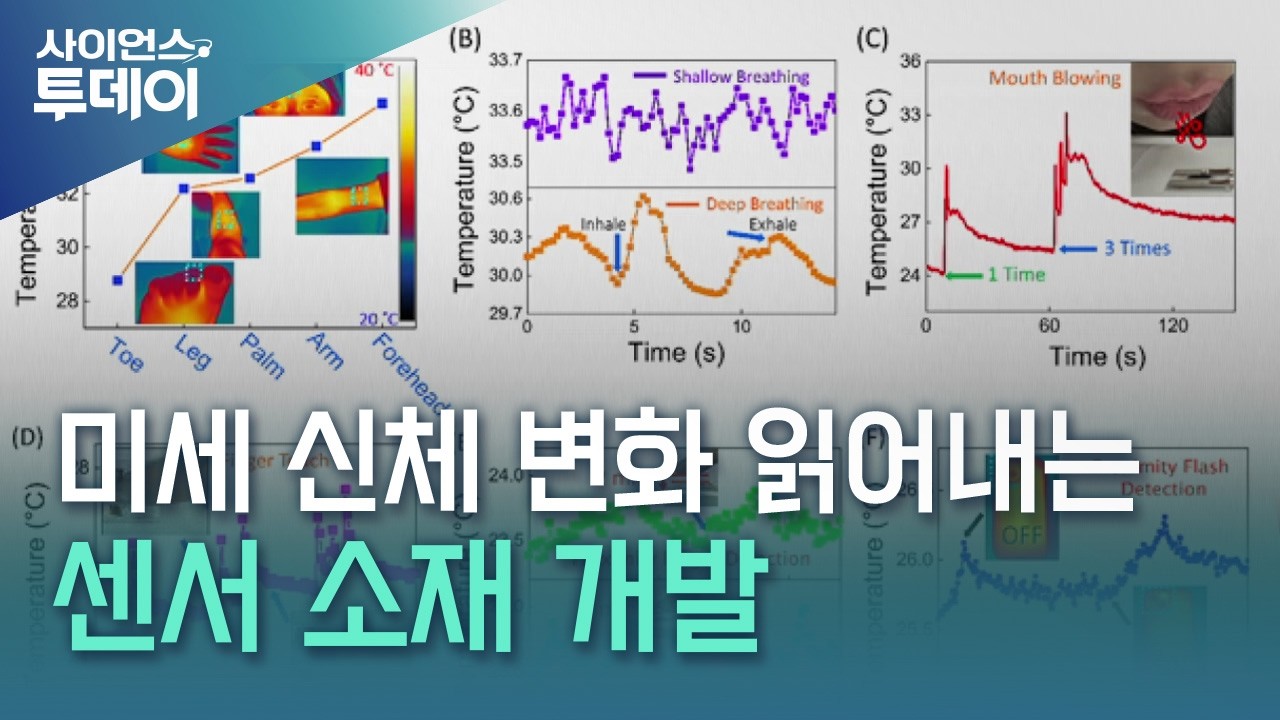
피부에 붙이면 체온뿐만 아니라 기침, 침 삼킴 등 미세한 신체 변화를 모두 읽어낼 수 있는 센서 소재가 새롭게 개발됐다. UNIST 반도체소재부품대학원 김수현·권순용 교수팀은 온도와 압력 변화를 모두감지할 수 있는 티타늄 탄질화물 기반의 초고민감도 맥신(MXene) 소재를 개발했다고 11일 밝혔다. 맥신은 금속과 탄소 또는 질소로 이루어진 원자층이 켜켜이 쌓여 있는 형태의 나노 물질이다. 두께가 매우 얇고 유연하면서도 전기가 잘 통해, 입는 컴퓨터나 웨어러블 헬스케어 기기에 들어가는 센서용 소재로 크게 주목받는 소재다. 연구팀이 이번에 개발한 맥신(Ti₃CNTz)은 질소가 없는 기존(Ti3C2Tx) 소재보다 온도 변화와 압력 자극에 대한 민감도가 각각 3배와 4배 이상 개선됐다. 아주 미세한 자극에도 전기저항이 크게 변한다는 뜻으로, 기계가 사람의 상태 등을 훨씬 더 선명한 전기신호로 인식할 수 있음을 의미한다. 연구팀은 최적의 질소 농도를 찾아내 이 같은 소재를 개발했다. 질소가 특정 영역에서 전자 밀도를 높이고, 격자 진동 현상을 강화해 외부 자극에 대한 반응성을 극대화한 덕분이다. 맥신의 아코디언 같은 구조는 기계적 강도도 강화하는 것으로 나타났다. 이러한 원리는 밀도함수이론(DFT) 계산과 방사광 기반 엑스선 흡수 미세 구조(XAFS) 실험 분석을 통해 입증됐다. 실험에서 이 소재를 이용해 만든 센서는 미세 압력 변화를 감지해 말하기, 침 삼키기, 기침하기 등 성대의 미세한 떨림을 완벽하게 구분해 냈다. 또한 눈가에서는 눈 깜박임을, 손목에서는 맥박 파형을 실시간으로 포착했으며, 신발 뒤꿈치에 부착해 보행 패턴을 분석할 수 있었다. 1~2mm 떨어진 상태에서 비접촉 온도 감지도 가능하다. 스마트폰 카메라 플래시에서 발생하는 적외선 열을 감지하거나, 손가락이 닿지 않은 상태에서도 접근만으로 온도 변화를 인식할 수 있었다. 김수현 교수는 “온도와 압력을 동시에 극도로 섬세하게 감지하면서도 신호 간 간섭을 효과적으로 제어할 수 있다는 점에서 차세대 인간-기계 인터페이스 및 지능형 로봇 전자 피부 기술의 전환점”이라며, “헬스케어뿐만 아니라 에너지 저장, 촉매, 전자기파 차폐 등 다양한 첨단 나노소재 분야로의 응용이 가능하다”고 강조했다. 김 교수는 이어 “그간 탄화물에 국한됐던 맥신 연구를 질소를 포함하는 탄질화물로 확장해 소재의 다양성을 확보했다는 점에서 큰 의미가 있다”라고 덧붙였다. 이번 연구 성과는 재료 과학 분야의 세계적 권위지인 '어드밴스드 펑셔널 머티리얼즈(Advanced Functional Materials)'에 4월 12일 온라인 공개됐다. 연구 수행은 과학기술정보통신부 한국연구재단(NRF)과 과학기술정보통신부의 이노코어(InnoCORE)사업의 지원으로 이뤄졌다.

2026.05.16

  • 2차원소재
  • 그래핀
  • 맥신
  • 박막소재
  • 반도체소재부품대학원
  • 센서
  • 신소재공학과
  • 압력감지
  • 온도감지
  • 탄질화물맥신

나뭇잎 속 ‘전하 이동 계단’ 닮은 염료감응 인공광합성 전극 개발

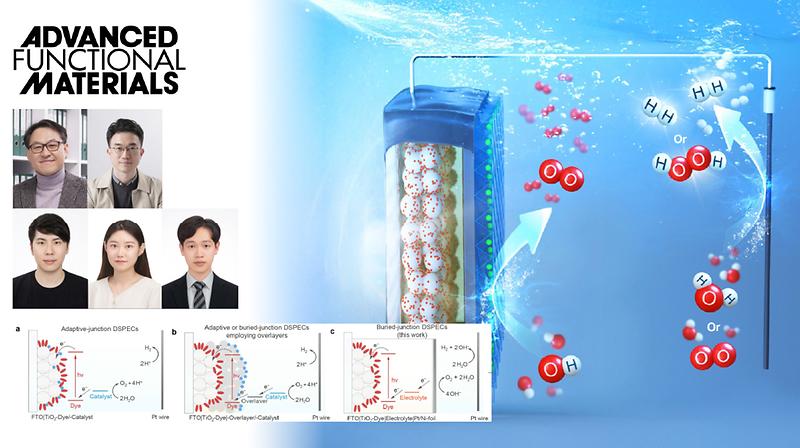
식물의 광합성에서는 엽록소가 태양빛을 받아 만든 전하가 내부의 ‘전하전달계’를 타고 유실 없이 포도당과 같은 연료 합성 지점까지 도달할 수 있다. 인공광합성에도 엽록소와 같은 역할을 하는 염료를 이용해 손실 없이 전하를 전달함으로써 외부 전력 없이도 태양광만으로 수소나 과산화수소를 생산할 수 있는 전극이 개발됐다. UNIST 화학과 권태혁 교수와 에너지화학공학과 장지욱 교수팀은 전하 전달 손실을 줄이고, 내구성을 높인 염료감응 인공광합성 전극을 개발했다고 7일 밝혔다. 인공광합성 전극은 햇빛을 받아 물에서 수소, 과산화수소 등을 생산하는 인공광합성의 핵심 부품이다. 그중 염료감응 인공광합성 전극은 유기 염료가 식물 엽록소 역할을 하는 전극으로, 일부 인공광합성 전극과 달리 납과 같은 유해 물질이 없다. 연구팀이 개발한 전극은 이 유기 염료층과 레독스 매개체라는 물질을 니켈 포일로 감싸 매립해 넣은 구조다. 이 구조에서는 빛을 받은 염료에서 생성된 전하가 한 번에 이동하는 것이 아니라, 염료 → 레독스 매개체 → 니켈 포일 → 촉매 순서로 차례로 전달된다. 서로 다른 물질을 단계적으로 거치면서 에너지 차이에 따라 ‘한 칸씩 내려가듯’ 이동하게 돼, 전하가 되돌아가거나 중간에 소멸되는 것을 줄일 수 있다. 식물 나뭇잎에서도 엽록소에서 생긴 전하가 여러 전자전달 단백질을 거치며 낮은 에너지 단계로 순차적으로 전달되기 때문에, 손실 없이 최종 반응까지 도달할 수 있다. 또 이 니켈 포일은 유기 염료가 액체 수계 전해질과 직접 닿는 것도 막아준다. 기존의 염료감응 광전극은 엽록소 역할의 염료가 수계 전해질과 직접 맞닿는 구조라 전하 이동 과정에서 쉽게 사라지고, 염료 자체도 수계 전해질에 노출되면서 떨어지기 쉬웠다. 개발된 인공광합성 전극은 물을 분해하는 반응에서 98%의 패러데이 효율을 기록했는데, 이는 염료가 만든 100개의 전하 중 약 98개가 실제 화학 반응에 잘 도달했다는 의미다. 이 전극을 물에서 과산화수소를 생산하는 인공광합성 시스템에 적용했을 때는 외부에서 전압을 걸어주지 않고도 태양광만으로 4.15%의 높은 태양광-연료 변환 효율(STF)을 달성했다. 이는 세계 최고 수준의 효율이다. 150시간 동안 성능 저하도 없었다. 제1저자인 박준혁 박사는 “식물이 전하를 거의 잃지 않고 전달하는 방식을 인공 소자 설계에 이식한 기술”이라고 밝혔다. 권태혁 교수는 “전극의 계면 설계를 통해 염료감응형 시스템의 효율과 수명 문제를 동시에 보완한 사례”라며 “유해 물질 없는 친환경 시스템으로 고부가가치 화학 원료를 생산할 수 있는 기술적 토대를 마련했다”고 설명했다. 이번 연구는 UNIST 박준혁 박사, 김경림, 이진영 연구원이 공동 제1저자로 참여했다. 연구 결과는 재료 분야 국제 학술지인 ‘어드밴스드 펑셔널 머티리얼즈(Advanced Functional Materials)’에 4월 13일 출판됐다.

2026.05.16

  • 식물염록소
  • 에너지화학공학과
  • 염료감응전극
  • 인공광합성
  • 인공광합성전극
  • 전하이동계단
  • 화학과

수개월 걸리던 반도체 설계, AI가 ‘단 하루’ 만에 끝낸다!

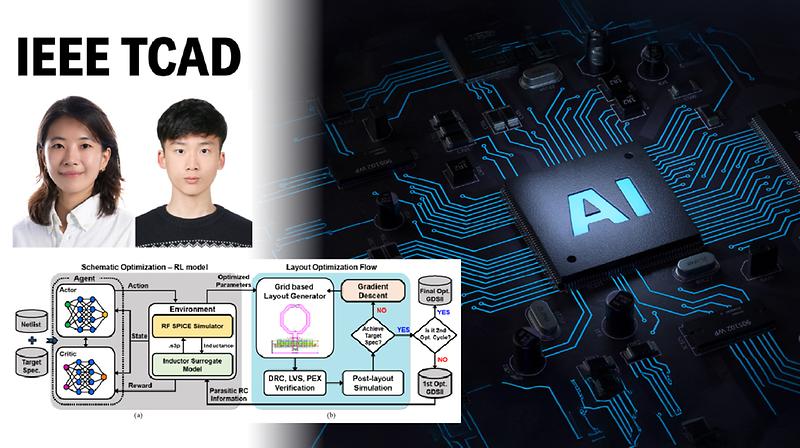
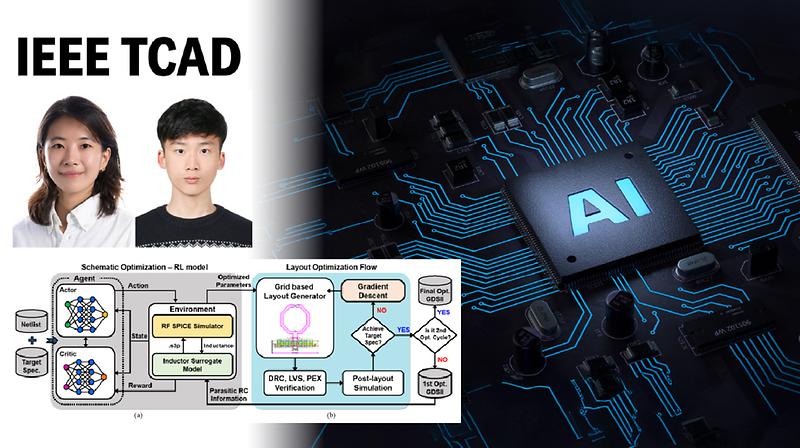
반도체 설계 전문가가 수주에서 수개월씩 걸려 작업하던 고성능 통신 반도체 회로 설계를 단 하루 만에 끝낼 수 있는 인공지능 기술이 개발됐다. UNIST 전기전자공학과 윤희인 교수와 경북대학교 송대건 교수팀은 통신 회로인 LC 전압제어 발진기(LC-VCO)를 회로 설계 단계부터 실제 칩에 넣는 물리적 레이아웃까지 자동으로 설계해주는 AI 모델을 개발했다고 5일 밝혔다. LC-VCO는 5G 같은 고속 통신 시스템에서 주파수를 만들어내는 반도체 회로다. 신호 잡음과 전력 소모를 줄이기 위해서는 인덕터, 트랜지스터 크기와 같은 변수를 잘 조합해 회로를 설계해야 하는데, 설계된 회로를 실제 칩 안으로 옮기기 위한 레이아웃 설계 단계에서는 회로 설계 단계의 조합이 깨지기 쉽다. 배선 굵기와 소자 배치에 따라 기생 효과가 더해지면서 주파수와 잡음 특성이 다시 달라질 수 있기 때문이다. 연구팀이 개발한 모델은 회로 설계와 레이아웃 설계를 통합해 최적화할 수 있다. 회로 설계 단계에서는 강화학습을 적용해 설계 변수들을 바꿔가며 목표 주파수와 성능을 만족하는 조합을 찾도록 했고, 실제 칩 구조가 결정되는 레이아웃 단계에서는 경사하강법을 이용해 배선 폭과 간격 같은 물리적 설계 변수를 성능이 개선되는 방향으로 반복적으로 보정하는 방식이다. 경사하강법은 현재 상태에서 성능이 더 좋아지는 방향을 따라 설계 값을 조금씩 조정해 최적의 조건을 찾아가는 최적화 기법이다. 연구팀은 “회로도 설계(Schematic)와 물리적 배치(Layout)를 개별적으로 최적화하던 기존 방식을 대신 AI가 두 단계를 통합적으로 관리하도록 한 기술”이라고 설명했다. 설계 과정에서 가장 시간이 오래 걸리는 인덕터는 딥러닝 기반 예측을 활용해 전체 설계 시간을 크게 줄였다. 설계자의 반복적인 전자기 시뮬레이션이 필요하던 작업을 단 몇 밀리초(ms) 만에 완료된다. 실험 결과, 기존의 자동 설계 방식이 약 119시간 소요되던 작업을 단 28.5시간 만에 완료해 설계 시간을 76% 이상 단축했다. 성능 지수(FoM) 또한 기존 연구 대비 월등히 우수한 결과를 보였다. 또 전이 학습이 적용돼 반도체 나노 공정 노드가 바뀌어도 기존에 학습한 내용을 바탕으로 설계를 이어갈 수 있다. 예를 들어 65nm 공정으로 학습한 AI는 40nm나 28nm 공정에서도 처음 학습에 필요했던 데이터의 약 10%만 추가로 활용해 설계를 수행할 수 있다. 공동 연구팀은 “5G·6G 통신과 AI 칩의 핵심 부품인 주파수 생성 회로의 성능은 높이면서 설계 비용은 크게 낮출 수 있을 뿐만 아니라 중장기적으로 반도체 설계 인력 부족 문제를 해결하고 차세대 공정으로의 전환 속도를 획기적으로 앞당길 수 있는 도구”라고 기대했다. 연구팀은 LC-VCO뿐만 아니라 다양한 아날로그/RF 회로 설계 자동화로 기술을 확장해 나갈 예정이다. 이번 연구는 UNIST 김성진 연구원과 경북대학교 이현수 연구원이 제1저자로 주도하였고 경북대학교 홍성민 연구원이 참여하였다. 연구 결과는 IEEE 반도체 회로 공학회에서 발행하는 권위 학술지인 ‘IEEE 집적회로 및 시스템 설계자동화(TCAD, Transactions on Computer-Aided Design of Integrated Circuits and Systems)’에 4월 3일 온라인 공개됐다. 연구는 과학기술정보통신부와 한국연구재단(NRF), 교육부(BK21 Four), 산업통상자원무(MOTIE), 반도체설계교욱센터(IDEC), 삼성전자, ㈜액시온 등의 지원 및 과기정통부와 정보통신기획평가원(IITP)의 '지역지능화혁신인재양성사업'의 지원으로 수행되었다.

2026.05.14

  • LC 전압제어발진기
  • LC-VCO
  • 강화학습
  • 경사하강법
  • 레이아웃
  • 반도체회로설계
  • 설계자동화
  • 전기전자공학과
  • 전이학습
  • 통신반도체회로
  • 회로설계

이산화탄소 제거하고 전기도 만드는 전기화학 전극 개발

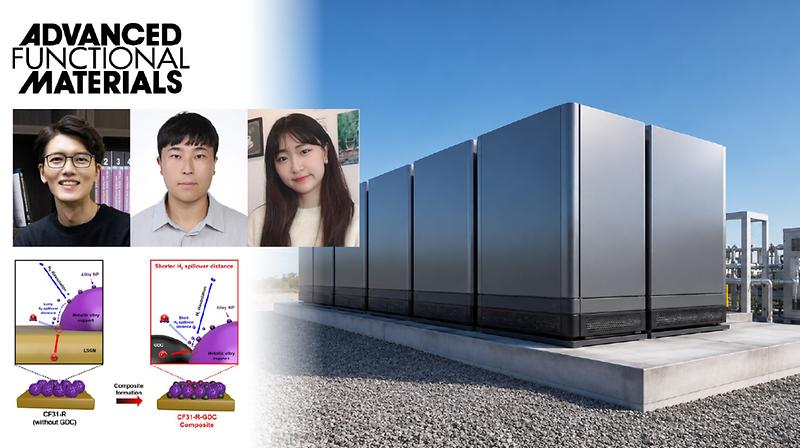
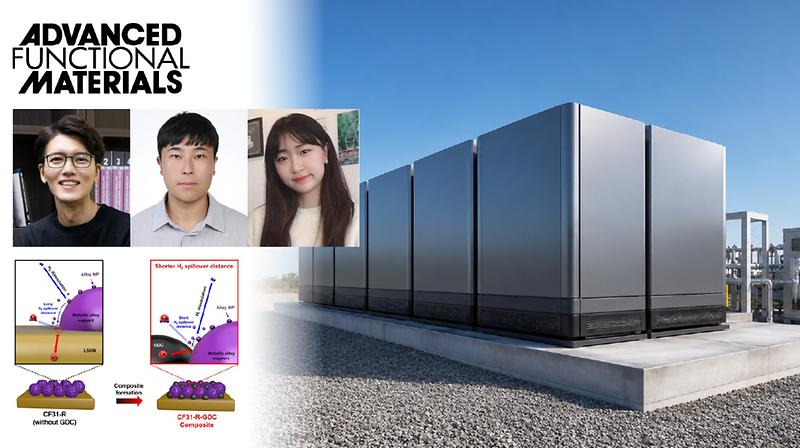
지구온난화의 주범인 이산화탄소를 유용한 물질로 바꿔주고, 수소로 전기도 만들 수 있는 장치의 성능과 수명을 획기적으로 개선하는 전극 물질이 개발됐다. UNIST 신소재공학과 조승호 교수팀은 POSTECH 안지환 교수, 서울대 한정우 교수, 중국 난징정보과학기술대학교 부윈페이 교수팀과 함께 이중층수산화물을 이용해 고온에서도 성능이 떨어지지 않는 고체산화물전지(SOC) 전극을 개발했다고 3일 밝혔다. 고체산화물전지는 수소나 메탄 같은 연료를 이용해 전기를 생산하는 장치다. 수소차의 연료전지와 달리 전기를 넣으면 반대로 반응을 돌릴 수 있어, 심야에 남는 전기로 다시 수소를 만들거나 온실가스인 이산화탄소를 분해해 산업용 가스인 일산화탄소를 만들 수도 있다는 장점이 있다. 연구팀이 개발한 전극은 지지체와 촉매 모두 금속으로 이뤄져 있어서 내구성이 뛰어나다. 기존 전극은 세라믹 지지체에 금속 촉매가 얹혀 있는 형태라, 세라믹과 금속 간의 구조 차이로 인해 600℃ 이상의 고온에서 장기 가동 시 금속 촉매가 뭉치거나 떨어져 나가는 문제가 있었다. 개발한 새로운 전극을 적용한 결과, 800℃에서 수소를 연료로 사용했을 때 기존 전극보다 약 1.5배 향상된 최대 출력(1.57 W/cm²)을 기록했다. 또 전기를 주입해 이산화탄소를 분해함으로써 일산화탄소를 생산하는 실험에서도 200시간 동안 안정적으로 작동하며 내구성을 입증했다. 지지체와 촉매 모두 금속인 전극을 만들 수 있었던 이유는 원료인 이중층수산화물 덕분이다. 이중층수산화물은 서로 다른 금속 이온이 한 층 안에 고르게 섞여 있고, 이 층이 겹겹이 쌓인 구조의 물질이다. 코발트와 철 이온이 섞인 이중층수산화물을 먼저 공기 중에서 한 번 가열해 지지체 역할을 할 금속 합금 뼈대를 굳힌 뒤, 이를 다시 수소를 넣어 가열하면 촉매 역할의 합금 나노 입자가 지지체 표면으로 솟아오르게(용출) 되는 원리다. 연구팀은 온도와 가열 환경별 이중층수산화물의 내부 구조(상변화)를 체계적으로 분석해 이 같은 물질을 합성해 낼 수 있었다. 또 첨가제(GDC)를 전극에 넣어 반응에 필요한 산소가 빠르게 공급되도록 했다. 공동연구팀은 “전극 교체를 줄여 장치 운영 비용을 낮춤으로써 고체산화물전지의 대중화에 기여할 수 있을 것”이라며 “수소와 전기 생산, 이산화탄소 업사이클링까지 연결되는 기반 기술”이라고 설명했다. 연구팀은 이어 “이중층수산화물은 그동안 저온 촉매나 배터리 전극 등에 주로 쓰이던 물질인데, 이번 연구에서는 이 물질이 고온에서 어떻게 변하는지를 분석해 고체산화물전지 전극으로 처음 적용했다는 점에서도 의미 있는 연구”라고 덧붙였다. 이번 연구에는 UNIST 에너지화학공학과 졸업생 김현민 연구원(現스탠포드대학교), UNIST 신소재공학과 졸업생 김윤서 연구원(現한국과학기술연구원) 그리고 서울대학교 재료공학부 서화경 연구원이 제1저자로 참여했다. 연구 성과는 재료 분야 글로벌 권위지인 ‘어드밴스드 펑셔널 머티리얼즈(Advanced Functional Materials)’에 4월 16일 출판됐으며, UNIST 이노코어 (InnoCORE) 프로그램과 한국연구재단의 지원을 받아 이뤄졌다.

2026.05.14

  • 고체산화물전지
  • 신소재공학과
  • 연료전지
  • 용출
  • 이산화탄소제거
  • 이중층수산화물
  • 전극
  • 전기생산

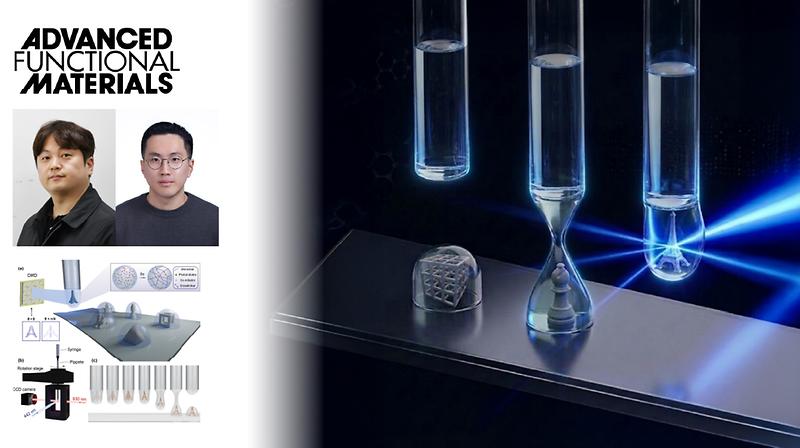
“60초에 하나씩 초고속 마이크로 3D 프린팅”...디스펜싱 체적 프린팅 개발

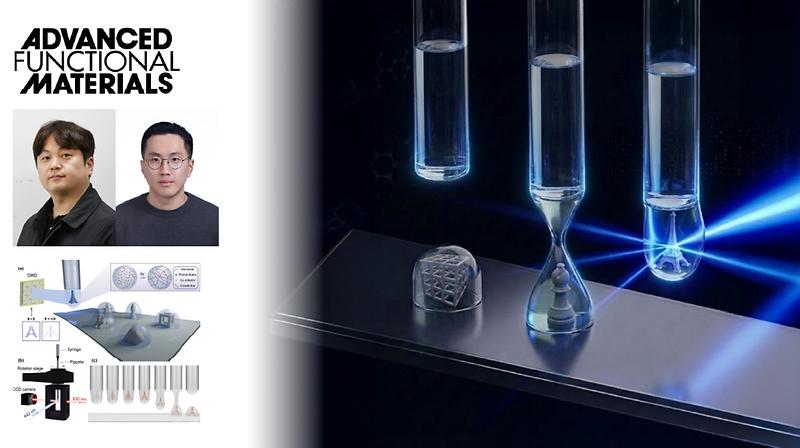
60초마다 3차원 마이크로 구조물을 연속적으로 인쇄할 수 있는 새로운 체적 적층 제조 기술이 개발됐다. UNIST 기계공학과 정임두 교수팀은 3차원 인쇄를 한층 단위가 아닌 불륨 단위로 하고, 연속 공정으로 다양한 형상을 빠르게 제조할 수 있는 ‘디스펜싱 체적 3D 제조(Dispensing Volumetric Additive Manufacturing)’ 기술을 개발했다고 29일 밝혔다. 개발된 디스펜싱 체적 3D 프린팅 기술은 피펫 끝에 맺힌 액체 원료 방울에 빛을 쏴 원하는 모양대로 굳혀(경화) 형상을 만드는 방식이다. 형상이 다 경화되면 공기압으로 피펫에서 액체 방울을 밀어내고, 새로운 액체 방울을 만든다. 한 층씩 쌓아 올려 형상을 만드는 일반적인 3D 프린팅 기술(layer-by-layer)과 달리 한 번에 형상 전체 볼륨을 만들 수 있어 제작 시간을 크게 단축할 수 있고, 층을 매끄럽게 다듬기 위한 별도의 후처리도 필요 없다. 기존에도 형상을 한 번에 만드는 체적 3D 프린팅 기술들이 있었지만, 체적 3D 프린팅 기술 중 하나인 회전 축 리소그래피(Computed Axial Lithography, CAL)는 매 인쇄 주기마다 원통형 용기에 수지를 채우고, 균일한 조사를 위해 굴절률 매칭 용액을 사용하며, 인쇄된 물체를 용기로부터 꺼내야 하는 작업이 필요해 다수 부품을 연속적으로 대량 생산하기 어려웠다. 연구팀은 수지가 담긴 별도의 용기 대신 유리 피펫에서 분사되는 단일 수지 방울 내에서 인쇄와 배출이 이루어지는 DVAM 기술을 개발해 이 문제를 해결했다. 수지 방울 자체가 인쇄 볼륨 역할을 하며, 회전하는 동안 단면 조사를 통해 용기와 굴절률 매칭 매질 없이도 수지 전체를 균일하게 경화시킬 수 있다. 인쇄 후 경화된 구조물은 기판 위로 배출되며, 다음 방울이 즉각적으로 공급돼 고속 연속 생산이 가능하다. 기술 개발의 가장 큰 난관은 액적의 둥근 표면 때문에 생기는 빛의 굴절이었다. 연구팀은 인공지능과 역 광선 추적의 광학 계산 기술을 결합해 이를 해결했다. 딥러닝 기반 사물 인식 AI가 액적의 곡률과 윤곽을 실시간으로 인식하면, 이를 바탕으로 빛의 굴절 경로를 계산하여 왜곡 및 경화에 필요한 에너지를 미리 수학적으로 보정한 패턴을 투사한 것이다. 이를 바탕으로 ‘에펠탑’이나 ‘생각하는 사람’과 같은 복잡한 구조를 프린팅할 수 있으며, 프린팅 시간 및 프린팅 외 작업 시간을 포함해서 10분 안에 각기 다른 10개 형상들을 제조할 수 있다. 구조물 하나를 만드는데 걸리는 시간은 60초 내외였다. 제 1 저자로 참여한 전홍령 학생은 “기존 3D 프린팅 원리와는 다르게 전체 형상을 볼륨 단위로 한번에 경화시키고, 또한 별도의 추가 공정없이 연속으로 바로 디스펜싱하도록 하여 3D 프린팅 속도를 백배 이상 향상 시켰다”며, “서로 다른 형상의 3차원 마이크로 부품을 쾌속으로 대량 생산할 수 있는 가능성을 보여주었다”고 했다. 연구를 총괄한 교신 저자인 정임두 교수는 “맞춤형 제조가 가능한 3D 프린팅 기술의 경우 느린 제조 속도가 항상 단점으로 지적되는데, 기존 광경화 방식에서 벗어나 전체 볼륨을 한번에 생산하고, 이때 발생하는 광학적 왜곡 한계를 인공지능 기술로 해결함으로써 초고속 3D 프린팅의 가능성을 한 단계 끌어올린 사례”라며, “이제는 원하는 형상을 제조하기 위해 오래 기다릴 필요 없이, 즉석에서 수십초 내에 만들 수 있는 시대가 되었다“고 했다. 연구 결과는 재료 과학 분야 세계적 학술지 (Impact Factor: 19.0, JCR 상위 5% 이내)인 ‘어드밴스드 펑셔널 머티리얼즈(Advanced Functional Materials)’에 3월 21일 온라인으로 게재되었다. 연구 수행은 과학기술정보통신부 한국연구재단과 정보통신기획평가원 및 산업통상자원부의 기술개발사업 지원으로 이뤄졌다.

2026.05.11

  • 3D 프린팅
  • layer-by-layer
  • 리소그래피
  • 액적프린팅
  • 체적3D프린팅
  • 회전축리소그래피

몸 안의 면역 센서 깨우는 헤르페스 바이러스 DNA의 바코드 발견!

헤르페스 바이러스가 활성화될 때 입술 주변에 올라오는 염증은 바이러스에 감염된 세포를 제거하려는 면역 반응의 결과다. 이 과정에서 우리 몸의 선천 면역 센서인 AIM2가 작동하게 되는데, 이 센서가 바이러스 DNA의 반복 코드를 인식함으로써 염증 반응과 감염 세포 사멸을 유도하는 것으로 드러났다. UNIST 생명과학과 이상준 교수팀은 성균관대, 제주대, IBS 한국바이러스기초연구소와의 공동연구를 통해 헤르페스 바이러스 DNA 상의 ‘poly(T)’ 반복 서열이 면역 반응을 유도한다는 사실을 규명했다고 27일 밝혔다. 헤르페스 제1형 바이러스는 전 세계 인구의 약 67%가 감염돼 있을 정도로 흔한 바이러스이다. 평소에는 면역계의 공격이 어려운 신경절에 숨어 있다가 면역 감시가 느슨해진 틈을 타 숙주 피부 세포를 감염시킨다. AIM2는 방어를 위해 출동한 숙주 대식세포 안에서 바이러스를 감지하는 센서 역할의 단백질이다. 연구에 따르면, AIM2는 바이러스 DNA 중 티민(T) 염기 분자가 길게 반복된 poly(T) 구간을 인식해 바이러스를 감지한다. 똑같은 제1형 헤르페스 바이러스라도 균주별로 면역 반응 강도가 달랐는데, 균주 DNA상에 poly(T) 서열이 있는 경우에만 AIM2가 활성화되며 염증 반응과 감염 세포 사멸이 일어난 것이다. 반대로 이 서열이 없거나 티민 염기 분자 20개 미만의 짧은 구간만 가진 균주에서는 이러한 반응이 거의 나타나지 않았다. 다른 균주에 이 서열을 넣어주면 면역 반응이 새롭게 유도됐으며, 반복 서열의 길이가 길수록 반응이 강해지는 ‘길이 의존성’도 확인됐다. 또 동물 실험에서 poly(T) 반복 서열이 있는 바이러스에 감염된 경우 염증 반응이 유도되며 바이러스 증식이 억제된반면, 이 서열이 제거된 바이러스에 감염되면 면역 반응이 거의 일어나지 않고 바이러스가 빠르게 증식해 치명적인 감염으로 이어졌다. 연구팀은 이 poly(T) 반복 서열이 엠폭스바이러스, 아데노바이러스, 코로나바이러스 등 다양한 감염병 바이러스군에서도 폭넓게 보존되어 있다는 점도 방대한 유전체 데이터 분석을 통해 찾아냈다. 이상준 교수는 “인체 면역 센서가 생각보다 훨씬 정교하게 바이러스를 인식한다는 사실을 새롭게 밝혔다”며 “바이러스 자체를 직접 공격하는 치료법이 아닌 면역 센서의 활성도를 조절하는 치료법이 새로운 대안으로 주목받고 있는데, 이번 발견은 이러한 맞춤형 면역 조절 신약 개발의 이론적 토대가 될 것”이라고 말했다. 이 교수는 이어 “이번에 확인된 반복 서열은 헤르페스뿐만 아니라 중증 질환을 유발하는 다양한 감염병 바이러스에서도 공통으로 보존되어 있기 때문에, 실제 환자의 질병 중증도와 바이러스 유전체 서열의 연관성을 추가로 규명해 다양한 감염병의 치료 전략을 설계하는 데 도움이 될 것”이라고 덧붙였다. 이번 연구는 성균관대학교 이주상 교수, 제주대학교 김의태 교수, 기초과학연구원 한국바이러스기초연구소 최영기 소장팀과의 공동 연구를 통해 수행된 융합 연구 성과이며, 연구 결과는 국제학술지 네이처 커뮤니케이션즈(Nature Communications)에 4월 13일 온라인 게재됐다. 연구 수행은 한국연구재단(NRF) 우수신진연구사업, 국가신약개발사업(KDDF), 보건복지부 산하 한국보건산업진흥원(KHIDI) 글로벌 의사과학자 양성사업, 한국형 ARPA-H 사업, 농림축산검역검사기술개발사업, 기초과학연구원(IBS), 질병관리청 국립보건연구원 사업, 동그라미재단, 그리고 유한양행의 지원을 받아 이뤄졌다.

2026.05.07

  • AIM2
  • Z-RNA
  • 면역반응
  • 비번역서열
  • 생명과학과
  • 선천면역센서
  • 염증
  • 염증소체
  • 제1형헤르페스
  • 헤르페스

더보기

Research Impact

star

Ultra-Sensitive Wearable MXene Sensor for Real-Time Human-Machine Interfaces

Abstract In the era of autonomous systems and multifunctional devices, sensors serve as vital sensory components in our Internet of Things and technologically advanced society. At the end of the synthetic 2D nanomaterials research, MXenes are not just chemicals but materials, depending on how they are synthesized for targeted applications, such as dual-functional temperature and pressure-sensitive wearable sensing. The current findings introduce the potential strategic role of nitrogen atoms to the Ti-Carbonitride (Ti3CNTz) structure in a controlled compositional stoichiometry of Ti3C1.8N0.2Tz, Ti3C1.5N0.5Tz, Ti3CNTz, Ti3C2Tx to deliver an ultrahigh sensitivity (300%–400% temperature & pressure sensitivity enhancement) and durability in real-time human-machine sensing interface applications. These recorded outstanding dual-sensing performance outplays many other MXene stoichiometries, graphene-related 2D nanomaterials, and their associated composites. Synchrotron radiation-based X-ray absorption fine structure and density functional theory analysis reveal that incorporating low N content (e.g., Ti3C1.8N0.2Tz) enhances temperature sensitivity by boosting electrical conductivity, and an upshift in the vibrational spectrum with increased lattice deformability significantly improves pressure sensitivity. We provide valuable insights for developing advanced sensing materials, emphasizing the need to investigate the fundamental mechanisms that control the interactions among layered 2D MXene materials and the sensing device functions that bridge human and machine interfaces. A research team, affiliated with UNIST has unveiled a groundbreaking wearable sensor material, capable of detecting body temperature, coughing, swallowing, and other subtle physiological signals when applied to the skin. Led by Professors Soo-Hyun Kim and Soon-Yong Kwon from the Graduate School of Semiconductor Materials and Devices Engineering, the team developed a novel titanium carbonitride-based MXene (Ti3CNTz) with unparalleled sensitivity to both temperature and pressure. This innovation achieves over three times the temperature sensitivity and more than four times the pressure sensitivity of conventional MXenes, enabling precise detection of minute biological cues. This advanced material, Ti3CNTz, benefits from carefully optimized nitrogen content, which enhances electrical conductivity and lattice vibrational responses. Its unique structure not only boosts sensitivity but also enhances mechanical durability, as validated through both theoretical and experimental analysis. In practical applications, sensors made from this MXene accurately distinguished subtle vocal cord vibrations, blinking, pulse waves, and gait patterns—all without direct contact. Remarkably, they can even detect temperature changes from a short distance, such as infrared heat emitted by a smartphone flash. Professor Kim highlights that this multifunctional sensor represents a transformative development in next-generation human-machine interfaces and electronic skin. Its versatility paves the way for numerous applications in healthcare, energy storage, catalysis, and electromagnetic shielding. Published in Advanced Functional Materials, this research was supported by the National Research Foundation of Korea (NRF) and the InnoCORE program of the Ministry of Science and ICT. Journal Reference Debananda Mohapatra, Ju-Hyoung Han, Hyun Jin Kang, et al., "Anomalous Pressure-Temperature Ultrahigh Sensitivities in Atomically Engineered Carbonitride MXenes for Multifunctional Wearable Human–Machine Interfaces: Joint Computational–Experimental Elucidations," Adv. Funct. Mater., (2026).

2026.05.18

  • Advanced Functional Materials
  • Department of Materials Science and Engineering
  • Graduate School of Semiconductor Materials and Devices Engineering
  • MSE
  • MXene
  • Soo-Hyun Kim
  • Soon-Yong Kwon

New Study Unveils High-Performance Dye-Sensitized Electrode for Artificial Photosynthesis

Abstract Dye-sensitized photoelectrochemical cells hold promise for artificial photosynthesis but face challenges such as low photocurrents and limited stability. To address these limitations, a cascade-type dye-sensitized photoelectrode is developed by encapsulating a dye-sensitized TiO2 layer and redox mediator within platinum-sputtered nickel foil. This buried-junction design enables spatially controlled cascade charge transfer, featuring effective photoconversion and Ni-catalyzed water oxidation, while suppressing undesirable recombination current leakage. Through a comprehensive study involving the selection of redox mediators and water oxidation catalysts, the best-performing photoelectrode for water splitting achieves a photocurrent of 14.0 mA cm−2 at 0.72 V vs. reversible hydrogen electrode (RHE), a Faradaic efficiency of 98%, and photostability of 30 hours. Moreover, the versatility of our design extends to bias-free H2O2 production, achieving a photocurrent density of 7.83 mA cm−2, a Faradaic efficiency of 92.2%, and a record-high solar-to-fuel efficiency of 4.15% (2.13 µmol min−1 cm−2), with photostability of 150 hours. A research team at UNIST has introduced an innovative dye-sensitized electrode that marks a significant leap in artificial photosynthesis technology. Demonstrating exceptional efficiency and durability, the system can produce hydrogen peroxide solely using sunlight—bringing us closer to sustainable chemical manufacturing. Led by Professor Tae-Hyuk Kwon from the Department of Chemistry and Professor Ji-Wook Jang from the School of Energy and Chemical Engineering, the team developed an electrode that mimics natural electron-transfer processes in plants. The device features an organic dye layer combined with a redox mediator, encapsulated within a nickel foil structure. This configuration facilitates a cascade-like, stepwise electron transfer—from the dye to the mediator, then to the nickel substrate, and ultimately to the catalyst—minimizing charge loss and enhancing stability. Unlike conventional designs with dyes exposed directly to electrolytes, this architecture prevents degradation and significantly prolongs operational lifespan. The electrode achieved a Faradaic efficiency of 98% in water splitting and demonstrated stable performance over 150 hours. When used for sunlight-driven hydrogen peroxide production, it attained a solar-to-fuel efficiency of 4.15%, setting a new global record without requiring external voltage. “By optimizing the electrode interface, we were able to enhance efficiency and durability simultaneously,” explained Professor Kwon. “This environmentally friendly system paves the way for sustainable production of valuable chemicals using solar energy.” According to the research team, this breakthrough addresses core challenges in artificial photosynthesis—namely, efficiency, stability, and environmental safety—paving the path toward scalable, renewable fuel and chemical production. Its simplicity and eco-friendly design hold great promise for future applications in green chemistry and renewable energy. This research was participated by researchers Jun-Hyeok Park, Kyounglim Kim, and Jinyoung Lee as the first co-authors. The findings of this research have been published in Advanced Functional Materials on April 13, 2026. Journal Reference Jun-Hyeok Park, Kyounglim Kim, Jinyoung Lee, et al., "Bias-Free Highly Efficient and Stable Dye-Sensitized Photoelectrochemical Cells via Cascade Charge Transfer," Adv. Funct. Mater., (2026).

2026.05.15

  • Advanced Functional Materials
  • Bias-Free
  • Cascade Charge Transfer
  • Chemistry
  • Department of Chemistry
  • DSPEC
  • ECE
  • ECHE
  • Faradaic Efficiency
  • Ji-Wook Jang
  • School of Energy and Chemical Engineering
  • Solar-to-Fuel Efficiency
  • Tae-Hyuk Kwon

New Electrode Converts CO2 into Chemicals While Generating Electricity

Abstract Heterogeneous catalysts comprising metal nanoparticles (NPs) on oxide supports are widely employed in high-temperature electrochemical devices such as solid oxide cells (SOCs). Unfortunately, these catalysts frequently exhibit structural instability at metal-oxide interfaces due to lattice mismatch, resulting in diminished catalytic activity and overall performance degradation over time. This work introduces an unprecedented approach of synthesizing intermetallic supports with metal-metal junctions by utilizing layered double hydroxide (LDH) structures. The LDH-derived framework undergoes controlled phase transitions, yielding an intermetallic structure decorated with exsolved Co─Fe alloy nanoparticles under reducing conditions, which would be the key for effectively mitigating the interfacial strain. This engineered electrode demonstrates exceptional electrocatalytic activity toward fuel oxidation reaction at high temperature regimes above 700°C. Furthermore, composite formation with oxygen ion conductive Gd0.1Ce0.9O2-δ (GDC) simultaneously augments electrochemical performance and structural stability, achieving a peak power density of 1.57 W cm−2 at 800°C under H2 fuel, while maintaining stable operation under SOC operations. This work hence presents an innovative strategy for designing structurally robust, efficient, and durable metal-metal junctions, thereby advancing the fields of high-temperature electrochemistry and catalysis. A research team affiliated with UNIST has unveiled a novel electrode material that significantly enhances the performance and stability of high-temperature electrochemical devices capable of converting carbon dioxide (CO2) into valuable chemicals while simultaneously generating electricity. Led by Professor Seungho Cho of the Department of Materials Science and Engineering at UNIST, the team collaborated with researchers from POSTECH, Seoul National University, and Nanjing University of Information Science and Technology (NUIST) to develop a metal-supported solid oxide cell (SOC) electrode utilizing layered double hydroxides (LDHs). This innovative design sustains high efficiency at temperatures exceeding 700°C, effectively addressing longstanding stability challenges associated with conventional ceramic-supported electrodes. The new electrode achieved a maximum power density of 1.57 W/cm² at 800°C—approximately 50% higher than existing solutions—and demonstrated stable operation over 200 hours during CO2 reduction to carbon monoxide. Its all-metal construction ensures resilience against thermal degradation, a common obstacle in high-temperature applications. This breakthrough leverages the distinctive properties of LDHs, layered materials containing uniformly dispersed cobalt and iron ions. Through controlled thermal processing, the researchers induced phase transformations that facilitate the formation of metal-metal junctions and promote the exsolution of catalytic nanoparticles. These processes effectively alleviate interfacial strain and significantly enhance durability. In addition, the incorporation of gadolinium-doped ceria (GDC) further optimized oxygen ion transport, thereby improving overall electrochemical performance. The research team noted, “Reducing electrode replacement lowers operational costs and accelerates the deployment of clean energy technologies. Our approach offers a versatile pathway toward sustainable fuel and chemical production from CO2.” They further stated, "This study pioneers the high-temperature application of layered double hydroxides in solid oxide electrodes—an advancement with far-reaching implications for energy efficiency and environmental sustainability." Contributing researchers include Hyunmin Kim (currently at Stanford University), Yoon Seo Kim (currently at Korea Institute of Science and Technology), and Hwakyoung Seo from Seoul National University, as first authors. The findings were published in Advanced Functional Materials on April 16, 2026. This research was supported by the InnoCORE program of UNIST and the National Research Foundation of Korea (NRF). Journal Reference Hyunmin Kim, Zhengyu Wu, Yoon Seo Kim, et al., "Engineering Metal-Metal Junctions from Layered Double Hydroxide Frameworks for High-Rate Solid Oxide Cells," Adv. Funct. Mater., (2026).

2026.05.15

  • Advanced Functional Materials
  • Department of Materials Science and Engineering
  • HOR
  • InnoCORE
  • LDHs
  • Metal-Metal Junction
  • MSE
  • Seungho Cho
  • SOCs
  • Solid Oxide Cells

Revolutionizing Semiconductor Design: AI Cuts Development Time from Months to Just One Day

Abstract Artificial Intelligence (AI) has been increasingly utilized across various fields, including communications, healthcare, and Computer-Aided Design (CAD). However, AI has shown relatively limited advances in analog and RF circuit design, which are critical for modern communication systems such as 5G due to their higher complexity and nonlinear characteristics. For example, the Inductor-Capacitor Voltage-Controlled Oscillator (LC-VCO) is a crucial component in frequency synthesizers, determining the performance of RF systems, including high data transmission rates and wide bandwidth. In fact, LC-VCO design is challenging due to the high parameter variability and complex interactions between design variables, making it challenging to optimize parameters to meet target specifications. Thus, this study proposes a comprehensive LC-VCO design methodology compatible across multiple process nodes and supports optimization down to the layout level. We use Reinforcement Learning (RL) to navigate the nonlinear design space efficiently for schematic optimization and apply an algorithm from Gradient Descent to optimize the design at the physical layout level. We highlight that the versatility of our methodology is demonstrated by producing optimized Figures of Merit (FoM) across various technology nodes and frequency ranges, showcasing its potential as a universal design tool accessible to all users. A team of researchers from UNIST and Kyungpook National University (KNU) has unveiled a pioneering AI system capable of completing the complex design of high-performance semiconductor circuits in just one day—an achievement that drastically reduces the traditional development timeline, which can take several months. Led by Professor Heein Yoon of UNIST’s Department of Electrical Engineering and Professor Taigon Song of KNU, the team developed an integrated AI platform that automates the entire process—from schematic design to physical chip layout. This breakthrough technology streamlines a typically multi-stage, resource-intensive task, offering faster, more efficient, and highly optimized circuit design solutions. The initial focus was on the design of the Inductor-Capacitor Voltage-Controlled Oscillator (LC-VCO), a critical component in 5G and emerging 6G communication systems. LC-VCOs generate the carrier signals essential for high-speed data transmission. Designing these circuits involves balancing numerous variables—such as inductor and transistor sizes—to minimize noise and power consumption. However, translating schematic designs into physical layouts often introduces parasitic effects that can impair performance. The new model integrates circuit schematic optimization with physical layout design, addressing these challenges holistically. During the schematic phase, reinforcement learning algorithms explore various parameter configurations to meet specific frequency and performance targets. Subsequently, in the layout phase, the system employs gradient descent methods to iteratively refine physical design parameters—such as wire widths and spacing—to enhance overall circuit performance. Gradient descent, a well-established optimization technique, incrementally adjusts design variables by following the gradient of the objective function toward an optimal solution. This integrated approach drastically accelerates the design process. Tasks that previously required up to 119 hours can now be completed in approximately 28.5 hours—reducing the overall time by over 76%. Moreover, the system’s adaptability across different semiconductor process nodes is enabled by transfer learning. Models trained on one technology node (e.g., 65nm) can be efficiently adapted to others (such as 40nm or 28nm), using just around 10% additional data. This AI-driven methodology not only shortens development cycles and reduces costs but also addresses the industry’s growing need for efficient design automation amid a global talent shortage. By ensuring high performance while minimizing manual effort, this technology is poised to significantly impact the production of next-generation communication and AI chips. The researchers anticipate expanding this framework beyond LC-VCOs to automate various analog and RF circuit designs, further accelerating innovation in semiconductor technology. The research was led by Sungjin Kim of UNIST and Hyunsoo Lee of KNU, who served as co-first authors, with additional contributions from Hong Seong-min of KNU. The findings of this research have been published online in the IEEE Transactions on Computer-Aided Design of Integrated Circuits and Systems (TCAD) on April 3, 2026. The study has been supported by the Ministry of Science and ICT (MSIT), the National Research Foundation of Korea (NRF), the Ministry of Education (BK21 Four), the Ministry of Trade, Industry and Energy (MOTIE), the Semiconductor Design Education Center (IDEC), Samsung Electronics, Axion Co., Ltd., and the Institute for Information & Communications Technology Planning & Evaluation (IITP). Journal Reference Sungjin Kim, Hyunsoo Lee, Seongmin Hong, et al., "A Framework of Automated LC-VCO Design with Physical Layout Based on Reinforcement Learning, IEEE TCAD, (2026).

2026.05.12

  • AI
  • Department of Electrical Engineering
  • EE
  • Figure of Merit
  • Gradient Descent
  • Heein Yoon
  • IEEE
  • LC-VCO
  • Parasitics
  • Reinforcement Learning
  • Semiconductor
  • Transfer Learning

Ultrafast 3D Microfabrication Technology Produces Complex Structures in Just 60 Seconds

Abstract Despite the advantages of additive manufacturing (AM) in creating customized 3D shapes, conventional layer-by-layer approaches are limited by low production rates, restricting their broader applications. Volumetric additive manufacturing (VAM) has emerged as a promising technique, enabling the simultaneous photopolymerization of entire volumes, which significantly reduces fabrication time. However, current computed axial lithography requires manual operations per print cycle, such as loading resin into a vial, physically placing and aligning the vial (with or without an index-matching medium), and removing the printed object, limiting continuous, high-throughput production of multiple parts. Here, we propose a dispensing volumetric additive manufacturing (DVAM) method that prints and dispenses each part within a droplet in less than a minute. The printing process occurs within a single droplet dispensed from a glass pipette, enabling simultaneous printed object removal and resin replenishment in a second. Light pattern distortion caused by the absence of the index-matching fluid was corrected through real-time droplet profile estimation and inverse ray-tracing within the optical system. We demonstrate rapid serial VAM of 10 different objects within 10 min. This approach establishes a practical pathway toward scalable, high-throughput volumetric manufacturing, enabling rapid production of complex 3D structures without the operational bottlenecks of conventional VAM workflows. A research team affiliated with UNIST has achieved a major breakthrough in 3D microfabrication, enabling the rapid production of intricate 3D structures within a single minute. The new technology promises to significantly accelerate manufacturing processes in fields, ranging from biomedical devices to microelectronics. Led by Professor Im Doo Jung from the Department of Mechanical Engineering at UNIST, the research team developed a cutting-edge dispensing volumetric additive manufacturing (DVAM) system.The new approach moves beyond traditional layer-by-layer methods, allowing for the swift, continuous fabrication of diverse three-dimensional shapes within a matter of minutes by employing a volumetric printing process. DVAM utilizes a fine resin droplet dispensed from a glass pipette as the entire build volume. Light is projected onto the droplet to cure the desired shape in real-time. Once a structure is solidified, compressed air expels the finished object, and a new droplet is immediately dispensed for the next cycle. This seamless process enables high-speed, continuous production without the need for post-processing or layer-by-layer assembly. Unlike conventional volumetric printing methods—such as Computed Axial Lithography (CAL)—which require filling a resin container, matching refractive indices with immersion fluids, and manually removing finished parts, the UNIST team’s approach eliminates these constraints. By performing printing within a single resin droplet that acts as the entire volume, they achieve rapid, uninterrupted manufacturing. One of the main challenges was optical distortion caused by the droplet’s curved surface. To overcome this, the researchers integrated artificial intelligence with inverse ray-tracing optical calculations. A deep learning-based AI accurately detects the droplet’s profile in real-time, enabling the system to mathematically correct for distortions and project precise light patterns for uniform curing. This advanced system successfully produced intricate structures, such as the Eiffel Tower and The Thinker, within just 10 minutes—demonstrating the ability to fabricate ten different objects with an average time of around 60 seconds each. Hongryung Jeon, the first author of the study, explained, “Unlike traditional 3D printing that builds objects layer by layer, our method cures the entire volume at once and continuously dispenses resin without additional post-processing, increasing speed by over 100 times. This opens up exciting possibilities for large-scale, rapid production of micro-scale components.” Professor Jung, the corresponding author, emphasized, “Speed has long been a limiting factor in 3D printing, especially for customized manufacturing. By moving away from conventional photopolymerization and employing artificial intelligence to compensate for optical distortions, we have significantly advanced the potential of ultrafast volumetric fabrication. Now, complex shapes can be produced in seconds—eliminating long wait times.” The findings of this research have been published online in Advanced Functional Materials (Impact Factor: 19.0, top 5% in JCR) on March 21, 2026. The project was supported by the National Research Foundation of Korea (NRF), the Ministry of Science and ICT (MSIT), the Institute for Information & communications Technology Planning & Evaluation (IITP), and the Ministry of Trade, Industry & Energy (MOTIE). Journal Reference Hongryung Jeon, Yunsoo Lee, Seobin Park, et al., "Dispensing Volumetric Additive Manufacturing," Adv. Funct. Mater., (2026).

2026.05.12

  • 3D Printing
  • Advanced Functional Materials
  • CAL
  • Computed Axial Lithography
  • Department of Mechanical Engineering
  • DVAM
  • Im Doo Jung
  • Layer-by-Layer
  • Lithography
  • ME

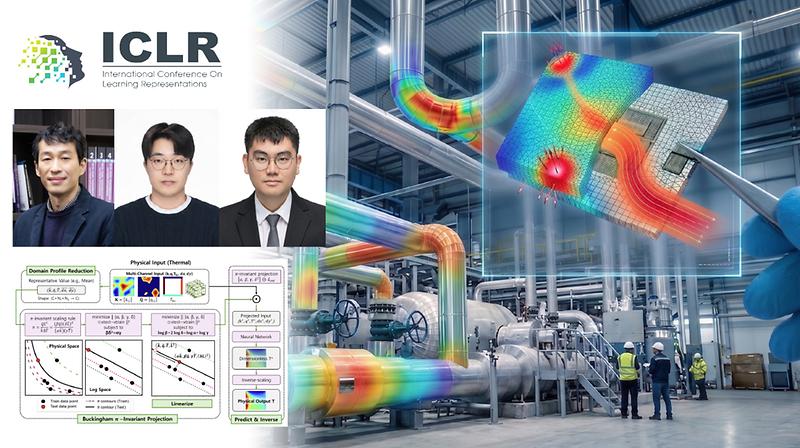
New AI Algorithm to Enhance Accuracy of Thermal and Stress Predictions in Semiconductors

Abstract PDE surrogate models such as FNO and PINN struggle to predict solutions across inputs with diverse physical units and scales, limiting their out-of-distribution (OOD) generalization. We propose a π-invariant test-time projection that aligns test inputs with the training distribution by solving a log-space least squares problem that preserves Buckingham π-invariants. For PDEs with multidimensional spatial fields, we use geometric representative π-values to compute distances and project inputs, overcoming degeneracy and singular points that limit prior π methods. To accelerate projection, we cluster the training set into K clusters, reducing the complexity from O(MN) to O(KN) for the M training and N test samples. Across wide input scale ranges, tests on 2D thermal conduction and linear elasticity achieve MAE reduction of up to ≈91% with minimal overhead. This training-free, model-agnostic method is expected to apply to more diverse PDE-based simulations. A research team affiliated with UNIST has introduced a novel AI-based algorithm that enhances the accuracy of thermal and mechanical predictions across various scales, from microchips to large pipelines. Led by Professor Changwook Jeong from the Graduate School of Semiconductor Materials and Devices Engineering, their π-invariant test-time projection method realigns input data to conform with physical laws, addressing a crucial challenge in AI modeling—accurate predictions when faced with unfamiliar or out-of-distribution data. The algorithm identifies the most physically similar data within existing training sets based on a dimensionless ratio derived from Buckingham's π theorem. It then transforms new inputs into familiar, physically consistent forms without retraining the model, operating in log space to preserve physical ratios. This approach is computationally efficient, reducing processing costs by approximately 99% compared to traditional methods. Applied to 2D thermal conduction and linear elasticity problems, the technique achieved up to a 91% reduction in prediction error, even under conditions outside the original training range. It also demonstrated promising results in fluid dynamics, improving the accuracy of Navier–Stokes equation predictions in complex scenarios. This advancement is expected to accelerate and economize simulations in semiconductor design, packaging reliability, battery management, and structural safety analysis—fields where varying sizes and conditions demand both precision and efficiency. The study has been supported by the National Research Foundation of Korea (NRF) and the Institute of Information & Communications Technology Planning & Evaluation (IITP). Journal Reference Seokki Lee, Min-Chul Park, Giyong Hong, and Changwook Jeong, "Buckingham π-Invariant Test‑Time Projection for Robust PDE Surrogate Modeling," ICLR 2026 .

2026.05.11

  • AI Algorithm
  • Buckingham-pi
  • Changwook Jeong
  • Department of Materials Science and Engineering
  • ICLR
  • MSE
  • Navier–Stokes
  • PDE
  • SE
  • Semiconductor
  • Stress Predictions
  • Thermal Prediction

더보기

UNIST Insight

star

UNISTAR Voices 
Shaping Futures, 
Inspiring the 
World

더보기

Life at UNIST

star

더보기